
CenstruX Services
Land Clearing
Land clearing removes trees, brush, and vegetation so a parcel is usable again — for building, farming, access, or fire safety. This guide covers methods, equipment, process steps, and environmental tradeoffs so you can plan the right clear.
- Scoped before work starts
- Method matched to the land
- Free local quotes
Basics
What is Land Clearing?
Land clearing is the controlled removal of trees, brush, stumps, and other vegetation so ground can be used for a defined purpose. It is not random demolition — a clear plan sets what comes out, what stays, and what the finished surface should look like.
Common contexts include homesite prep, driveway or utility access, pasture or crop expansion, storm cleanup, and reducing wildfire fuel. Outcomes range from a mulched, walkable lot to a graded pad ready for construction.
- Open a homesite, driveway, or building pad
- Expand pasture, garden, or crop ground
- Create access for equipment or utilities
- Reduce brush for fire safety and visibility
- Reclaim overgrown parcels for sale or rebuild
Why It Matters
Why is It Necessary?
Construction site prep depends on clearing. Foundations, septic fields, driveways, and drainage need vegetation and root mass out of the way so crews can grade and build on stable ground. Skipping a proper clear leads to delays, soft spots, and rework.
Agricultural expansion uses clearing to turn brush and timber into usable pasture or cropland. Selective clears keep windbreaks and shade trees; full clears open larger blocks when that is the goal.
Fire prevention and safety matter in wooded and brushy regions. Removing ladder fuels and dense undergrowth near structures lowers ignition risk and improves access for emergency response. Clearing also reduces trip hazards, pests nesting in deadfall, and sight-line problems along roads and fences.
Equipment
Equipment Needed
The right mix depends on acreage, vegetation density, access, and whether material is mulched on-site or hauled. Pros stage heavy equipment; DIY projects usually stop at handheld tools and small rentals.
- Skid steer Compact carrier for mulching heads, grapples, and buckets on tight lots.
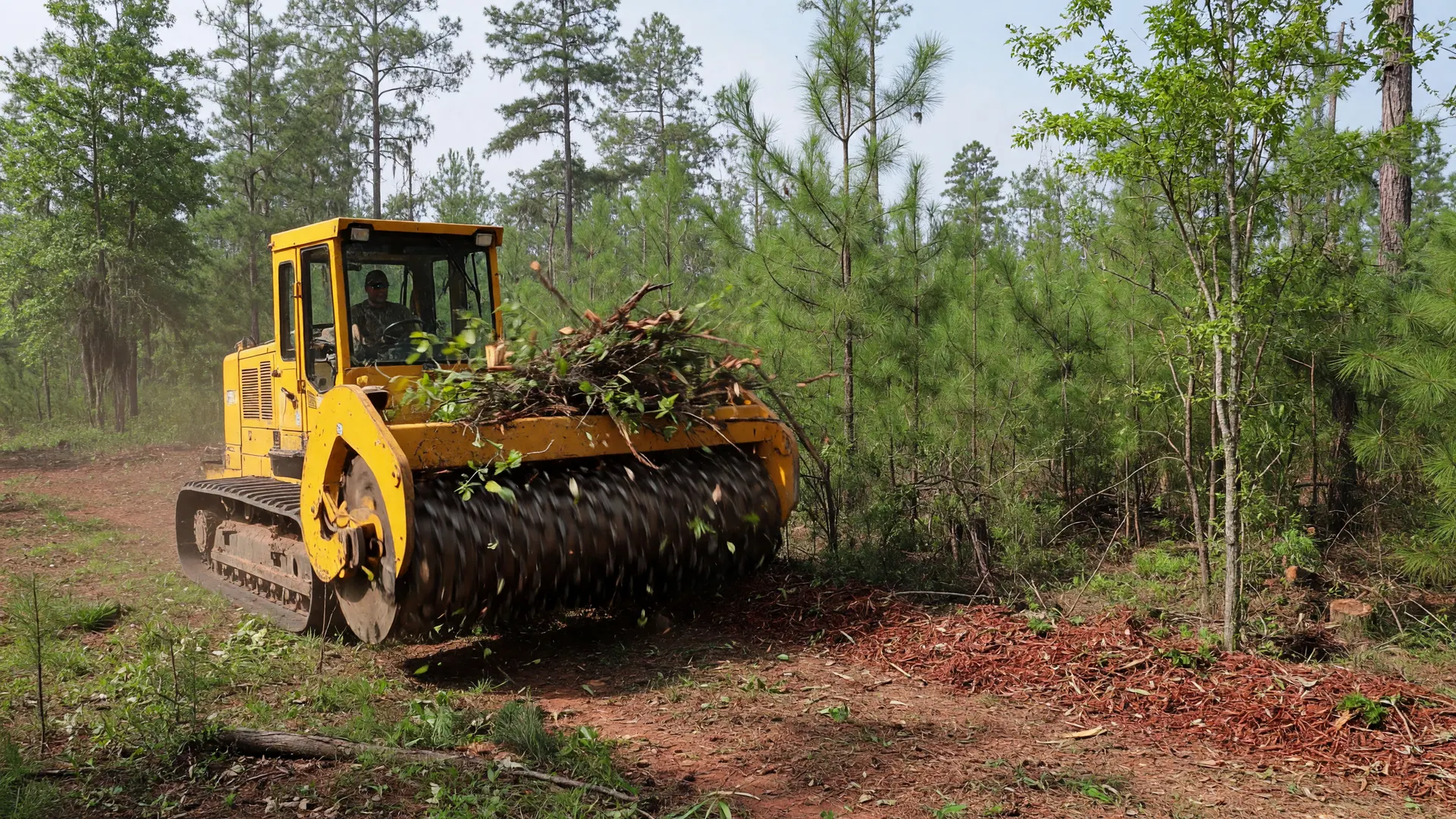
- Forestry mulcher / mulching head Grinds brush and saplings in place into a mulch layer.
- Bulldozer Pushes timber and debris; useful for larger open clears and rough grading.
- Excavator Digs, sorts debris, and handles grubbing or stump work with the right attachment.
- Grapple or root rake Piles brush and roots for mulching, burning (where allowed), or haul-off.
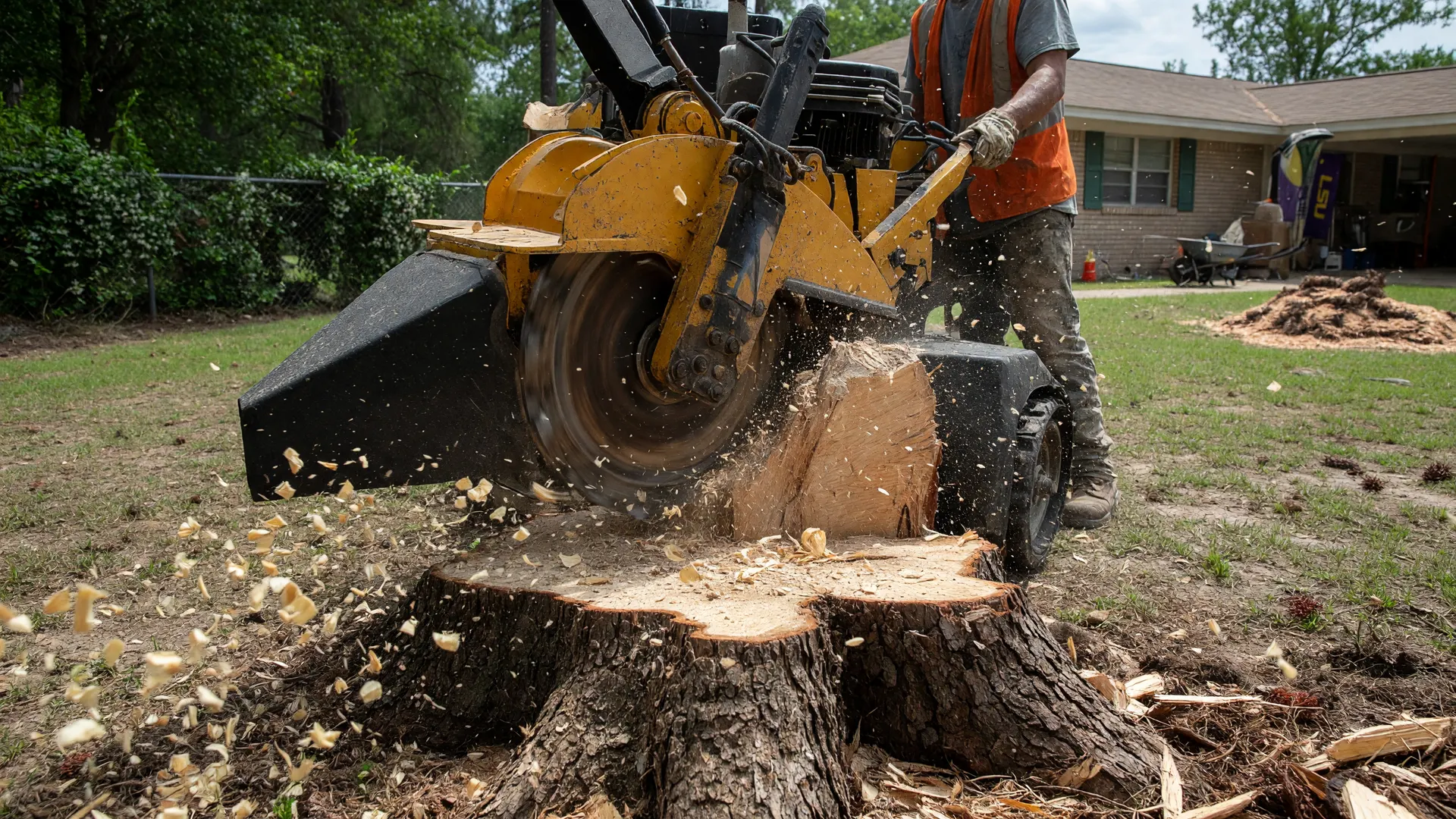
- Stump grinder Cuts stumps below grade after trees are down.
- Chainsaws & brush cutters Selective cutting, fence lines, and cleanup where machines cannot reach.
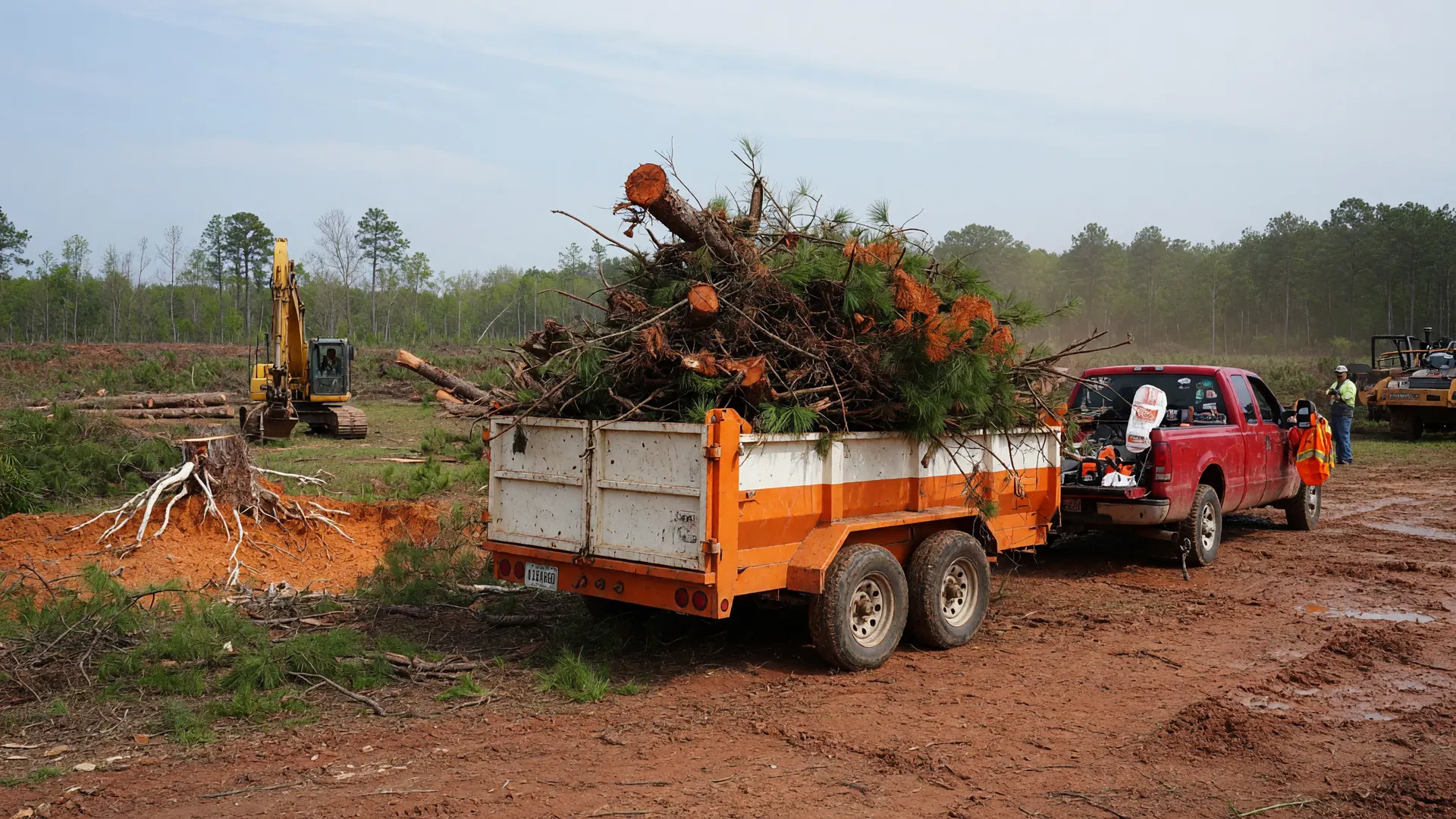
- Dump trailer / truck Hauls chips, logs, and debris when the finish requires material off-site.
- Safety gear PPE, first-aid, and utility-locate tools before steel hits the ground.
Methods
Types of Land Clearing Methods
No single method fits every parcel. Density, end use, access, burn rules, and soil sensitivity decide whether you push, pull, mulch, or haul.
| Method | Best For | Pros | Cons | Equipment Required |
|---|---|---|---|---|
| Bulldozing | Open acreage, rough clears | Fast on open ground; moves large material | High soil disturbance; less selective | Dozer, often excavator support |
| Cut and grind | Lots needing timber down then stumps gone | Clean finish for build/landscape | More steps and machine time | Saws, grinder, loader |
| Pulling / grubbing | Root removal for pads and utilities | Roots leave the ground | Labor-heavy; larger holes to backfill | Excavator, root rake, trucks |
| Pile and burn | Remote sites where burning is legal | Reduces haul volume | Smoke, ash, permits, weather limits | Dozer/grapple, burn supervision |
| Mulching | Brush and undergrowth, low-impact opens | Fast; mulch stays on-site; less smoke | Not ideal for heavy timber alone | Skid steer or dedicated mulcher |
Many jobs combine methods — mulch the brush, cut larger trees, then grind stumps. Match the mix to the finish you need, not to the first machine available.
Process
Land Clearing Process Steps
A professional clear follows a sequence so the quote matches the finish and surprises stay rare. Steps below are typical; local rules and site conditions can add or skip stages.
-
01
Survey and planning
Define acreage, keepers, access, wet spots, and the end use (homesite, pasture, sale). Photos and a walk set the scope.
-
02
Permitting and utility locate
Confirm parish or local requirements. Call 811 for buried lines before digging or heavy grubbing.
-
03
Site prep and selective demolition
Mark boundaries, protect keepers, and remove fences, debris, or structures in the clear zone as scoped.
-
04
Vegetation removal
Fell or mulch trees and brush to the plan — full clear or selective corridors.
-
05
Grubbing and stump work
Pull roots where needed for pads, or grind stumps below grade for lawn and landscape finishes.
-
06
Grading and cleanup
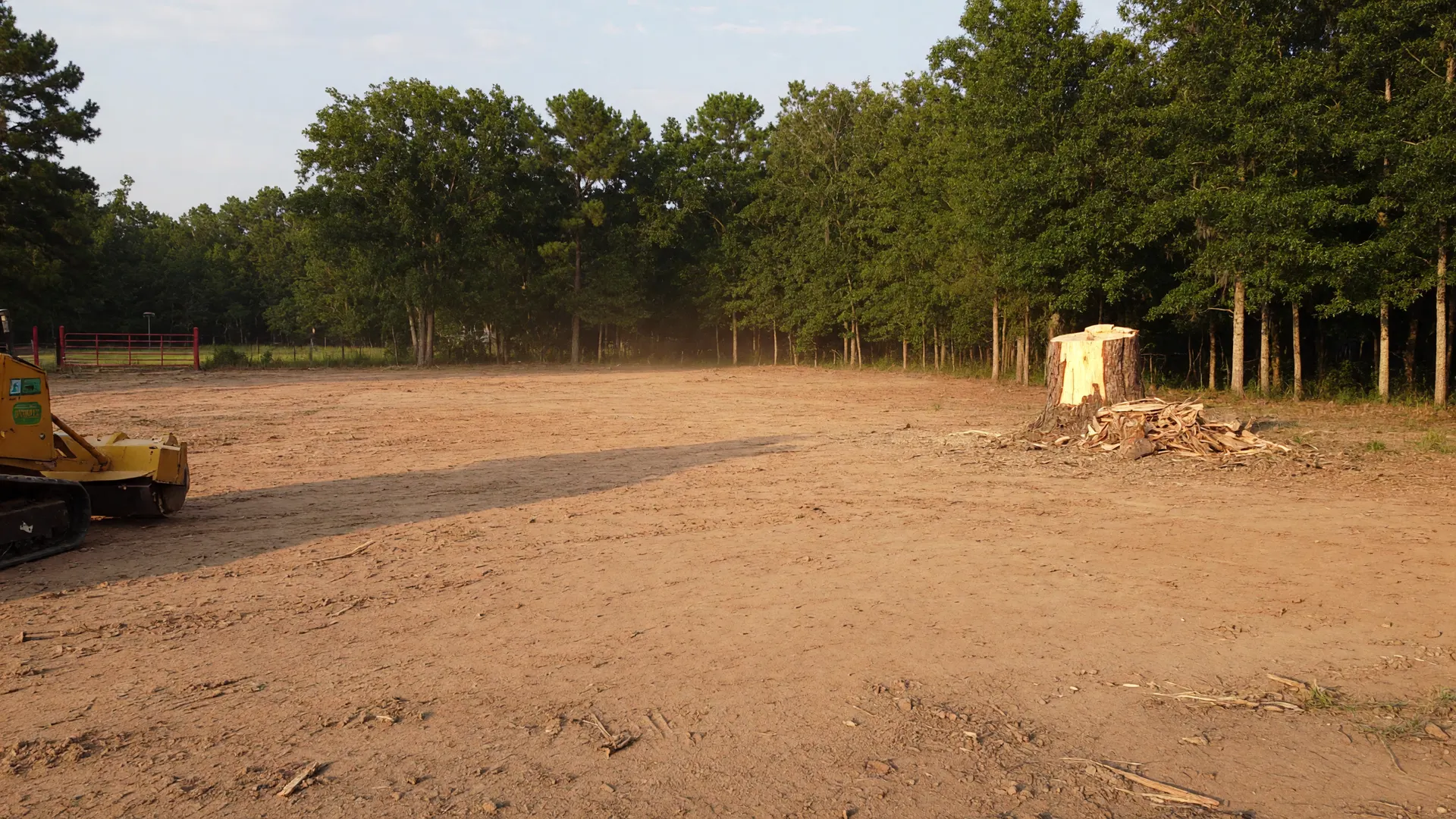
Level the surface, handle chips or haul-off, and leave the ground ready for the next phase.
Environment
Environmental Impacts
Clearing changes soil, habitat, and water movement. Done carefully, it can also reduce fire fuel and restore usable land. Balance the project goal with mitigation that fits the site.
| Impact | Description | Mitigation Strategy |
|---|---|---|
| Soil erosion | Bare ground washes in heavy rain | Mulch cover, staged clears, silt controls, prompt seeding |
| Habitat loss | Wildlife cover and corridors shrink | Keep buffers, selective clears, leave wildlife trees where safe |
| Water quality | Sediment and debris reach ditches and streams | Avoid wet-weather work; protect drainage paths |
| Carbon release | Burning or decaying piles release carbon | Prefer mulching over burn when practical |
| Invasive species | Disturbed soil favors weeds and invasives | Revegetate quickly; monitor and treat early |
Decision Guide
DIY vs Professional Land Clearing
Small brush jobs with open access can be DIY with rented tools. Larger timber, slopes, wetlands, or build-ready finishes usually belong with a crew that has the right machines and insurance.
DIY
- Lower cash cost on tiny lots if you already have time and tools
- Fine for light brush and fence-line cleanup
- Higher personal injury and property-damage risk
- Easy to underestimate time, disposal, and stump work
Professional
- Right equipment for density and access
- Scoped quote, insurance, and a defined finish
- Faster on multi-acre or timber-heavy parcels
- Better fit when permits, drainage, or grading matter
Hire a pro when the clear feeds construction, when access is tight, or when you need mulching, grinding, and haul-off on one schedule. DIY only when the scope is small and you accept the safety tradeoff.
FAQ
FAQs About Land Clearing
How much does land clearing cost per acre?
Published U.S. ranges often run from roughly $500–$2,000+ per acre for light brush, and much higher for dense timber, steep ground, or full grubbing and haul-off. Density, access, method, and debris handling drive the price. Get a site-specific quote.
Do I need a permit for land clearing?
It depends on location, acreage, wetlands, drainage, and burn rules. Many small residential brush jobs are simple; larger clears or sensitive areas may need parish or other approvals. Check local planning/zoning before major work.
What is the most environmentally friendly land clearing method?
Forestry mulching is often the lower-impact choice for brush: less smoke than pile-and-burn, organic cover left on the soil, and less bare ground. Pair it with buffers, staged work, and quick revegetation when the site allows.
How long does land clearing usually take?
A small residential lot can open in a day or two. Multi-acre or timber-heavy parcels take longer based on method, weather, and whether stumps are ground or hauled. After photos or a walk, a crew can give a realistic schedule.
Can land clearing improve property value?
Yes when it makes land usable — buildable homesites, better access, safer brush lines, or cleaner curb appeal for sale. Value follows the end use; a messy clear without a finish plan helps less than a scoped, build-ready result.
Locations
Land Clearing by city
Choose your city for a local landing page, or browse all CenLA locations.
Related Services
More site prep options
Get Started
Ready to clear the land?
Call CenstruX with acreage, photos, and your goal for a clear, scoped quote.