
CenstruX Services
Forestry Mulching for Brush Clearing: Complete Guide
Forestry mulching grinds brush and undergrowth in place — opening lots, trails, and firebreaks faster than hand clearing, with less smoke and soil disturbance than pile-and-burn. Use this guide to see how it works, what it costs, and when to hire a crew.
- Low-impact brush clearing
- Mulch stays on-site
- Free local quotes
Basics
What Is Forestry Mulching?
Forestry mulching is a brush-clearing method that uses a rotating drum or disc with steel teeth to grind vegetation into mulch in a single pass. Instead of cutting, piling, and hauling or burning, the machine processes brush, saplings, and undergrowth where it stands.
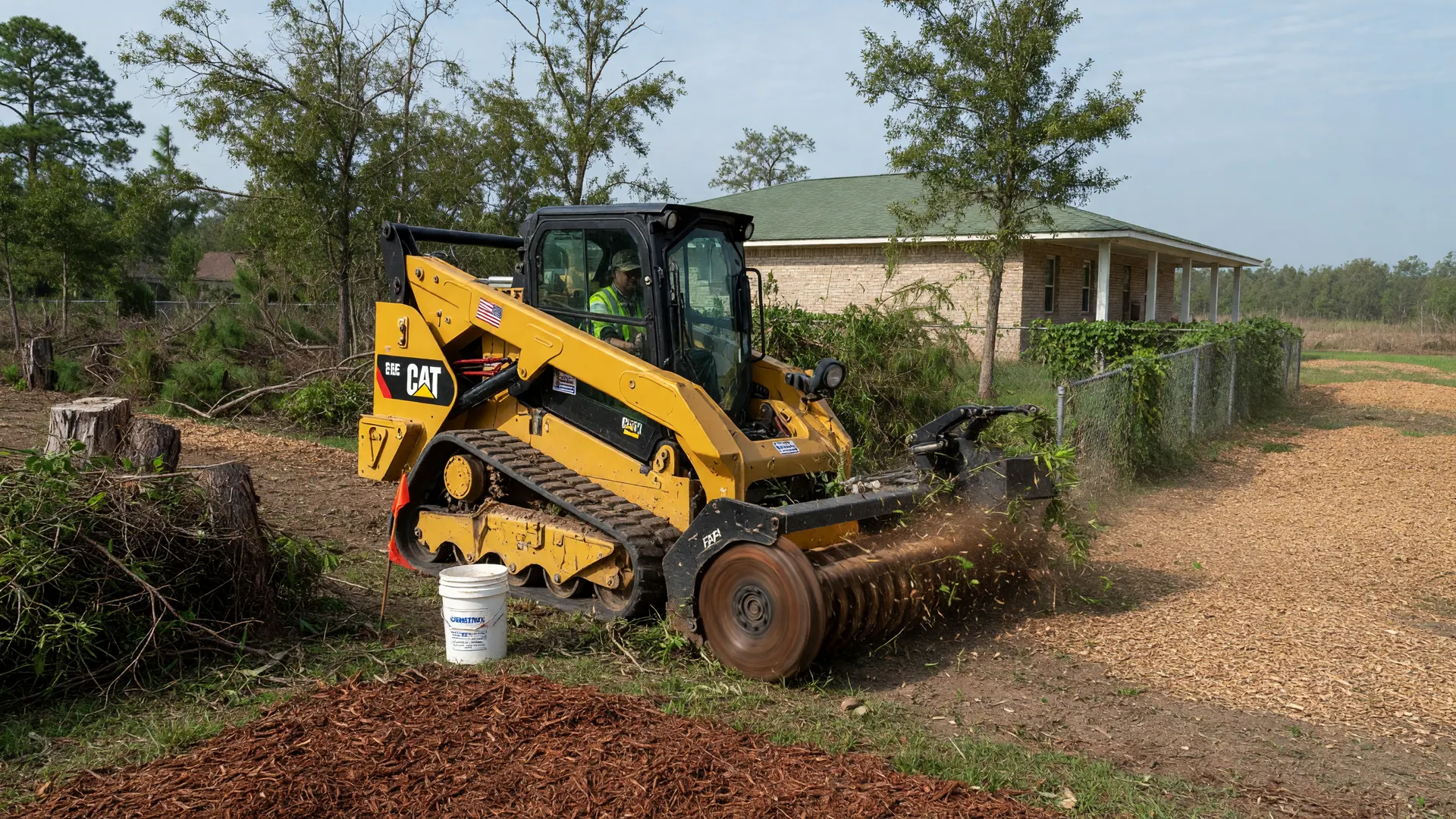
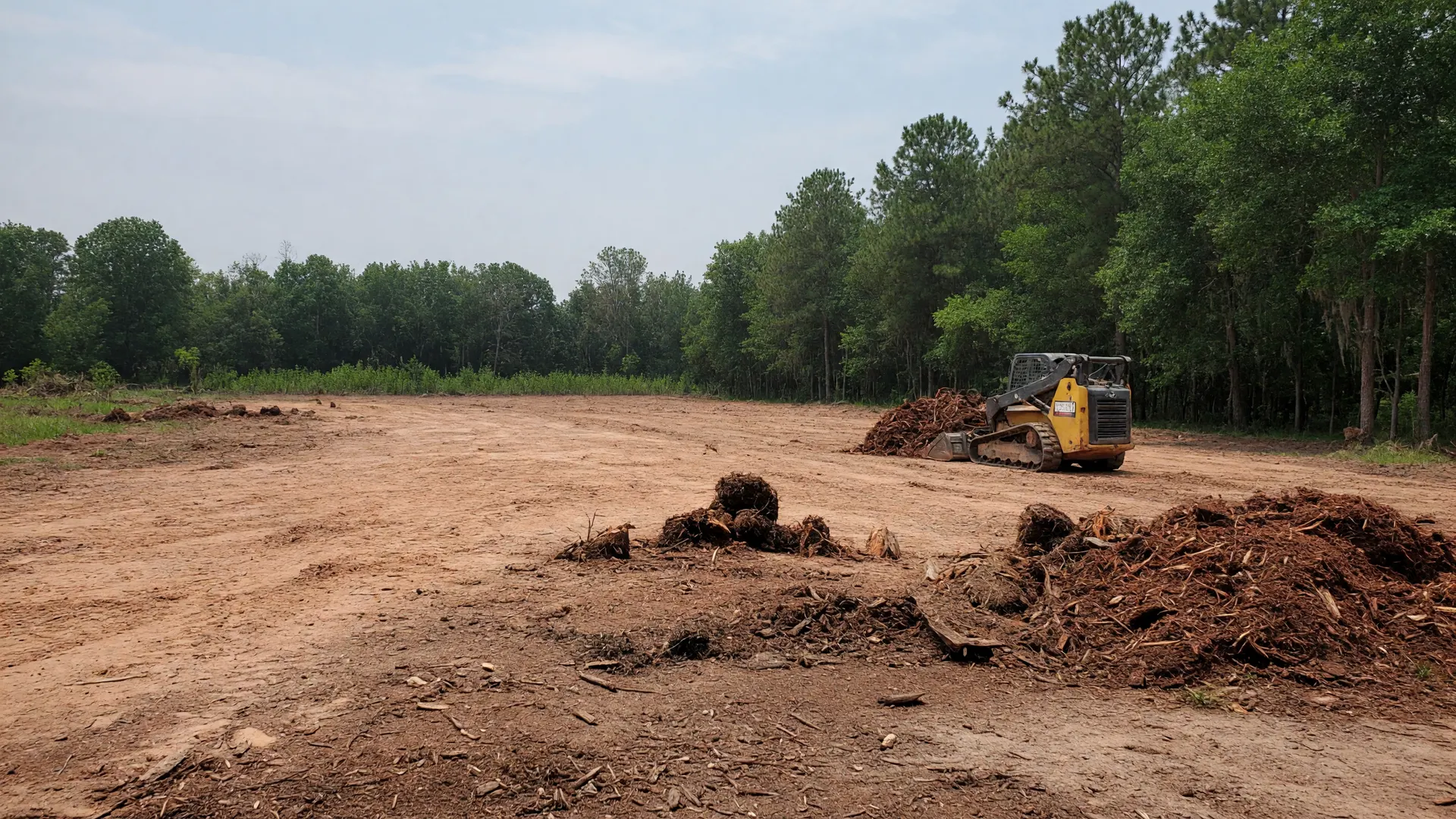
Equipment is typically a mulching head mounted on a skid steer, tracked carrier, or excavator. The operator works corridors through the brush, leaving a shredded organic layer that protects soil and opens access for the next use of the land.
How It Works
How Forestry Mulchers Work
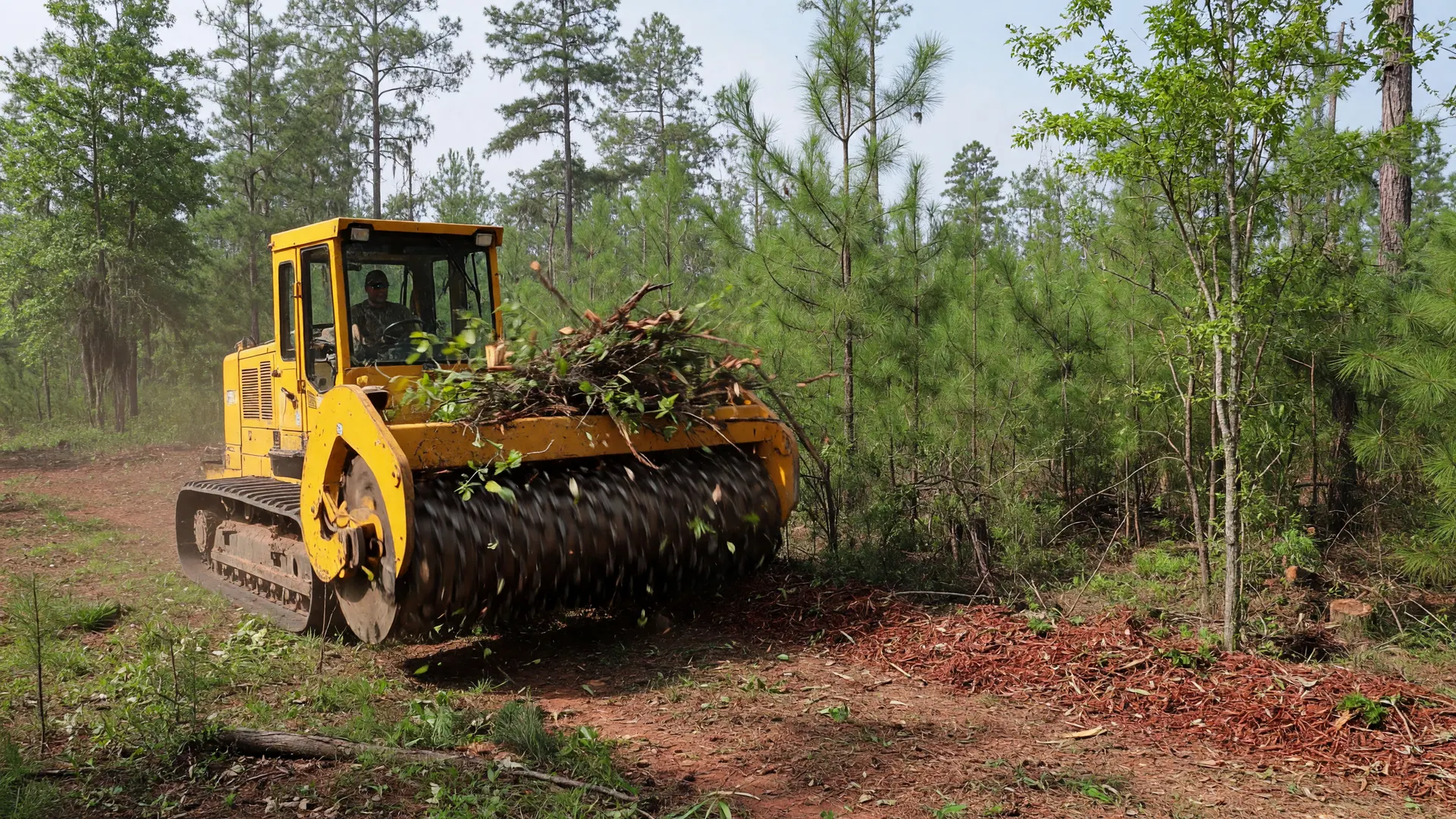
A mulcher drum (or disc) spins at high speed. Carbide or steel teeth bite into brush and small stems, shredding them into chips that fall behind the machine. Depth and aggressiveness are controlled by how hard the operator feeds the head into the vegetation.
Mounting options matter for access. Skid-steer mulchers fit residential lots and trail work. Excavator-mounted heads reach slopes, ditches, and tighter spots from a stable boom. In either case, the goal is the same: one pass that clears and mulches without a separate burn or haul for every stem.
Benefits
Benefits of Forestry Mulching for Brush Clearing
Mulching is popular for brush jobs because it opens ground quickly while leaving cover on the soil.
- Soil cover stays put Mulch shades bare dirt and helps hold moisture after the clear.
- Erosion control Less exposed soil than a scraped or burned finish in the first storms.
- Minimal site disturbance No burn piles or loaded trucks on every pass when mulch can stay.
- Less smoke Avoids pile-and-burn haze when local rules or neighbors make burning a poor fit.
- Speed on brush Undergrowth comes down in machine time instead of weeks of hand cutting.
- Cost efficiency Often cheaper than full haul-off when the goal is opening land, not exporting chips.
- Selective corridors Open trails, fence lines, and lots while keeping marked trees.
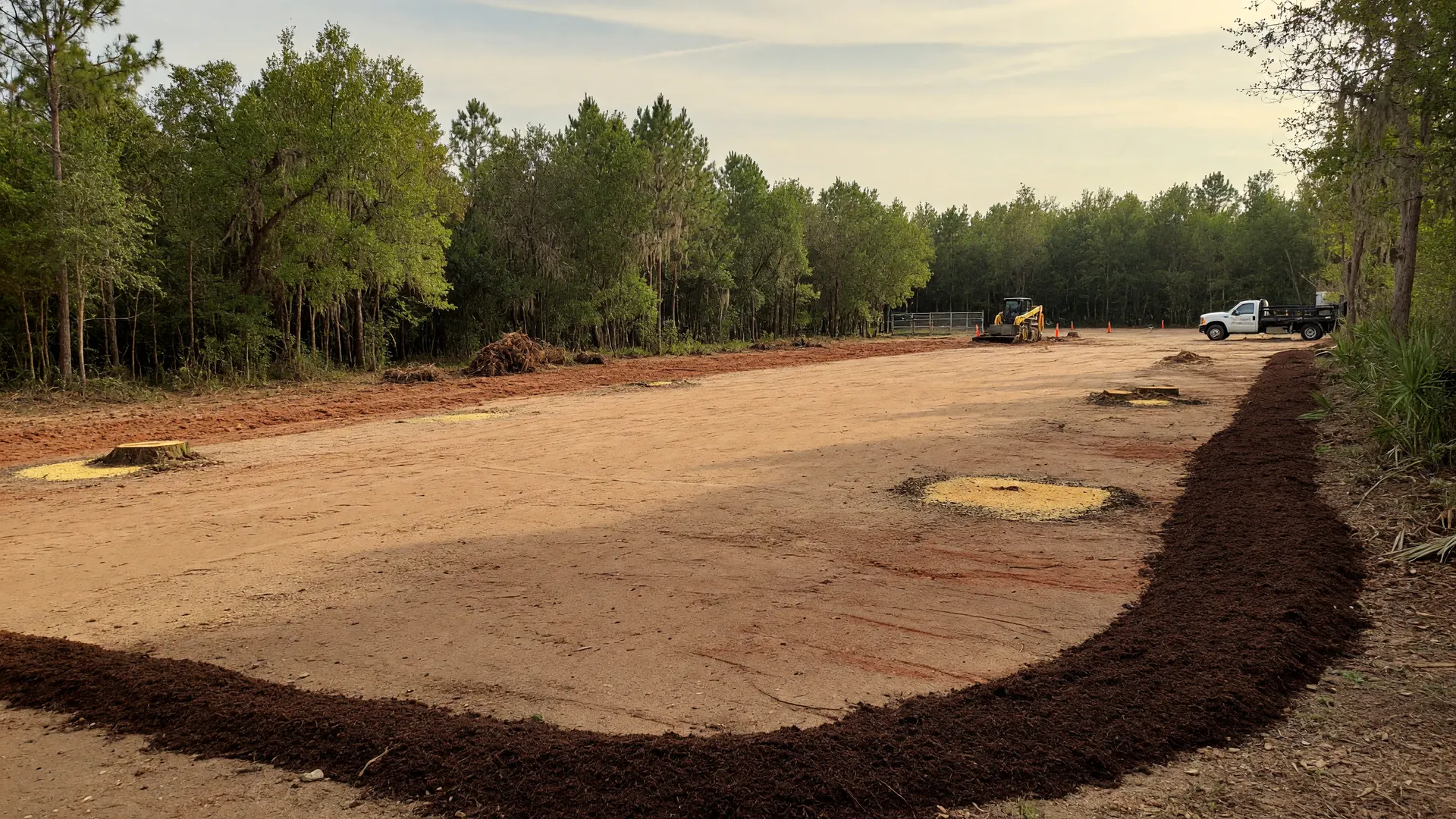
- Ready for next steps Pairs cleanly with stump grinding or heavier clearing when timber remains.
Applications
Applications for Brush Clearing
Mulching fits jobs where brush and saplings are the main problem — not heavy timber alone.
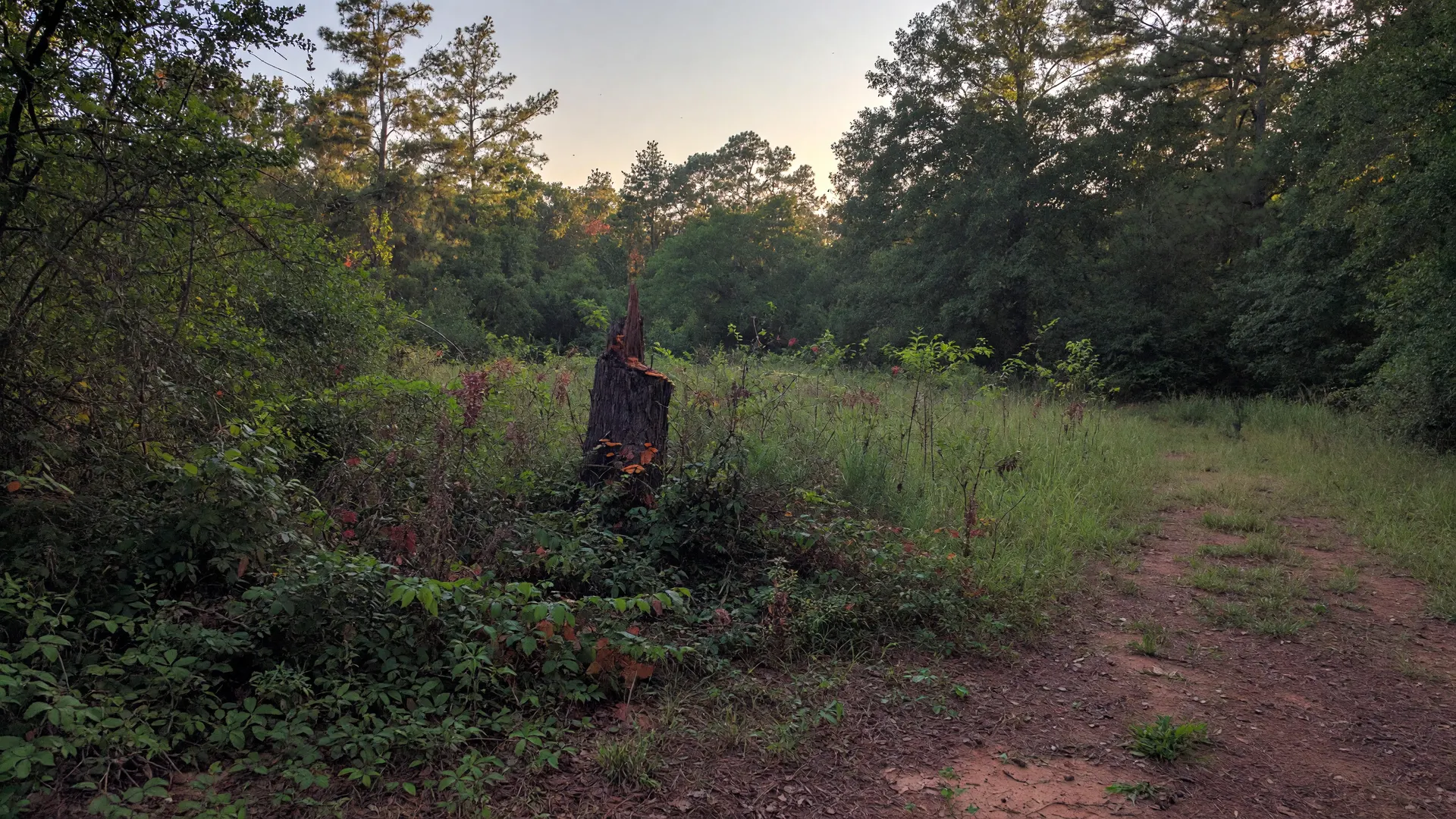
- Residential and commercial lots choked with undergrowth
- Trail and access-lane maintenance
- Invasive brush and thicket control
- Firebreak and defensible-space corridors near structures
- Fence lines, utility paths, and pasture edges
Limitations
Limitations of Forestry Mulching
Mulchers have diameter limits. Most brush heads handle saplings and small stems well; large hardwoods usually need cutting first, then stump grinding or other clearing. Rocky ground, buried debris, and wire can damage teeth and slow the job.
Steep slopes, soft wet soils, and gated yards with no machine access may rule out a mulcher or force a different mount. Dense mature forest is not a “mulch-only” job — timber, grading, and haul-off may still be required for a build-ready finish.
Comparison
Forestry Mulching vs Traditional Land Clearing
Choose mulching when brush is the main load and you want cover left on-site. Choose traditional clearing when timber, grubbing, or a bare pad is the priority.
| Aspect | Forestry Mulching | Traditional Clearing |
|---|---|---|
| Debris handling | Mulch left on-site | Piles, burn, or haul-off |
| Soil impact | Lower disturbance; cover remains | Higher — scraping and digging more common |
| Erosion control | Mulch helps early protection | Bare soil needs extra controls |
| Environmental impact | Less smoke than burning; organic recycle | Burn/haul can mean more smoke and trucking |
| Typical cost | Often competitive on brush jobs | Can rise with timber, grubbing, and haul |
| Speed | Fast for undergrowth corridors | Varies; pile/burn/haul adds stages |
Pricing
Costs and Service Options
Brush-mulching prices are usually quoted per acre or by the job after photos and access review. Density, stem size, terrain, travel, and whether chips stay or get hauled all move the number.
- Published U.S. consumer ranges for forestry mulching often fall roughly in the mid-hundreds to low thousands of dollars per acre for light-to-moderate brush — denser growth and poor access cost more.
- Regional notes: rural travel, wet ground, and gated lots raise price; open, dry parcels with light undergrowth land toward the low end.
- 2024–2025 planning tip: treat per-acre averages as a starting point only. A local walk or photo quote beats any national benchmark for CenLA parcels.
- Hiring a pro usually includes the machine, operator, and scoped finish; DIY rental rarely matches production heads used on commercial brush jobs.
Decision Guide
Decision Guide: When to Choose Forestry Mulching
Use this checklist. If most answers are “yes,” mulching is a strong fit. If several are “no,” plan traditional clearing, grinding, or a combined scope.
- Is the main problem brush, thickets, and saplings — not large timber?
- Do you want mulch left on-site instead of burn piles or full haul-off?
- Is machine access available (gates, firm ground, room to work)?
- Are slopes and rocks moderate enough for a mulching head?
- Do you need trails, lots, or firebreaks opened quickly?
- Can keeper trees be marked and avoided?
- Is smoke from burning a concern for neighbors or local rules?
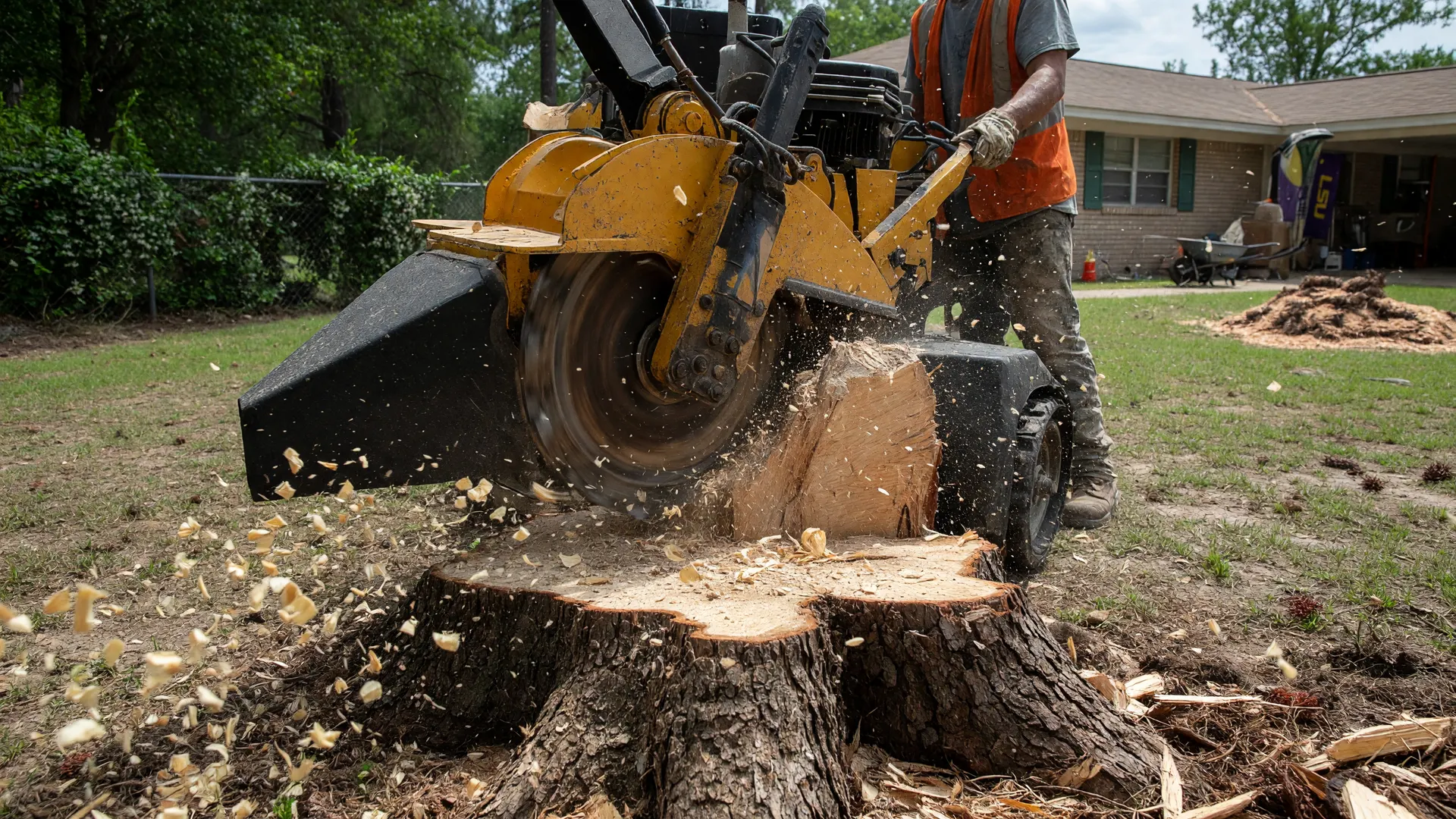
- Are you okay grinding leftover stumps separately if needed?
If timber is heavy, the finish must be bare pad, or access is impossible for a carrier, ask for a mixed plan: cut/haul or dozer work plus mulching where it still helps.
FAQ
Frequently Asked Questions
How much does forestry mulching cost per acre for brush clearing?
Industry consumer guides often cite roughly mid-hundreds to low thousands of dollars per acre depending on density and access. Light brush on open ground costs less; thick stems, slopes, and travel cost more. Get a local quote from photos or a site look.
What size trees can forestry mulchers handle?
Most brush mulchers are built for undergrowth and saplings. Larger diameter trees usually need cutting first. Ask what stem size the crew’s head is rated for on your parcel.
Is forestry mulching better for the environment than traditional clearing?
For brush jobs, mulching often means less smoke than burning and more soil cover than a full scrape. Traditional clearing still fits when roots must come out or material must leave the site.
Can forestry mulching be used on rocky or steep terrain?
Sometimes, with the right carrier and operator — but rock damages teeth, and steep or soft ground can stop a machine. Those sites may need excavator mounts, hand work, or a different method.
Locations
Brush Clearing & Mulching by city
Choose your city for a local landing page, or browse all CenLA locations.
Related Services
More site prep options
Get Started
Ready to mulch the brush?
Call CenstruX with parcel details and photos for a forestry mulching quote.