
Stump Grinding vs Stump Removal: What’s the Difference?
After a tree comes down, the stump is the part that keeps getting in the way of mowing, landscaping, or new construction. Homeowners usually face two options: stump grinding or full stump removal. They sound similar, but they are not the same job—and picking the wrong one can waste money or leave roots that sprout again.
This guide breaks down how each method works, cost and time differences, and a simple checklist for choosing the right approach for your yard.
Get a free quote from local pros
How Stump Grinding and Stump Removal Work
Stump grinding
A stump grinder uses a spinning cutting wheel with carbide teeth to chip the stump into small wood pieces. The operator works the stump down below the surrounding grade—commonly about 6 to 12 inches, sometimes deeper when access and machine size allow.
- Clear rocks, metal, and debris around the stump.
- Position the grinder and chip the stump in passes.
- Grind surface roots that stick up near the stump.
- Leave a mix of chips and soil in the hole, or haul chips away if requested.
- Rake the area so it is ready to fill and seed.
Deeper roots usually stay in the ground and break down over time. That is why grinding is faster and less invasive than digging everything out.
Full stump removal
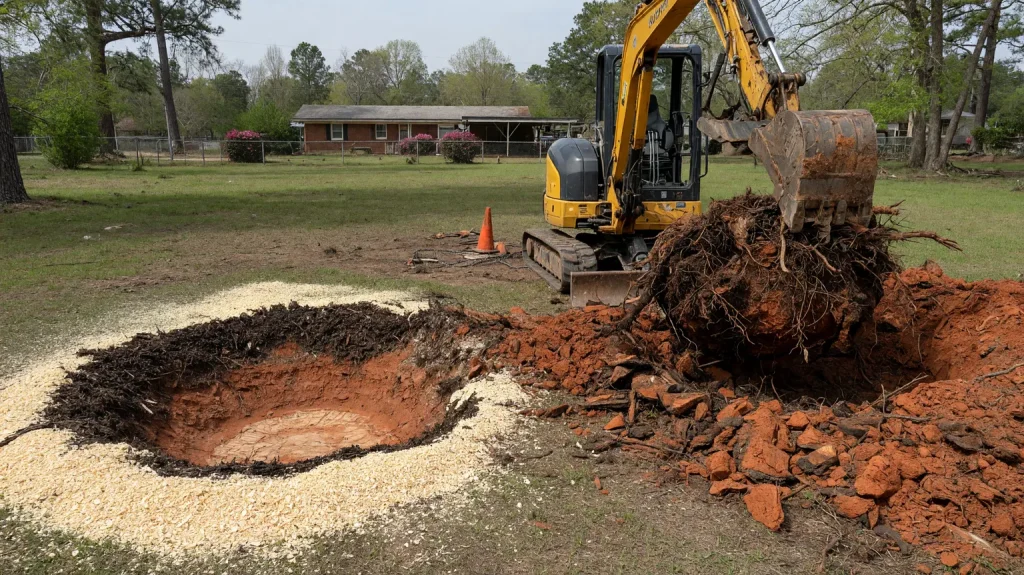
Full removal excavates the stump and a large portion of the root ball. Crews may use a mini excavator, winch, or manual digging depending on size and site access.
- Expose the stump and major roots.
- Cut or pry roots free from the surrounding soil.
- Lift the stump and root mass out of the hole.
- Backfill with clean fill dirt and compact as needed.
- Haul the stump and roots off-site.
Removal creates a bigger hole and more soil disruption, but it clears more of the root system—useful when you are building, grading, or planting something large in the exact same spot.
Side-by-Side Comparison
| Factor | Stump grinding | Full stump removal |
|---|---|---|
| Typical cost | Lower ($175–$475 common) | Higher ($300–$1,000+) |
| Time on site | Often under an hour per stump | Longer; more digging and haul-away |
| Yard disruption | Smaller hole, less soil moved | Large hole, more mess |
| Root removal | Main stump + surface roots | Most of the root ball |
| Regrowth risk | Lower, but not zero | Lowest of the two |
| Byproduct | Wood chips / mulch on site | Stump and roots hauled away |
| Best uses | Lawns, landscaping, most homes | Building, disease issues, exact replanting |
Advantages of Stump Grinding
- Lower cost for most yards — Grinding avoids heavy excavation and usually costs less than full removal.
- Faster job — Many residential stumps are finished in a single short visit once the machine is on site.
- Less lawn damage — You get a shallow hole instead of a crater and piles of displaced soil.
- Useful chips — Leftover grindings can mulch paths, tree rings, or erosion spots (age them before flower beds).
- Easier access options — Walk-behind and compact grinders fit many side yards where excavators struggle.
- Good enough for most goals — If you want to mow, seed grass, or plant shrubs nearby, grinding usually solves the problem.
For the average homeowner who just wants the stump gone from daily yard work, grinding is the default choice.
When Full Stump Removal Makes Sense
- New construction or hardscape — Foundations, driveways, patios, and pools need a clear root zone.
- Major grading or drainage work — Remaining roots can interfere with soil work and settle unevenly later.
- Planting a large tree in the same footprint — A new tree’s roots compete with decaying wood and voids left under a ground stump.
- Disease or pest concerns — If the tree had a transferable root disease, removing more of the root mass can be the safer call. Ask an arborist for species-specific advice.
- You need the hole filled with clean soil only — Some projects cannot leave a thick layer of chips under the finished grade.
Removal costs more and tears up more yard—but it is the right tool when the next use of that spot demands a clean slate.
Cost and Time Factors
National ballparks for planning:
- Stump grinding: about $175–$475 per stump, or roughly $2–$5 per inch of diameter
- Full stump removal: often $300–$1,000+, rising fast with size, access, and haul-away
Variables that move the price either way:
- Stump diameter and wood hardness
- Surface roots and flare size
- Fences, slopes, or long equipment carries
- Whether chips/stumps are left or hauled
- Number of stumps on one visit
| Region | Grinding avg. (per stump) | Removal avg. (per stump) | Notes |
|---|---|---|---|
| Northeast metros | $250–$550 | $450–$1,200+ | Higher labor and disposal fees |
| West Coast metros | $275–$600 | $500–$1,400+ | Access and haul-away often costly |
| Midwest | $150–$400 | $300–$900 | Often the most competitive pricing |
| South / Southeast | $150–$425 | $300–$950 | Hardwoods and wet soil can add time |
| Mountain / rural | $150–$375 | $300–$850 | Travel fees may apply for remote sites |
These are planning ranges for 2026, not guarantees. Always get a written on-site quote.
Decision Checklist: Grinding or Removal?
Choose stump grinding if most of these are true:
- You mainly want to mow or landscape over the spot.
- You are okay leaving deeper roots to decay in place.
- You want the lower-cost, faster option.
- You can use or store wood chips, or pay a modest haul-away fee.
- You are not building a structure on that exact footprint.
Choose full stump removal if most of these are true:
- You are building, paving, or excavating there soon.
- You need to plant a large tree in the same hole.
- An arborist flagged disease or aggressive resprouting concerns.
- You need clean fill only—no thick chip layer under grade.
- Budget allows for more labor, dirt work, and disposal.
Still unsure? Ask for two line items on the quote: grinding only vs full removal. Comparing those side by side usually makes the decision obvious.
Frequently Asked Questions
How deep does stump grinding go?
Most residential grinding goes about 6–12 inches below grade. Deeper grinding is possible with larger machines and clear access, but it is not the same as removing the full root system.
Can I replant in the same spot after grinding?
Small shrubs or grass often work after you fill with topsoil. For a large tree in the exact same footprint, wait and amend heavily—or choose full removal—so new roots are not fighting voids and decaying wood. Many pros suggest waiting several months and improving the soil before a major replant.
Does stump grinding prevent root regrowth?
It greatly reduces the visible stump and surface roots, but it does not guarantee zero sprouts. Some species resprout from remaining roots.
Which common tree species have higher regrowth risk?
Trees known for aggressive sprouting—such as willow, poplar/aspen, Chinese tallow, mimosa, and some maples and fruit trees—may send up shoots after grinding. Ask your tree service about follow-up cutting or treatment if those species are on your property.
What happens to the sawdust and mulch?
Chips can stay on site for mulch, paths, or hole fill (top with real soil before seeding). Or you can pay to have them hauled away. Fresh chips are better for paths than for vegetable beds.
Should I DIY or hire a pro?
Rental grinders exist, but they are heavy, loud, and easy to damage against rocks or buried debris. Pros bring the right machine, grind to a useful depth, and leave the site ready to restore. Full removal is almost always a professional job.
Conclusion: Choosing the Right Option for Your Yard
Stump grinding vs stump removal comes down to what you need that patch of ground to do next. Grinding wins for cost, speed, and everyday landscaping. Full removal wins when construction, disease control, or a clean replanting site matters more than the extra expense and mess.
Measure the stump, note access limits, and decide whether chips can stay. Then get a local assessment so you are not paying for removal when grinding would have been enough—or grinding when the project needs a clear root zone.
Contact a local stump grinding or removal crew for an on-site quote and ask them which method fits your next step for the yard.