
How to Use Stump Grindings as Mulch
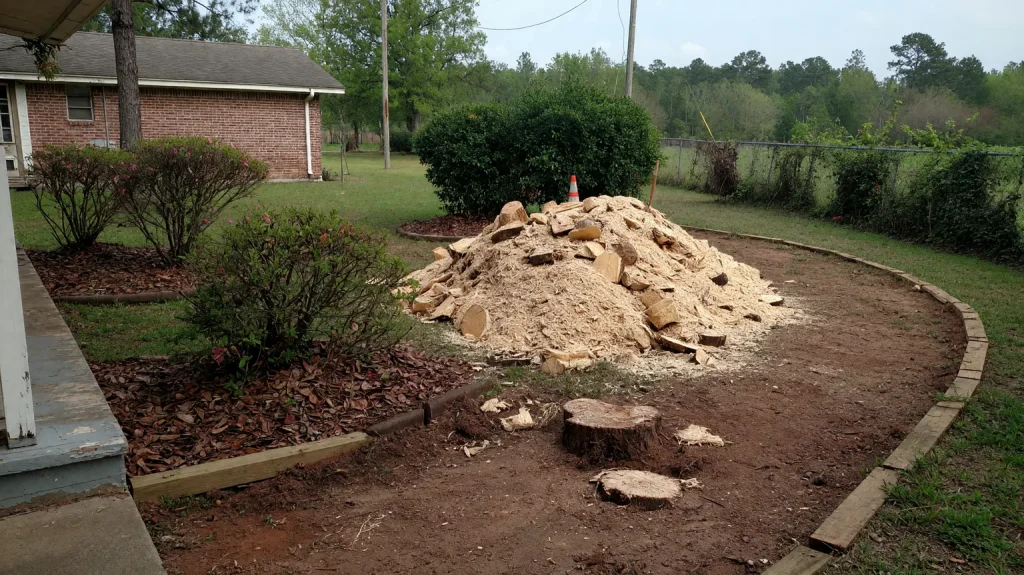
That pile left after stump grinding is not waste. You’re done with the hard work and the land clearing, but there’s still more you can do! With a little preparation, mulch from stump grinding can improve moisture, cut weeds, and tidy up beds and paths. Here is how to use it safely—and when to skip it.
What Are Stump Grindings and Can They Be Used as Mulch?
Stump grindings are the mix of wood chips, sawdust, and soil left when a stump grinder chips a stump below grade. Yes, you can use them as mulch. Fresh grindings work best on paths, around established trees and shrubs, and for erosion control. Age them a few months before using them in flower beds, and avoid putting diseased wood or heavy fresh layers into vegetable gardens.
Benefits of Stump Grinding Mulch
- Moisture retention — A wood-chip layer shades soil and slows evaporation, so beds need less frequent watering in summer heat.
- Weed suppression — A 2–4 inch cover blocks light that weed seeds need to sprout, especially in shrub beds and under trees.
- Temperature regulation — Mulch buffers hot and cold swings, which helps roots stay more stable through the seasons.
- Soil improvement — As chips break down, they add organic matter that supports microbes and improves soil structure over time.
- Erosion control — On slopes and bare spots, grindings slow runoff and help hold soil in place after rain.
You also recycle wood waste instead of paying to haul it away—one of the simplest sustainable gardening practices after tree work.
How to Prepare Stump Grindings for Mulch
- Rake and sort. Pull the pile into one spot. Remove stones, large chunks, trash, and any wood that looks diseased or rotten.
- Decide: fresh or aged. Use fresh grindings on paths, woodland edges, and erosion areas. For ornamental beds, let the pile sit a few months so microbes start breaking it down.
- Store it right. Keep the pile in a back corner of the yard. Turn it every few weeks and keep it lightly moist (not soggy) to speed aging. Share extras with neighbors if you have more than you need.
- Balance nitrogen if needed. Fresh wood is high in carbon. Before mulching tender plants, top-dress soil with compost or a light nitrogen feed so chips do not compete with roots while they decompose.
| Use case | Fresh grindings | Aged grindings | Recommendation |
|---|---|---|---|
| Trees & shrubs | OK if kept off trunks | Best | Age when you can; always leave a gap at the bark |
| Flower beds | Risky (nitrogen drawdown) | Good | Prefer aged chips or add compost first |
| Garden paths | Excellent | Excellent | Fresh is fine; 3–6 inches over fabric optional |
| Vegetable gardens | Avoid | Use with caution | Skip if wood was diseased; compost instead |
| Erosion control | Excellent | Excellent | Fresh grindings work well on bare slopes |
How to Apply Stump Grindings as Mulch
Safest application zones, in order:
- Around established trees and shrubs — Spread 2–4 inches; keep mulch a few inches off trunks and stems.
- Garden pathways — Use 3–6 inches for a soft, natural walkway between beds.
- Erosion-prone slopes and bare soil — Cover washout spots to slow water and hold dirt.
- Woodland or naturalized areas — Fresh chips are fine where you mainly want weed cover, not showy annuals.
- Ornamental flower beds — Prefer aged grindings; add compost if plants are young or shallow-rooted.
Do not volcano-mulch against trunks. For the stump hole itself, put some stump grindings mixed with dirt in the bottom for bulk, then cap with real topsoil before seeding grass. Expect settling over the first year and top off as needed.
Important Cautions When Using Stump Grindings
- Diseased wood — If the tree had fungal disease, wilt, or serious pest issues, do not mulch healthy plants with those chips. Compost hot, haul away, or use only in low-risk areas away from gardens.
- Nitrogen drawdown — Fresh chips can temporarily tie up nitrogen as they break down. That stunts young flowers and veggies more than established trees.
- Acidity — Some species (including many pines) can make more acidic chips. Prefer them around acid-loving plants, or mix with other organics over time.
- Vegetable gardens — Avoid fresh grindings here. Disease risk and nutrient competition make them a poor fit for food crops.
- Piles near the house — Do not store a large damp mound against the foundation. Spread chips in the landscape or move surplus away from the structure.
How Long Does It Take for Stump Grindings to Decompose?
Most stump grindings take about 6 months to 2 years to break down, depending on chip size, wood type, moisture, and temperature. Coarse chips last longer; fine grindings and warm, humid weather speed the process.
In the Southeast and Gulf Coast, warm wet seasons can push piles toward the faster end of that range. In cooler Northern climates, or in dry Western yards with little irrigation, expect slower breakdown—closer to one to two years unless you turn and moisten the pile. Turning the stack and keeping it slightly damp shortens the wait without special equipment.
Stump Grinding Mulch FAQs
Can I use fresh stump grindings directly as mulch?
Yes, on paths, erosion spots, and around established trees and shrubs. For flower beds, aging a few months is safer.
How deep should stump grinding mulch be applied?
Use a 2–4 inch layer in beds. Paths can go thicker (about 3–6 inches). Keep mulch off trunks and stems.
Is stump grinding mulch safe for vegetable gardens?
Usually no—especially when fresh. Nitrogen drawdown and possible disease in the wood make other mulches a better choice for food crops.
How long until stump grindings fully decompose?
Typically 6 months to 2 years. Climate, chip size, and how often you turn the pile all matter.
What are alternatives to using stump grindings as mulch?
Build garden paths, stabilize slopes, add chips as compost “browns,” fill the stump hole under topsoil, or share extras with neighbors.
Turn Leftover Grindings Into Landscape Value
Mulch from stump grinding is one of the easiest ways to recycle tree work into moisture control, weed suppression, and cleaner beds—if you match fresh vs. aged chips to the right spots and respect the cautions above. Rake, age when you can, apply 2–4 inches, and keep piles off the house and out of the veggie patch.
Need the stump ground first, or help clearing a pile that is too big to reuse? Contact a local stump grinding pro for a quote and a cleanup plan that fits your yard.