
Whole-House Surge Protector Installation for Total Home Safety

Central Louisiana sees its fair share of lightning, sudden storms, and power flickers, and every surge that rides in on those lines can threaten appliances, HVAC systems, and electronics in a single hit. Installing a whole-house surge protector involves mounting the device near the electrical panel and connecting it to the main service wires for comprehensive protection. This upgrade turns the main panel into a shield, stopping dangerous voltage spikes before they travel through branch circuits and into outlets, where damage usually happens. A well-planned installation starts with understanding the home’s service panel, grounding, and breaker layout, then choosing a surge protector rated to handle Gulf Coast storm activity and utility fluctuations. Proper mounting, clean routing of conductors, and tight, code-compliant connections give the device the best chance to react fast when lightning strikes or the grid misbehaves. Once the protector is in place, clear labeling, status checks, and regular inspections help keep that protective barrier strong for the long haul, even as new circuits, EV chargers, or backup generators get added. Every step—from planning and choosing equipment to wiring, testing, and long-term maintenance—works together to create a safer, more resilient home that stays powered and protected when the weather over the Red River turns rough and the lights start to flicker across Central Louisiana.
Quick Navigation:
Planning a Whole-House Surge Protector Install in Central Louisiana | Step-by-Step Installation Near the Main Electrical Panel | Verifying Operation, Safety Checks, and Long-Term Maintenance | Frequently Asked Questions
Planning a Whole-House Surge Protector Install in Central Louisiana
Installing a whole-house surge protector in Central Louisiana starts long before any wires are landed in the panel. Local power conditions, rural co-op service, and older homes around Alexandria, Pineville, or Natchitoches often call for a quick check of existing wiring capacity, grounding quality, and space in the main panel. Budget, device warranty, and coordination with utility shutoff windows also matter, especially with busy storm seasons and afternoon “popup” thunderstorms. Planning ahead includes choosing an install day, confirming access to outdoor service equipment, and mapping critical circuits so the new protector fits smoothly into the home’s overall electrical strategy.
Evaluating the main service panel, breaker capacity, and existing grounding system
Evaluating the main service panel starts with confirming the service size, usually 100-, 150-, or 200-amp in Central Louisiana homes, since the surge protector must match or exceed that rating. Breaker capacity needs checking to see if there is an open 2-pole breaker space or room to add a dedicated breaker without overloading the bus. Older panels with crowded or double-tapped breakers often require correction before installing protection equipment. The existing grounding system also matters, including the bond to the neutral bar, ground rods outside, metal water piping, and grounding electrode conductor size. Loose, corroded, or undersized grounding in Louisiana’s humid climate weakens surge performance and often calls for upgrades before connecting a whole-house surge protector.
Selecting a Type 1 vs. Type 2 whole-house surge protector for Louisiana storm conditions
Selecting between a Type 1 and Type 2 whole-house surge protector in Central Louisiana starts with understanding where storms hit the system. Type 1 devices mount ahead of the main breaker and are designed to take the brunt of lightning-related surges from the utility side, which is valuable during strong Gulf thunderstorms and tropical systems that roll through Alexandria, pineville, and nearby towns. Type 2 units install on the load side of the main breaker and work best for everyday protection from smaller utility spikes and internal surges from HVAC units, well pumps, and large appliances cycling on and off. Many Central Louisiana homes benefit from a layered approach, using a robust Type 1 unit at the service and a high-kA Type 2 device matched to the panel’s amp rating for added protection during harsh storm seasons.
Pro Tip: Surge protection devices operate using metal oxide varistors that divert excess voltage to ground, preventing damage to home appliances during power fluctuations.
Source: UL Solutions
Understanding local electrical codes, permits, and when a licensed electrician is required
Local electrical codes across Central Louisiana follow the National Electrical Code (NEC), but parishes like Rapides, Avoyelles, and Grant often add their own rules for surge protection and service panel work. Whole-house surge protector installs usually fall under “service equipment modification,” which commonly requires an electrical permit from the city or parish building department. Work that involves opening the main panel, tapping service conductors, or adding a new breaker is typically classified as licensed-electrical-only. In Alexandria or Pineville, inspectors often expect surge devices to be listed, mounted within a specified distance of the main breaker, and connected with short, straight leads to reduce impedance. A licensed electrician keeps the install code-compliant, properly grounded, and ready for inspection approval.
Step-by-Step Installation Near the Main Electrical Panel
Once planning, device selection, and panel layout are squared away, attention shifts to the hands‑on work around the main electrical panel. This stage moves from theory to precise steps: shutting down power safely, opening the panel without damaging existing wiring, and choosing the best knockout or mounting spot so leads stay short and tidy. Conductor routing, torqueing lugs to manufacturer specs, and dressing wires to keep everything neat and code‑compliant all matter. Each move is deliberate, building layer by layer toward a clean, professional installation that the following step‑by‑step breakdown will walk through in order.
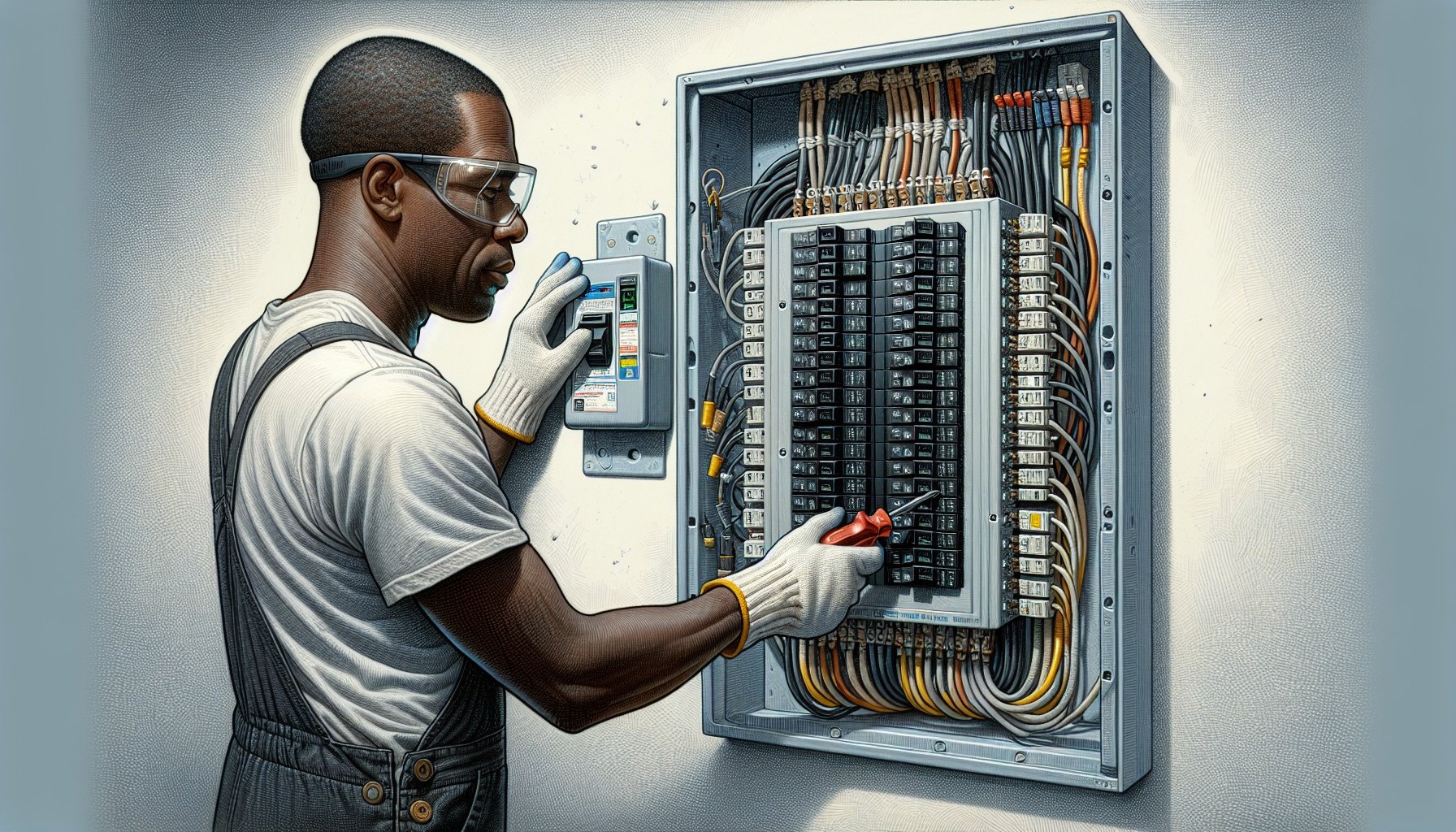
Quick Insight: Installing a whole-house surge protector requires turning off main power and connecting it to the service panel, a process that typically takes licensed electricians 1-2 hours.
Source: Popular Mechanics
Shutting off power safely and preparing tools, PPE, and mounting location
Shutting off power safely always starts at the main breaker, not individual branch circuits. The main disconnect is switched OFF, then voltage is verified with a non-contact tester on bus bars and lugs before any cover screws are touched. Lockout/tagout devices or a clearly marked panel label help prevent someone from flipping the breaker back on during work. Basic PPE includes safety glasses, insulated gloves rated for the panel’s voltage, long sleeves, and sturdy shoes, especially in damp Central Louisiana garages or carports. Tools are laid out in reach: an insulated screwdriver set, torque screwdriver, wire stripper, side cutters, drill with appropriate bits, and a label maker. A flat, solid surface near the panel is chosen for the surge protector, leaving clearance for heat dissipation and a short, straight path for the conductors into the panel.
Worth Noting: The global surge protection devices market is projected to grow from USD 2.5 billion in 2024 to USD 3.8 billion by 2031, driven by rising demand for electrical safety in residential installations.
Source: QY Research
Mounting the surge protector enclosure and routing conductors with minimal lead length
Mounting the surge protector enclosure starts with aligning it so the knockout closest to the leads faces the main electrical panel. A short, rigid path keeps surge currents from “seeing” extra resistance or inductance. Most enclosures mount with two to four screws into studs, plywood, or masonry anchors; fasteners are tightened snugly so the box does not shift when conduit or fittings are attached. A short length of listed flexible conduit or a close-coupled nipple is then installed between the enclosure and the panel, with bushings to protect insulation. Conductors are routed through the nearest available knockout straight toward the main breaker or bus connection, avoiding loops, sharp bends, and excess length so surge energy is carried away as quickly and cleanly as possible.
Keep in Mind: The National Electrical Code in 2023 updated requirements to mandate surge protection devices for dwelling units, enhancing whole-house surge protector installations to safeguard electrical systems.
Source: DITEK Surge Protection
Connecting the surge protector to a dedicated breaker and neutral/ground bars
With the conductors routed, the surge protector connects to a dedicated two‑pole breaker sized per the manufacturer’s instructions, often 20–50 amps. Hot leads land on that breaker, matching colors to the service legs and tightening lugs to the specified torque. Positioning this breaker near the main disconnect keeps connections short and improves surge response. The neutral lead terminates on the neutral bar serving the service, never on an isolated subpanel bar. The ground lead lands on the main equipment grounding bar bonded to the service. Neutral and ground conductors stay straight and as short as practical, separated from high‑current feeders where possible, so surge energy flows cleanly back to the service bonding point and earth system.
Verifying Operation, Safety Checks, and Long-Term Maintenance
Installing a whole-house surge protector involves more than landing wires and tightening lugs; the real protection starts once power is restored and performance is verified. After planning around storm patterns and coordinating shutoff Windows, attention shifts to confirming that indicator lights, status LEDs, and protective modules are functioning as designed. Proper safety checks help catch loose connections, overheating, or miswired breakers before they become hazards. Long-term reliability then depends on simple routines like periodic visual inspections, logging major storm events, and knowing when replacement is needed after a serious surge. These steps shape the core practices for verification, safety, and ongoing maintenance.
Keep in Mind: Whole-house surge protectors integrate with smart home systems in 2025 models, allowing remote monitoring and automatic notifications for surge events via mobile apps.
Source: The New York Times Wirecutter
Testing indicator lights, confirming proper grounding, and restoring power
Testing begins at the surge protector’s indicator lights. Most units use green lights to show active protection and red or dark lights to signal a failed module. After tightening all terminations, the breaker feeding the device stays off while panel covers are reinstalled, then the main breaker is turned on, followed by the surge protector breaker. Indicator lamps are checked again to confirm full line voltage and proper operation. Grounding gets verified with a multimeter or approved tester, confirming low resistance between the surge protector ground, the neutral bar, and the grounding electrode conductor. Once readings look solid and indicators show protection status, branch breakers are restored in stages so sensitive electronics, HVAC systems, and major appliances return to service without sudden heavy loading.
Quick Insight: In 2024, the North American surge arresters market reached USD 350 million, with whole-house protectors installed at the main electrical panel to cover all home circuits.
Source: GlobeNewswire
Labeling the surge protection breaker and documenting installation details
Labeling the surge protection breaker and documenting installation details keeps future service work simple and safe. The surge protector breaker is clearly marked on the panel directory, such as “Whole-House Surge Protector – 2-Pole 30A,” and matched to the unit’s location inside or beside the panel. A small label near the device can state the required indicator light color for normal operation and the steps for resetting the breaker after a surge event. Installation notes should include the date of installation, manufacturer, model number, breaker size, wiring method, and grounding connection points. These details are stored near the panel and on any maintenance log so inspections, warranty claims, and future upgrades stay organized and code-compliant.

Scheduling periodic inspections, replacing failed devices, and planning for future electrical upgrades
Scheduling periodic inspections follows the same mindset as labeling and documenting the system. A visual check of the surge protector and its breaker at least once or twice a year catches tripped breakers, damaged wiring, or changed indicator lights before major storms or peak utility loads. After any big lightning event, a quick inspection confirms the device still shows normal protection status. Failed devices are replaced promptly with the same or higher-rated model, matching the breaker size and wiring layout recorded in the installation notes. Planning for future electrical upgrades includes leaving panel space and capacity for items like EV chargers, solar inverters, hot tubs, and shop equipment so the surge protection system grows with the home’s electrical needs.
Conclusion
Installing a whole-house surge protector involves mounting the device near the electrical panel and connecting it to the main service for complete, behind-the-scenes defense against voltage spikes. Planning the layout, shutting off power safely, and opening the panel without disturbing existing wiring set the stage for a clean, code-compliant job. Choosing the right knockout, keeping conductor leads short, routing and dressing wires neatly, and torqueing lugs to manufacturer specifications create a solid, professional installation that supports long-term safety.
With the right protection in place, every circuit in the home gains a powerful shield against sudden surges. Now is a great time to prioritize electrical safety and invest in whole-house surge protection for a safer, more reliable home.
Frequently Asked Questions
- What does a whole-house surge protector actually do, and why is it important in storm-prone areas like Central Louisiana?
- A whole-house surge protector blocks or redirects excess voltage before it spreads through a home’s electrical system. When a surge hits—from lightning, power flickers, or utility switching—the device sends the extra energy safely to ground instead of letting it burn through wiring, outlets, and plugged-in devices.
Central Louisiana deals with frequent lightning, heavy storms, and sudden power drops and spikes. Those conditions create constant stress on appliances and electronics. A whole-house surge protector helps:
– Protect major systems like HVAC units, refrigerators, ovens, and water heaters
– Reduce the risk of damage from lightning-induced surges
– Cut down on nuisance failures and early burnout of electronics
– Add an extra layer of safety on top of point-of-use power stripsIt works like a shield at the electrical service panel, guarding the entire home at once instead of only protecting single outlets or individual devices.
- How is a whole-house surge protector installed at the main electrical panel?
- Installation centers around the main electrical service panel, where power from the utility enters the home. Licensed electricians follow these basic steps:
1. Turn off main power
Power to the panel is shut off at the main breaker to create a safer work environment.2. Choose the mounting location
The surge protector is mounted either inside the panel or directly beside it, depending on the model and panel layout. The goal is to keep the wire runs as short and straight as possible.3. Connect to a dedicated breaker
Most devices require a dedicated two-pole breaker sized according to manufacturer instructions (commonly 15–50 amps). Wires from the surge protector connect to this breaker and to the neutral/ground bars as directed.4. Secure grounding
A solid, low-resistance ground connection is critical. Electricians verify that the panel’s grounding system meets code and that all surge protector ground connections are tight and correct.5. Restore power and test
After double-checking all wiring, the main breaker is turned back on. The surge protector’s indicator lights are checked to confirm proper operation.Work inside an electrical panel carries shock and arc-flash risk, so most homeowners in Central Louisiana rely on a licensed electrician rather than attempting this as a DIY project.
- Does a whole-house surge protector stop all lightning damage?
- A whole-house surge protector offers strong protection but does not create a perfect shield against every lightning event. Here is what it does and does not do:
Helps with:
– Indirect lightning strikes that send surges through the power grid
– Surges traveling along utility lines from nearby strikes
– Spikes caused when power returns after an outage or flickerHas limits with:
– Direct lightning strikes to the home, service mast, or nearby trees/structures
– Extremely large surges that exceed the device’s ratingFor stronger protection in storm-heavy regions like Central Louisiana:
– Use a whole-house surge protector at the main panel
– Add point-of-use surge protector strips for sensitive electronics (TVs, computers, gaming systems)
– Maintain proper grounding and bonding of the electrical systemThe combination of whole-house protection, plug-in protectors, and good grounding greatly reduces the chance of serious damage, even in areas where lightning is common.
- What should be considered when choosing a whole-house surge protector for a home in Central Louisiana?
- Several key features affect performance and reliability:
1. UL 1449 listing
Look for surge protectors tested and listed to UL 1449 (latest edition). This standard covers safety and performance.2. Surge current rating (kA)
A higher surge current rating, measured in kiloamps (kA), means the device can handle larger spikes. Many residential units fall between 20 kA and 80 kA per mode, with higher ratings offering more robust protection.3. Voltage protection rating (VPR)
This rating shows how high the voltage can rise before the device clamps it down. Lower VPR generally means better protection for electronics.4. Type of device
– Type 1 devices can be installed on the line side of the main breaker or on the load side.
– Type 2 devices are installed on the load side of the service disconnect (inside or next to the panel).
Most homes use Type 2 protectors.5. Indicator lights and alarms
Visual indicators (and sometimes audible alerts) show whether protection is active or if the device needs replacement.6. Compatibility with the panel
Some surge protectors are brand-matched to specific panel manufacturers, while others are universal. Electricians often prefer manufacturer-approved models for cleaner installation and warranty compatibility.Storm-heavy regions like Central Louisiana benefit from robust ratings, solid grounding, and a device that can be easily monitored.
- Can a whole-house surge protector be installed without shutting off power from the utility?
- Safe installation requires de-energizing the working area. Typically, the main breaker in the panel is turned off, which cuts power to the home’s circuits but not necessarily to the service lines feeding the panel.
Working on the line side of the service (between the meter and main breaker) remains dangerous because those conductors stay live unless the utility disconnects at the meter or pole. For that reason:
– Licensed electricians usually complete the work on the load side of the main breaker, where power can be switched off.
– If a Type 1 device or meter-based device requires work near live service conductors, coordination with the local utility may be needed to safely disconnect power.No one should attempt to install a surge protector with energized components exposed. The risk of shock, burns, or arc flash is significant, especially in humid, stormy conditions common across Central Louisiana.
- How long does a whole-house surge protector last, and how can its condition be checked?
- Whole-house surge protectors wear down over time as they absorb surges. Lifespan depends on:
– Number and size of surges the device has handled
– Quality and rating of the unit
– Quality of the grounding systemSome units last many years with only small surges, while others may need replacement sooner in regions with frequent lightning and unstable power, such as Central Louisiana.
To check condition:
– Use the built-in indicator lights (usually green for protected, red or off for failed).
– Inspect visually for damage like burn marks, melted plastic, or a tripped internal disconnect.If indicators show loss of protection or if the unit is visibly damaged, it must be replaced. Some homeowners also opt to replace surge protectors after a known major lightning event, especially if sensitive electronics acted strangely afterward.
Electricians can test related aspects of the system—like grounding resistance and panel connections—to ensure the surge protector is working under the best possible conditions.
- Is a whole-house surge protector still needed if power strips with surge protection are already in use?
- Whole-house surge protection and plug-in surge strips serve different roles and work best as a team.
Whole-house surge protector:
– Mounts at the main electrical panel
– Protects all branch circuits and large equipment (HVAC, water heater, built-in appliances)
– Reduces big, fast surges coming in from outside the homePlug-in surge strips:
– Protect individual devices at a specific outlet
– Help filter smaller spikes and electrical noise
– Add extra protection for sensitive electronics like TVs, routers, computers, and home theater systemsEven with multiple surge strips, unprotected equipment remains at risk, especially larger 240-volt loads that cannot plug into standard strips. A whole-house surge protector lowers the surge level before it reaches those strips and the rest of the system.
Homes in storm-prone areas such as Central Louisiana benefit most from a layered approach: whole-house protection at the panel backed up by quality plug-in surge protectors for high-value electronics.