
Reclaimed Wood Sourcing: Local Barns and Mills for Authentic Projects

Reclaimed wood sourcing in Central Louisiana turns weathered barns, aging sheds, and historic mills into a treasure hunt for character-filled lumber. Sun-faded boards that once framed haylofts near Alexandria, beams that saw generations of work along the Red River, and slabs tucked away in small-town mills across Rapides and Grant Parishes all hold stories worth preserving. Each nail hole, saw mark, and patina-rich surface adds warmth and authenticity to flooring, wall paneling, custom furniture, and statement pieces that feel truly rooted in local history.
Quick Navigation:
Identifying Quality Reclaimed Wood Sources in Central Louisiana | Building Relationships with Local Barn Owners and Mills | Assessing, Preparing, and Transporting Reclaimed Wood | Frequently Asked Questions
Sourcing reclaimed wood involves identifying local barns, old factories, or mills that have surplus or salvaged timber available for purchase. This process requires assessing the wood’s condition, history, and suitability for specific projects like flooring or paneling. By connecting with regional suppliers, homeowners can ensure authenticity while supporting sustainable practices and potentially reducing transportation costs. In Central Louisiana, that means learning how to spot solid, salvageable lumber in rural landscapes, recognizing valuable species like pine, oak, and cypress, and understanding the difference between decorative boards and structural-grade beams.
Success with reclaimed materials also depends on strong relationships and smart planning. Respectful conversations with landowners, clear agreements with local mill operators, and attention to legal access keep every salvage effort above board. Careful inspection, preparation, and transport help protect both the reclaimed wood and anyone working with it. When all these pieces come together, reclaimed wood projects do more than recycle old lumber; they capture the spirit of Central Louisiana and bring it forward into fresh, long-lasting builds.
Identifying Quality Reclaimed Wood Sources in Central Louisiana
Sourcing reclaimed wood in Central Louisiana often starts with knowing which local spots consistently turn up solid, reliable stock. Beyond old barns and mills, many quality boards come through small demolition crews, estate cleanouts, and long-running family lumber yards around Alexandria, pineville, and upriver toward Colfax. Experienced salvage operators in these areas usually keep mental notes on which structures were built with dense longleaf pine or tight‑grain cypress. Checking whether wood was kept under cover, away from river flood zones, and stored off the ground helps separate decorative pieces from lumber ready for serious construction, setting up a clear process for finding trustworthy sources.
Expert Insight: Reclaimed lumber sourced from old barns and mills often originates from longleaf pine used in 19th-century industrial buildings, providing durable wood with historical patina for modern construction projects.
Source: Wikipedia
Spotting promising barns, sheds, and farm structures for safe, salvageable lumber
Promising barns, sheds, and farm structures in Central Louisiana usually show age without major structural failure. Rooflines in Rapides and Grant Parishes that sag only slightly, with metal panels mostly intact, often protect solid framing inside. Good candidates often sit on higher ground away from the Red River floodplain, reducing long-term moisture damage. Corner posts and sill beams made from old pine or cypress that remain straight, with only surface checking, suggest strong salvage potential. Open-sided hay sheds near Alexandria or old equipment shelters along rural highways often hide long, clear spans of framing lumber with few knots. Limited termite trails, dry rot confined to ground-contact areas, and minimal twisting in joists all point toward safe, reclaimable wood ready for careful dismantling.
Quick Insight: Sourcing reclaimed wood from local barns and mills reduces carbon emissions by up to 50% compared to virgin timber, supporting environmental conservation through reuse of existing resources.
Source: BioResources
Locating active and historic mills that offer reclaimed boards, beams, and slabs
Locating active and historic mills that offer reclaimed boards, beams, and slabs starts with tracking down older sawmill sites along rivers and rail lines in Central Louisiana. Many family mills near Alexandria, Tioga, and Pineville now mix custom milling with reclaim work, pulling pine, cypress, and oak from tear‑downs across Rapides and Grant Parishes. Some small outfits quietly advertise “resawn” or “antique” lumber on roadside signs along Highway 28 and Highway 165. Historic mill properties around old timber towns like Glenmora or Boyce sometimes store stacks of weathered timbers from shut‑down plants, cotton gins, and depots. Asking about kiln‑dried, metal‑detected slabs or surfaced beams helps reveal which operations can prepare reclaimed stock for ready‑to‑install projects.
Evaluating wood species, age, and condition for projects like flooring, paneling, and furniture
Evaluating wood species, age, and condition for projects like flooring, paneling, and furniture starts with recognizing what moved through Central Louisiana barns and mills. Heart pine and longleaf pine from older Rapides and Avoyelles farm buildings work well for high‑traffic flooring because dense early‑growth rings handle wear and refinishing. Lighter softwoods from newer sheds fit better as wall paneling or ceiling boards. Oak, cypress, and pecan beams pulled from older mills near the Red River often shine as furniture stock, table slabs, and stair parts. Checking for tight grain, minimal soft rot, limited insect damage, and straightness matters more than perfect color. Boards that plane smooth with solid edges, even after trimming checks and nail holes, usually adapt best to modern projects.
Building Relationships with Local Barn Owners and Mills
Sourcing reclaimed wood from local barns and mills becomes far more productive when barn owners, yard managers, and mill operators see a salvager as a dependable partner rather than a one-time buyer. Consistent communication, fair offers, and respect for schedules often lead to early calls when a building is coming down or a fresh batch of salvaged boards is ready. Many small family farms and independent mills around Central Louisiana still rely on word-of-mouth, so a solid reputation can open doors that online listings never show. With the right relationships, access improves, pricing stabilizes, and long-term supply becomes much easier to plan.
Approaching landowners respectfully and discussing fair purchase or trade arrangements
Approaching landowners starts with learning a bit about the property’s history and being clear about goals. Many barn owners around Central Louisiana have deep family ties to their buildings, so casual small talk about the farm, past harvests, or old storm stories helps build trust. A simple folder with photos of past reclaimed wood projects and a rough idea of needed board footage shows seriousness and respect. Fair purchase talks work best when pricing is broken down by species, condition, and effort required to pull boards, pull nails, and haul material. Some owners like trade options, such as offering cleanup, brush removal, or basic repairs in exchange for beams or siding, turning a simple transaction into a long-term partnership.
Did you know? The global reclaimed lumber market reached USD 57.28 billion in 2024 and is projected to grow to USD 83.53 billion by 2034, driven by demand for sustainable materials from local sources like barns.
Source: Precedence Research
Working with mill operators on custom cutting, de-nailing, and kiln-drying services
Working closely with mill operators turns rough reclaimed stock into reliable, build-ready lumber. Many mills around Central Louisiana offer custom cutting, so beams from old barns can be sawn into matched flooring, shiplap, or mantel pieces sized for specific plans. De-nailing services protect blades and help reveal hidden issues like checks or rot before installation. Some shops use metal detectors and hand tools to pull every spike and fence staple from longleaf pine or cypress. Kiln-drying adds another layer of value, driving out moisture, pests, and lingering barn odors while stabilizing boards for tight joinery. Regular business, clear board-foot counts, and consistent species requests encourage mills to set aside choice reclaimed runs for repeat partners.
Good to Know: Advanced kiln-drying technology processes reclaimed wood from mills to remove contaminants while preserving natural characteristics, enabling safe use in high-quality flooring and millwork applications.
Source: Old World Timber
Verifying legal ownership, access rights, and documentation for reclaimed materials
Verifying legal ownership starts long before the first board is loaded. Barn owners, timber heirs, or land companies in Central Louisiana may all claim rights to the same structure, so clear documentation matters. A simple written agreement listing the property address, structure description, materials included, and agreed price protects both sides. Asking to see a deed, tax record, or lease helps confirm that the seller has authority to part with the barn, beams, or siding. Access rights also deserve attention, especially when logging roads, pipeline easements, or hunting leases cross the route to the site. Photos of the structure, dated receipts, and basic bills of sale create a traceable paper trail that mills, inspectors, and future clients can trust.
Assessing, Preparing, and Transporting Reclaimed Wood
Once promising beams or boards are located, the next step shifts from simple sourcing to hands-on decision-making. Moisture levels, hidden fasteners, and signs of past insect activity start to matter just as much as species or age. Surface grime, peeling paint, or light checking often clean up well, but deep rot, active termites, or severe warping can rule pieces out for structural use. After sorting what is worth saving, reclaimed wood usually needs careful cleaning, denailing, and stacking for acclimation before any project begins, followed by smart loading and transport methods that protect every hard-earned board along the way.
Pro Tip: Reclaimed wood from barns features unique patina and grain patterns that enhance rustic aesthetics in furniture and interiors, reflecting cultural appreciation for heritage craftsmanship in contemporary design.
Source: Wikipedia
Inspecting for rot, insect damage, metal fasteners, and structural soundness
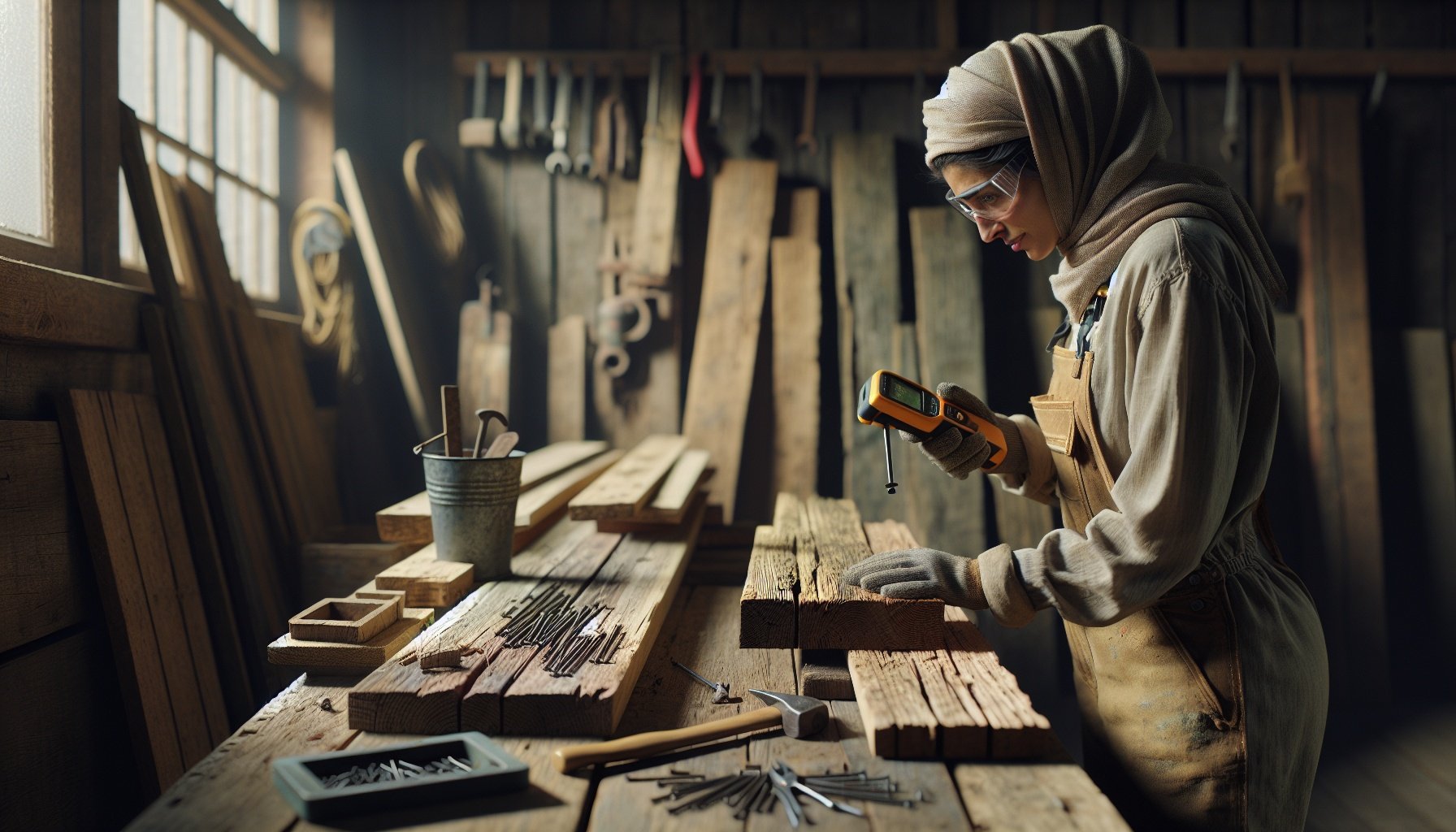
Careful inspection turns a promising pile of reclaimed boards into dependable material. Rot often shows as soft, spongy spots, dark stains, or crumbling edges, especially near old roof leaks or ground contact. Insect damage appears as pinholes, powdery dust, or maze-like tunnels beneath the surface; barn beams from humid regions like Central Louisiana need extra attention here. Every board should be scanned for metal fasteners—nails, screws, fence staples, and hidden cut-off bolts—with a magnet and metal detector, since leftover hardware can ruin saw blades and planers. Structural soundness comes next: check for deep checking, splits around knots, twist, and severe bowing. Sound, solid boards can be safely milled for flooring, paneling, or framing in authentic reclaimed projects.
Sorting and grading lumber for appearance, strength, and intended end use
Once damaged pieces are set aside, reclaimed boards can be sorted into clear groups based on look, strength, and job. Boards with tight, straight grain and minimal knots work best for structural use, such as stair stringers or door framing. Heavier timbers with firm, sound edges can be graded for beams, porch posts, or mantel supports. Pieces with knots, nail scars, and color variation become ideal for accent walls, rustic cabinets, and farm-style tables. Highly weathered planks with saw marks or faded paint can be stacked separately for decorative trim and feature ceilings. Labeling each stack by thickness, length, and quality keeps reclaimed lumber ready for milling, helps reduce waste, and matches each board to a purpose it can handle safely and beautifully.

Expert Insight: The reclaimed lumber industry is expected to reach USD 68.2 billion globally by 2030, with economic growth fueled by rising popularity of vintage aesthetics sourced from local barns and mills.
Source: GlobeNewswire
Planning safe removal, stacking, and hauling from rural sites across Central Louisiana
Safe removal and hauling around Central Louisiana start with planning access to the site. Many barns and mills sit down gravel parish roads or low-lying fields that stay muddy after a hard rain, so heavier trailers and trucks need solid ground, clear turning space, and a safe path past fences, ponds, and ditches. Longer timbers and stacked boards should be handled with proper lifting gear, sturdy gloves, and eye protection, keeping helpers clear of pinch points and shifting loads. Stacks are built off the ground with stickers between layers to keep boards dry and stable until loading. Ratchet straps, corner blocks, and flags on overhanging pieces keep reclaimed lumber secure as it travels from rural sites back toward Alexandria, Pineville, or other Central Louisiana towns.
Conclusion
Sourcing reclaimed wood from local barns and mills starts with knowing where to look and who to talk to. Old barns, family farms, and small independent mills around Central Louisiana often hold piles of history in the form of weathered beams, siding, and decking. Careful storage practices, solid handling, and clear differences between decorative reclaimed boards and construction-ready lumber all help match the right wood to the right project. Building steady relationships with barn owners and mill operators turns one-time finds into long-term supply, especially when word-of-mouth opens doors that online listings never show. The next step is simple: start asking around locally, visit nearby yards or mills, and let the most authentic reclaimed lumber shape the next project from the ground up.
Frequently Asked Questions
- What is reclaimed wood and why is it popular for home projects in Central Louisiana?
- Reclaimed wood is lumber salvaged from old structures such as barns, sheds, warehouses, and historic mills, then cleaned, milled, and reused for new projects.
In Central Louisiana, reclaimed wood is popular because:
– It offers a unique, weathered appearance that new lumber cannot match.
– It often comes from older trees with tighter grain, giving boards more strength and character.
– It preserves pieces of local history from farm buildings and mills that helped build communities around places like Alexandria, Pineville, and the Red River corridor.
– It supports sustainability by reusing existing material instead of cutting new trees.Reclaimed beams, wall boards, and flooring from local barns and mills can give homes a warm, authentic Louisiana feel that fits right in with local country roads, bayou views, and historic downtown areas.
- Where does high‑quality reclaimed wood usually come from in Central Louisiana?
- High‑quality reclaimed wood in Central Louisiana often comes from:
– Old barns and agricultural buildings – These structures were usually built with strong pine, cypress, or oak and have decades of natural aging.
– Historic mills and warehouses – Old sawmills, cotton gins, rice mills, and warehouses near rail lines and rivers often contain dense, well‑seasoned timbers.
– Aging sheds and outbuildings – Smaller farm sheds, corn cribs, and smokehouses can still provide solid boards and beams.
– Deconstructed homes and commercial buildings – Some older houses and storefronts in small towns and historic districts use lumber that is perfect for reuse.Local crews that understand Central Louisiana’s climate and building traditions know how to identify solid, reusable wood from structures that have stood through humidity, storms, and hot summers.
- How can authentic reclaimed wood be identified and not confused with artificially aged wood?
- Authentic reclaimed wood usually shows several clear signs:
– Nail holes and hardware marks – Old square nails, bolt holes, or hardware shadows often remain.
– Weathered patina – Sun, rain, and time create a natural color variation that looks deeper than surface‑level distressing.
– Saw marks – Circular or straight saw marks from historic mills may still be visible on some faces.
– Tight grain and heavier boards – Older lumber can feel denser with tighter grain patterns.
– Variations and imperfections – Checks, knots, mineral streaks, and minor cracks tell a story of long use.Artificially aged wood may look more uniform, with repeated patterns or shallow surface distressing. Reliable suppliers working with barns and mills around Central Louisiana usually provide the history of each batch, listing where the material came from and how it was salvaged.
- What types of projects work best with reclaimed wood from barns and mills?
- Reclaimed lumber from local barns and mills fits a wide range of residential and light commercial projects, such as:
– Accent walls and ceilings – Weathered boards bring character to living rooms, kitchens, and entryways.
– Flooring – Old pine or oak can create warm, durable floors with a rustic Louisiana farmhouse feel.
– Fireplace mantels and beams – Thick reclaimed timbers make strong visual centerpieces.
– Furniture – Tables, benches, shelves, and headboards gain a custom, handcrafted look.
– Exterior features – Porch details, shutters, and decorative trim can use reclaimed boards once properly treated.
– Commercial interiors – Restaurants, coffee shops, and boutiques across Central Louisiana often use reclaimed wood to create a cozy, local vibe.Projects that celebrate knots, color variation, and natural wear tend to show reclaimed wood at its best.
- Is reclaimed barn and mill wood safe to use inside a home?
- Reclaimed barn and mill wood can be very safe indoors when handled correctly. Proper processing normally includes:
– Metal detection and removal – Nails, screws, and staples are removed to protect tools and occupants.
– Cleaning – Boards are brushed or washed to remove dirt, dust, and surface debris.
– Kiln drying or proper seasoning – This step helps control moisture, reduces the risk of warping, and can help address insects.
– Surface preparation – Sanding or light planing removes most rough or splintered surfaces while keeping the original character.
– Finishing – Safe sealers, stains, and topcoats protect the wood and make it easier to clean.Reputable Central Louisiana suppliers understand local pests, humidity, and building codes, and prepare reclaimed material so it performs well in modern homes and businesses.
- How does using reclaimed wood from local barns and mills support sustainability and the local community?
- Reclaimed wood from Central Louisiana barns and mills supports both the environment and the region’s communities:
Environmental benefits:
– Reduces demand for newly harvested lumber, helping conserve forests.
– Lowers waste by keeping old beams and boards out of landfills.
– Limits the energy needed to process new materials.Community benefits:
– Preserves the history of local farms, mills, and rural homesteads that shaped parishes across Central Louisiana.
– Provides work for local crews who carefully dismantle old structures instead of simply demolishing them.
– Keeps money circulating in nearby towns rather than sending it out of state.Homes and businesses finished with reclaimed boards, beams, and flooring carry a direct connection to the region’s past, from old rural roads near Kisatchie National Forest to fields and mill towns along the Red River.
- What should be considered before choosing reclaimed wood for a project in Central Louisiana’s climate?
- Several key points matter when planning reclaimed‑wood projects in Central Louisiana’s hot, humid climate:
– Moisture content – Lumber needs proper drying so it does not warp or cup once installed in air‑conditioned spaces.
– Wood species – Cypress and certain pines perform well in humid conditions, especially for accent walls, trim, and some exterior uses.
– Location of use – Covered outdoor spaces, like porches and carports, demand extra care with finishes and fasteners to handle moisture and temperature swings.
– Finishes and sealers – Quality sealers help protect against humidity, spills, and everyday wear while highlighting natural grain.
– Movement and gaps – Reclaimed boards may expand and contract slightly; experienced installers plan for this with proper spacing and fastening.By working with suppliers and builders who understand Central Louisiana weather patterns, reclaimed wood can stay stable, beautiful, and long‑lasting from Alexandria to the smaller surrounding communities.