
U.S. Construction Faces 456,000 Worker Gap as AI Drives Demand
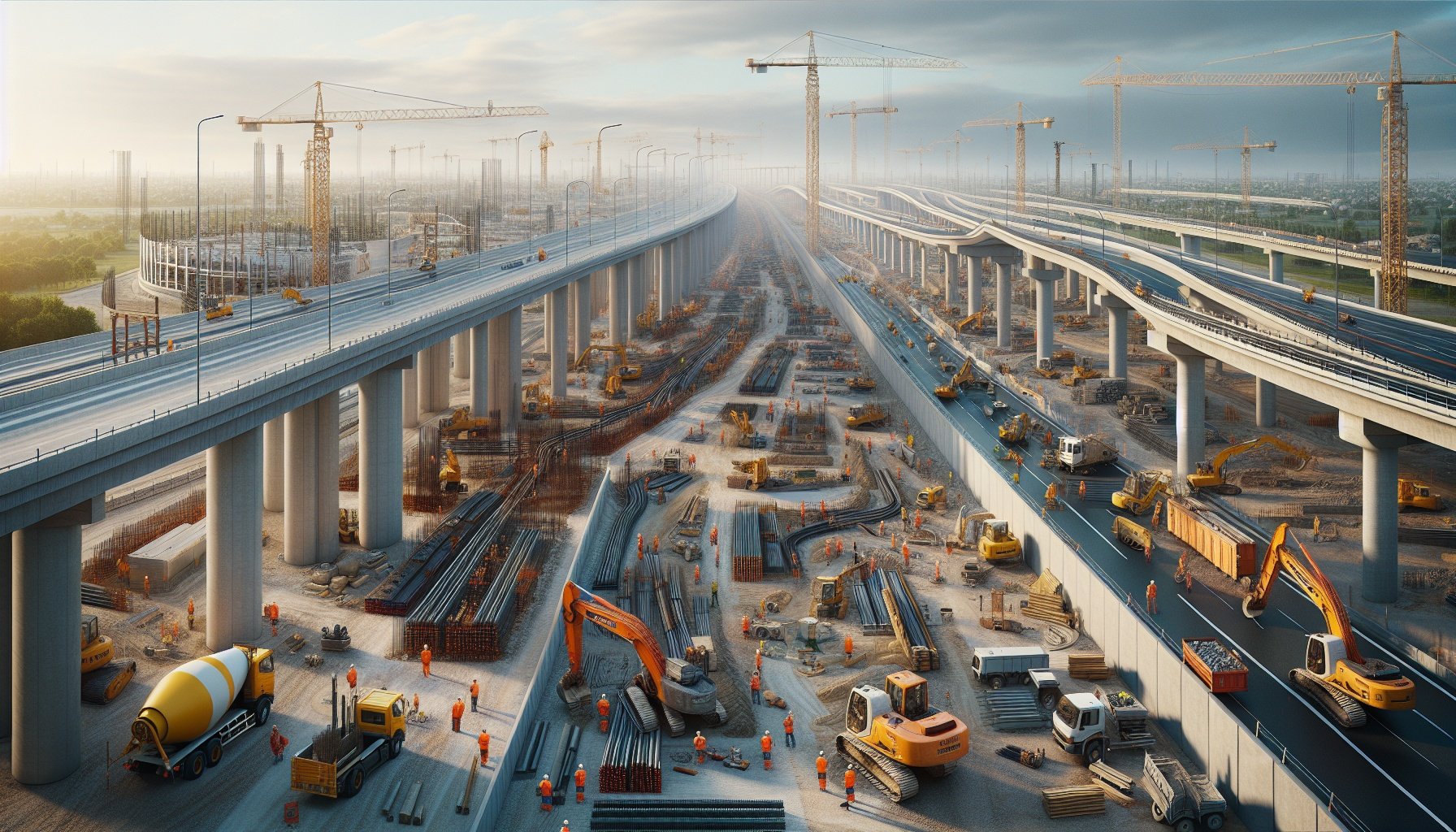
Project bids stacking up, start dates slipping, and not enough skilled hands to go around now define construction from Central Louisiana to major coastal metros. Contractors across commercial, industrial, and residential work face crews stretched thin, older tradespeople eyeing retirement, and a shrinking pipeline of new apprentices ready to step in. The recent The U.S. construction industry will need half a million new workers next year – Fortune (source) highlights that The U.S. construction industry is projected to need 456,000 new workers in 2027, a 30.7% jump from 2026, driven mostly by retirements rather than fresh demand. As the gap grows, every delayed inspection, rescheduled pour, and pushed-back move-in date becomes another reminder that the labor shortage is no longer a future problem—it is already on the jobsite.
Quick Navigation:
Rising Demand: Why U.S. Construction Needs 456,000 New Workers by 2027 | AI, Data Centers, and the New Building Boom | Hiring Challenges and Pathways to Grow the Workforce | Frequently Asked Questions
At the same time, a historic AI and data center building boom is pulling experienced workers toward billion‑dollar campuses, fiber backbones, and power upgrades that never seem to slow down. Tech giants planning to invest $700 billion for data centers and related infrastructure need electricians, HVAC techs, and concrete pros just as badly as hospitals, schools, and homebuilders do, putting even more pressure on wages and schedules. Nearly 92% of construction firms now struggle to hire qualified people, especially in the skilled trades, which forces tough choices about which projects move first and which sit on the back burner. From a custom home in Pineville to a commercial build in Alexandria, every crew gap ripples into higher costs, tighter margins, and longer timelines.
This crunch hits families waiting on new homes, business owners banking on expansion, and community projects that keep getting bumped down the calendar. Long‑time craftworkers taking their know‑how into retirement leave fewer mentors on the job to train the next generation, and many young people still see construction as a last‑choice career instead of a high‑skill, high‑impact path. As AI infrastructure ramps up and traditional construction demand holds steady, the pressure only builds for smarter hiring, better training, and stronger local pipelines into the trades. The stage is set for a fight to grow the workforce fast enough to keep America—and Central Louisiana—building on time and on budget.
Rising Demand: Why U.S. Construction Needs 456,000 New Workers by 2027
Those headline numbers only tell part of the story. Beneath the 456,000‑worker gap sits a fast‑tightening mix of federal infrastructure funding, reshored manufacturing, and record-breaking housing demand that stacks even more work on a shrinking labor pool. Public projects tied to highways, bridges, and broadband now compete with AI‑driven data centers for many of the same electricians, operators, and concrete crews. Smaller markets, from Central Louisiana to rural counties, feel the squeeze as large national contractors pull talent toward mega‑projects. Understanding exactly where this demand is rising—and which trades are under the most pressure—sets the stage for a closer look at 2027 needs.
Worth Noting: U.S. data center construction outlays surged 32 percent in the first 10 months of 2025 year-over-year, propelled by AI hyperscalers’ infrastructure investments.
Source: Fortune
ABC’s 2027 forecast: Breaking down the 456,000-worker gap across commercial, industrial, and residential work
Associated Builders and Contractors estimates that close to 60% of the 456,000‑worker gap will hit commercial construction, led by AI‑driven projects like data centers, tech campuses, medical office space, and logistics hubs. Industrial work—manufacturing plants, battery and chip facilities, distribution and energy projects—accounts for roughly another quarter of the need, as reshoring and clean‑energy incentives fuel new megaprojects from Ohio to Texas. The remaining slice falls on residential and light commercial work, where multifamily housing, build‑to‑rent neighborhoods, and senior living communities are expanding. Electricians, HVAC techs, equipment operators, and concrete crews see the sharpest demand across all three segments, forcing contractors to move crews between sectors and driving up wage offers just to keep projects staffed through 2027.
Retirement wave: Aging tradespeople, shrinking apprentice pipelines, and the loss of decades of jobsite know-how
Behind the 456,000‑worker gap sits a demographic cliff. Nearly one in four U.S. construction workers is now over 55, and retirements are accelerating just as AI‑related projects spike. Electricians, pipefitters, and heavy equipment operators who started in the 1980s and 1990s are timing exits around pension milestones, taking decades of jobsite judgment with them. At the same time, apprentice pipelines are thinner: high schools have cut shop programs, parents push four‑year degrees, and many young workers gravitate to climate‑controlled warehouse or tech support jobs instead of muddy sites. Contractors report apprenticeships going unfilled even with higher starting pay, leaving fewer mid‑career leaders ready to run complex data center builds, large‑scale concrete pours, and multifamily projects safely and on schedule.
Did you know? Every $1 billion increase in inflation-adjusted U.S. construction spending generates demand for approximately 3,450 new jobs, based on Census Bureau and BLS payroll data.
Central Louisiana snapshot: How the national shortage shows up on local job sites, from Alexandria to Pineville
On Cenla job sites, the 456,000‑worker national gap feels very real. General contractors in Alexandria juggle hospital upgrades along MacArthur Drive, school renovations, and new subdivisions off Versailles Boulevard, all while competing for the same limited pool of electricians, framers, and HVAC techs. Across the river in Pineville, small crews building metal shops, barndominiums, and lake houses around Kincaid and Buhlow Lake often run short on concrete finishers and welders, stretching a “three‑week job” into six. When Fort Johnson projects ramp up or a new data‑heavy medical or manufacturing facility lands along I‑49, local wages spike, subcontractors pull crews off smaller jobs, and schedules slip, pushing housing costs and remodel budgets higher across Central Louisiana.
AI, Data Centers, and the New Building Boom
As retirements accelerate and traditional projects fight for crews, a new force is quietly rewriting demand forecasts: AI itself. Each chatbot, cloud platform, and streaming service runs on racks of servers inside massive data centers, and those high‑powered buildings do not resemble a typical warehouse job. Hyper‑scale campuses need heavy electrical work, specialized cooling systems, hardened structures, and round‑the‑clock construction schedules, pulling the most experienced electricians, concrete crews, and steel teams off other projects. From rural sites near cheap power to tech corridors outside major metros, this AI‑driven building boom is reshaping where work happens, who gets hired, and what kinds of skills pay best.
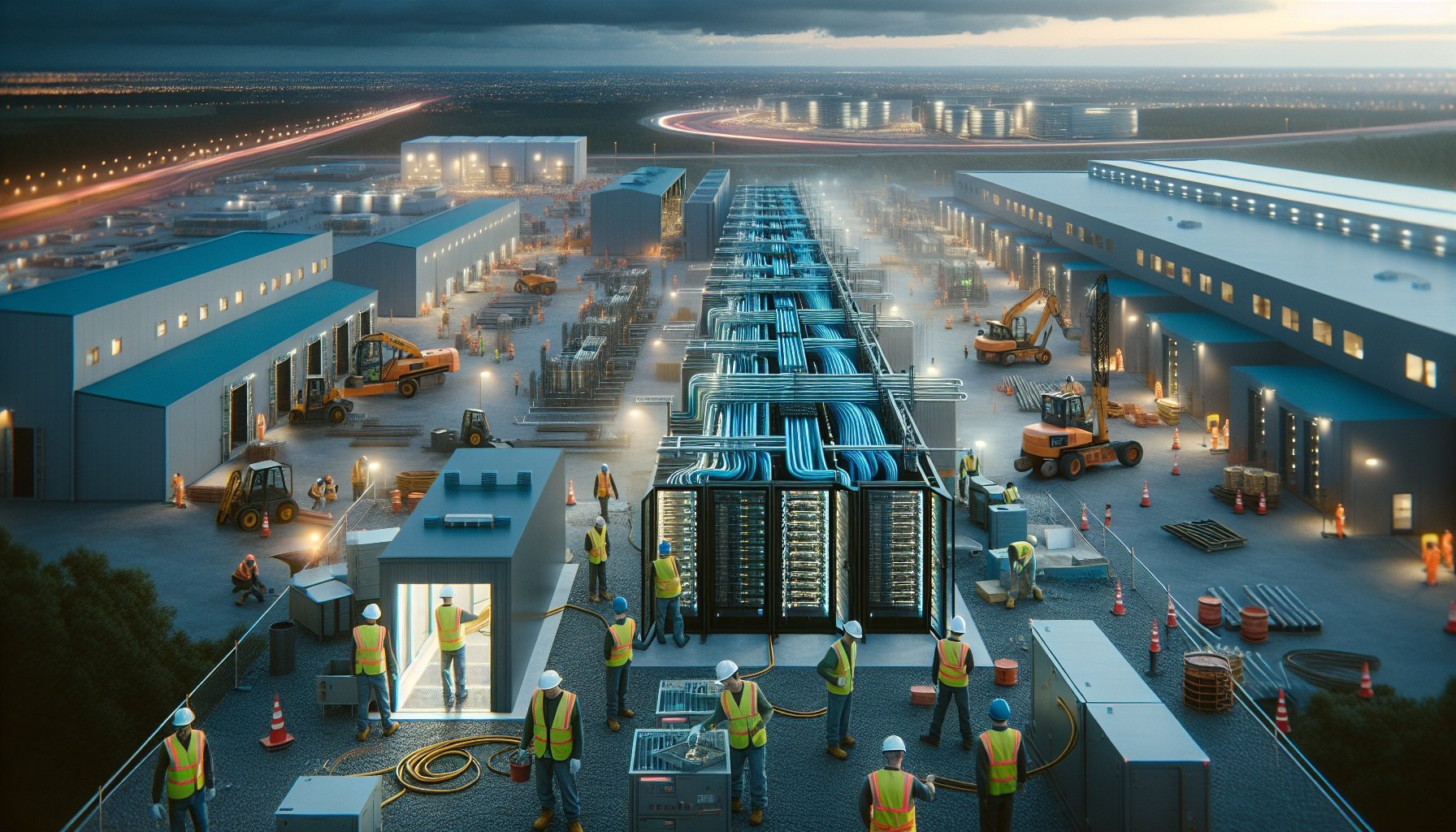
Pro Tip: U.S. nonresidential specialty trade contractors added 95,000 net new jobs since August 2024, supporting megaprojects in semiconductors and data centers.
Source: Fortune
$700 billion AI investment: How data centers, fiber networks, and power upgrades are reshaping construction demand
Major tech firms are steering more than $700 billion into AI infrastructure, and that money is flowing straight into construction backlogs. Each hyperscale data center can span over a million square feet and demand miles of underground conduit, precision concrete work, advanced cooling systems, and secure shell buildings. Those facilities trigger parallel construction waves: new fiber backbones to move AI data, substation expansions, high-voltage transmission lines, and on-site solar, gas peakers, or battery storage to keep servers running. Entire regional grids are being upgraded around fast-growing hubs in places like Northern Virginia, Central Texas, and the Southeast. That chain reaction pushes demand for linemen, utility crews, telecom installers, and heavy civil teams far beyond what traditional commercial or residential building ever required.
Worth Noting: The U.S. construction industry must attract 456,000 net new workers in 2027 to meet demand, marking a 30.7 percent rise from 349,000 needed in 2026.
Skilled trades in the AI era: Electricians, HVAC techs, and concrete crews as front-line players in high-tech builds
Electricians, HVAC specialists, and concrete crews are becoming the core roster for AI-era construction, especially on hyperscale data center sites. Electricians are wiring double- and triple-redundant feeds, installing miles of bus duct, and integrating backup generators and battery systems built to keep racks live through storms and grid failures. HVAC and mechanical techs are shifting from simple rooftop units to advanced cooling—close-coupled in-row systems, chilled-water loops, and emerging liquid-cooling setups that keep dense AI servers from overheating. Concrete teams are no longer just pouring slabs; they are building vibration-controlled pads, deep foundations for massive battery farms, and hardened shells designed for both security and heat management, turning traditional trades into high-tech specialists on every major AI job
Pro Tip: Nearly one-fifth of U.S. electricians are over 55 years old, fueling increased recruitment for precision wiring roles in expanding data center projects.
Cost and schedule pressures: Labor scarcity driving higher bids, longer timelines, and tighter margins for Louisiana contractors
Labor shortages are turning AI-era projects into bidding battles across Louisiana, pushing costs higher before work even starts. With data center developers able to pay premium rates, commercial and residential contractors in places like Alexandria, Baton Rouge, and Shreveport often get priced out of key trades. Bid lists shrink as subcontractors book months in advance, so proposals arrive padded for overtime, per diems, and travel just to staff a crew. Schedules stretch as well; what used to be a 10-month tilt-wall job can slide to 14 months when electricians or HVAC techs are double-booked between a hospital upgrade and a hyperscale server farm. Margins tighten as fixed-price contracts collide with rising wage demands, material escalation, and owner pressure to hit hard AI-driven go-live dates.
Hiring Challenges and Pathways to Grow the Workforce
Those pressures on schedules and budgets now collide with a deeper challenge: actually finding people to put on the jobsite. Associated Builders and Contractors report that more than 9 out of 10 construction firms struggle to hire qualified workers, even as older craft professionals retire in waves and take decades of experience with them. Electricians, heavy-equipment operators, and concrete finishers are not only in short supply, they also require years of training to replace. This widening skills gap is forcing contractors to rethink recruiting, training, and career pathways to grow a sustainable workforce for both AI-era projects and everyday home building.
Worth Noting: Electrician employment in the U.S. construction sector is forecasted to grow 9 percent from 2024 to 2034, outpacing the national average and opening skilled career paths.
Source: U.S. Bureau of Labor Statistics
Why 92% of firms struggle to hire: Pay competition, training gaps, and perceptions about construction careers
Contractors competing for the same limited talent now face a three‑way squeeze. On pay, tech‑backed projects are offering overtime, per‑diem housing, and bonuses that small and midsize builders rarely match, especially on schools, road work, or single‑family homes. At the same time, formal training pipelines are thin. High school shop classes, union apprenticeships, and contractor‑run programs have not expanded at the pace of AI‑driven demand, so many applicants arrive without basic skills in reading plans, using digital layout tools, or handling advanced electrical systems in data centers. Perception adds another barrier: parents and students still push four‑year degrees, often viewing construction as low‑tech, unstable, or unsafe, even as wages for experienced tradespeople quietly rival many office careers.
Opportunities for local talent: Trade schools, union and non-union paths, and on-the-job training in Central Louisiana
Central Louisiana sits at a key crossroads for growing construction talent, with multiple entry ramps instead of a single narrow pipeline. Trade programs at places like Central Louisiana Technical Community College, LSU Alexandria partnerships, and high school CTE academies are expanding welding, electrical, HVAC, and carpentry tracks that align with AI‑ready job sites and industrial projects along the Red River. Union apprenticeship programs offer structured, paid training with healthcare and retirement, while non‑union contractors often run fast‑track helper‑to‑craftsman ladders tailored to local residential and light commercial work from Alexandria to pineville and Fort Johnson. Many Cenla firms pair classroom basics with on‑the‑job training, letting new hires learn layout tablets, robotic total stations, and prefab workflows while earning steady pay on active projects
Impact on home building and remodeling: What the worker gap means for custom homes, additions, and renovation timelines
Shrinking crews and rising demand for AI‑driven projects ripple straight into neighborhoods, where custom homes, additions, and renovations now face longer waits. When data center and industrial contractors can pay more, residential builders lose key framers, electricians, and HVAC techs, stretching a custom home schedule from 8–10 months to a year or more. kitchen and bath remodels that once slotted in within 6–8 weeks often push closer to 3–4 months as trades stack jobs and bounce between sites. Smaller markets like Central Louisiana feel this sharply when one large industrial project pulls dozens of skilled workers at once, leaving fewer hands for porch additions, outdoor kitchens, and whole‑house updates, and raising the risk of schedule gaps between critical phases of work.
Conclusion
The U.S. construction industry stands at a defining moment as demand climbs and the worker gap grows. AI-powered data centers, backed by hundreds of billions in tech investment, now compete with housing, infrastructure, and commercial projects for the same limited pool of skilled trades. Contractors face rising costs and tighter schedules as labor-intensive electrical work, structural concrete, and complex mechanical systems all converge on the same projects.
Yet this pressure also opens a powerful window for growth. Strong careers in the skilled trades, modern training programs, and smarter use of technology can turn today’s shortage into tomorrow’s opportunity. With coordinated effort from contractors, educators, and communities, the 456,000-worker challenge can become the foundation for a stronger, more resilient U.S. construction workforce.
Frequently Asked Questions
- What is driving the need for 456,000 new construction workers by 2027?
- The 456,000 worker gap comes from a combination of three main forces:
- Surging demand for construction
• More data centers, warehouses, and tech facilities are being built to support artificial intelligence (AI) and cloud computing.
• Housing demand remains strong, especially in growing regions where populations are increasing.
• Public infrastructure work is ramping up, including roads, bridges, schools, and hospitals.- Retirements and an aging workforce
• Many experienced tradespeople are reaching retirement age at the same time.
• Skilled workers leaving the field often take decades of know‑how with them, making replacement harder than simply hiring bodies.- Not enough new workers entering the trades
• Fewer young people are choosing construction careers compared to past generations.
• High schools often promote four‑year college over trade training, so fewer students learn about jobs like carpentry, electrical, plumbing, and HVAC.
Together, these pressures create a projected shortfall of about 456,000 workers by 2027 if hiring and training do not accelerate. - How is the AI boom increasing demand for construction workers instead of replacing them?
- AI is creating more work for builders, not less, in several ways:
- More AI‑related facilities
• Massive data centers are needed to power AI tools, streaming, and cloud services.
• These facilities require complex electrical work, cooling systems, fire protection, and structural construction.- Upgrades to existing buildings
• Older commercial buildings often need retrofits to handle new equipment, higher power loads, and advanced fiber and networking for AI and automation.
• This leads to more work for electricians, mechanical contractors, and general contractors.- AI as a tool, not a replacement
• AI helps with design, estimating, scheduling, and detecting plan conflicts before construction starts.
• However, actual work in the field—pouring concrete, framing, roofing, wiring, plumbing, and finishing—still depends on hands‑on skilled labor.
AI shifts how projects are planned and managed, but it also increases the number and complexity of projects, which raises the demand for trained construction crews. - What problems is the construction labor shortage causing for projects right now?
- The labor shortage is already visible on active and planned projects:
- Stacked‑up project bids
• Contractors see more invitations to bid than they can staff.
• Some firms pass on work because they cannot guarantee enough labor to complete jobs on schedule.- Delayed start dates and longer timelines
• Projects sit in line waiting for available crews.
• Start dates shift out weeks or months, which affects owners, lenders, and communities that need new buildings or repairs.- Higher construction costs
• Competition for skilled labor pushes wages up.
• Overtime and travel pay rise when contractors move workers between jobsites to cover gaps.- Stress on quality and safety
• Short‑staffed crews may feel pressure to push harder and work longer hours.
• This can increase the risk of mistakes, rework, and safety incidents if not managed carefully.
These challenges show that the gap between project demand and available skilled workers is already affecting schedules and budgets across the country. - Which construction trades are most affected by the worker shortage?
- The shortage touches almost every trade, but some areas are especially tight:
- Carpenters and framers
• Needed for residential and commercial building shells, interior framing, and finish work.
- Electricians and low‑voltage technicians
• In high demand for data centers, manufacturing plants, hospitals, and smart buildings.
• Work ranges from main power to controls, networking, and building automation.- Plumbers, pipefitters, and HVAC technicians
• Required for energy‑efficient systems, large mechanical rooms, and specialized cooling for AI and server facilities.
- Concrete and structural crews
• Important for foundations, industrial floors, parking structures, and heavy civil work.
- Project managers and site supervisors
• Needed to coordinate complex jobs, manage schedules, budgets, and safety, and tie together multiple trades.
Markets with strong tech, industrial, or infrastructure growth feel these shortages most sharply because they need high‑skill labor for complex projects. - How can the industry attract more people into construction careers?
- Several strategies can help bring new workers into the field and close the 456,000‑worker gap:
- Strengthen trade education and apprenticeships
• Expand partnerships between contractors, high schools, and community colleges.
• Support paid apprenticeships that mix classroom training with real jobsite experience.- Highlight pay and career growth
• Emphasize that many trades offer strong starting wages and clear paths to higher earnings as skills grow.
• Show how workers can advance into foreman, superintendent, estimator, or project manager roles.- Promote modern construction technology
• Showcase tools like drones, 3D modeling (BIM), robotics, and AI‑assisted planning.
• Present construction as a high‑tech, problem‑solving career, not just manual labor.- Reach underrepresented groups
• Encourage more women, veterans, and career‑changers to enter training programs.
• Remove barriers such as unclear entry paths or lack of mentorship.- Improve work conditions and culture
• Focus on safety, respect on the jobsite, and stable scheduling where possible.
• Build a culture that values training, teamwork, and long‑term careers.
A mix of education, outreach, and better career messaging can help rebuild the construction workforce pipeline. - What role do training and upskilling play as AI and new technology spread through construction?
- Training and upskilling are central to keeping the workforce productive as AI and technology become more common:
- Using AI‑powered planning tools
• Workers learn to interpret AI‑generated schedules, material takeoffs, and clash‑detection reports.
• This reduces surprises in the field and helps crews work more efficiently.- Working with digital models and tablets
• Foremen and tradespeople use digital plans, 3D models, and real‑time updates instead of paper drawings.
• Fewer errors occur when the latest information is always available on site.- Operating advanced equipment
• Training covers new layout tools, robotic total stations, prefabrication equipment, and automated machinery.
• Skilled operators are needed to get the most out of these investments.- Staying current on codes and energy standards
• Buildings tied to AI and high‑tech use often have strict code and performance requirements.
• Ongoing education ensures installations meet safety, efficiency, and reliability standards.
Upskilling allows experienced tradespeople to combine hands‑on skills with modern tools, making each worker more effective on every project. - What are the long‑term risks if the U.S. construction labor shortage is not addressed?
- If the worker gap continues to grow, the impacts reach far beyond individual projects:
- Slower housing and infrastructure growth
• Fewer workers mean fewer homes, apartments, roads, schools, and hospitals completed each year.
• This can worsen housing shortages and delay needed repairs to aging infrastructure.- Higher construction and living costs
• Persistent labor shortages push up project costs, which can increase rents, home prices, and public project budgets.
• Taxpayers may face higher bills for major infrastructure programs.- Reduced competitiveness for U.S. businesses
• Delays in building factories, warehouses, data centers, and offices can slow business expansion.
• Companies may hesitate to invest if key facilities cannot be built on schedule.- Strain on local communities
• Regions waiting on hospitals, schools, or storm‑resistant infrastructure may remain vulnerable longer.
• Disaster recovery and resilience projects can stall without enough skilled crews.- Loss of craft knowledge
• As older workers retire without passing on skills, specialized trades become harder to find.
• Complex renovations and historic preservation work suffer when there are fewer true craft experts.
Addressing the shortage through recruitment, training, and better use of technology helps protect long‑term economic growth and community development across the country.
Categories
News