
Meta’s Data Center Sparks Construction Boom in Northeast Louisiana
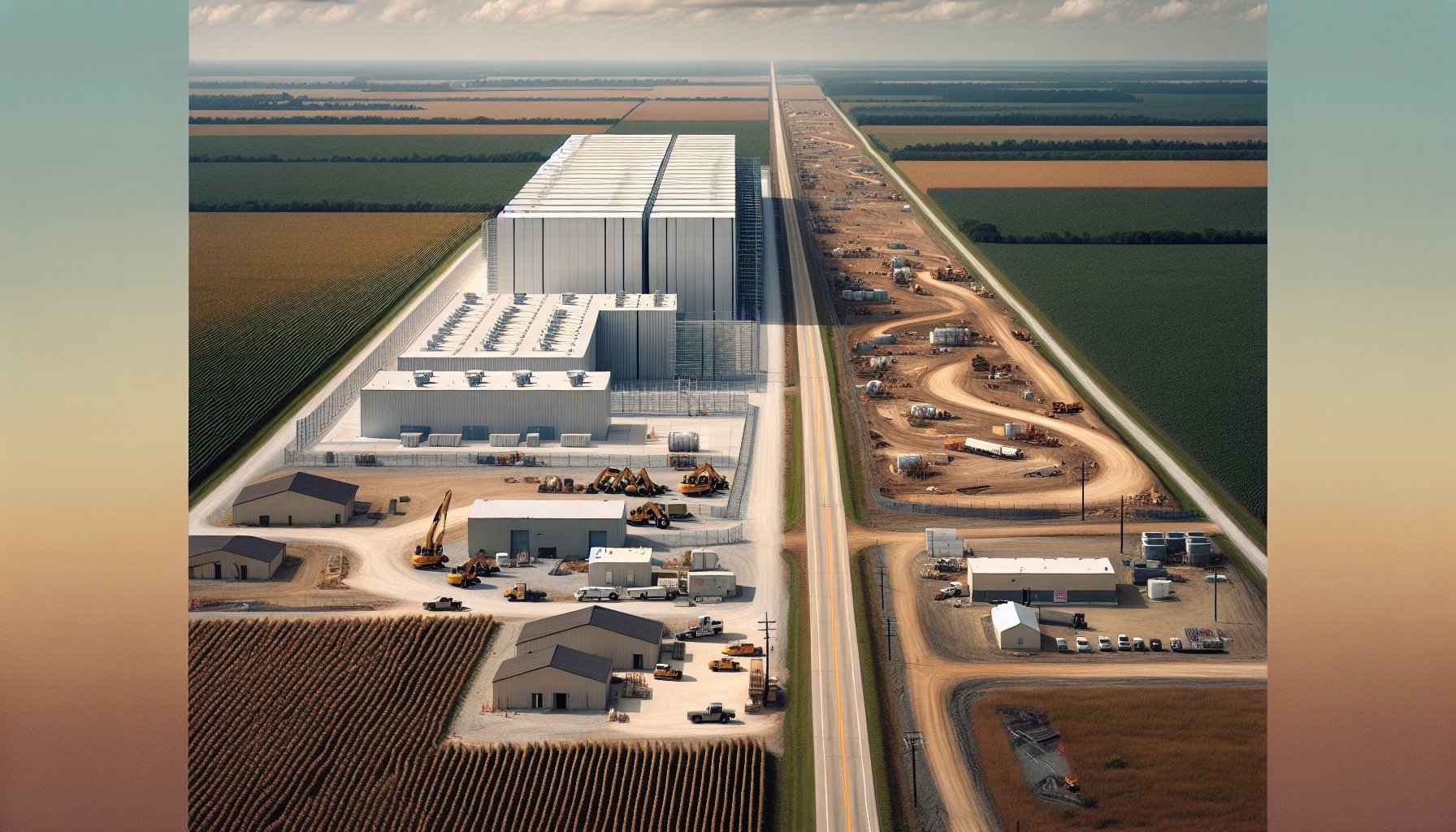
Concrete is pouring, cranes are swinging, and northeast Louisiana is suddenly at the center of a construction story few saw coming. Contractors from Monroe to Alexandria are juggling packed schedules, short-handed crews, and nonstop phone calls as Meta’s Holly Ridge Hyperion AI data center keeps scaling up. The recent Meta’s expanding its already massive Louisiana data center project – Fortune (source) highlights a $10 billion build on more than 3,600 acres, over 4 million square feet of facilities, thousands of construction jobs, and three new Entergy gas plants—numbers that sound exciting until deadlines start colliding and material orders get stretched thin. The boom feels like a blessing, but on the ground it often looks like long days, rising costs, and constant pressure to keep up.
Crews that once focused on schools, small commercial projects, or neighborhood homes now find themselves pulled toward high-spec data center work that demands advanced electrical, cooling, and security systems. Smaller builders struggle to find skilled labor as workers chase higher wages on the Hyperion site, leaving backlogs for roof repairs, kitchen remodels, and local business projects across towns like Ruston, Rayville, and Columbia. Housing near key job hubs tightens up, hotel parking lots fill with out-of-state plates, and rental prices creep higher as thousands of tradespeople flood into rural parishes. At the same time, suppliers hustle to source transformers, switchgear, concrete, and steel fast enough to keep both mega-project timelines and Main Street jobs moving.
These growing pains hit hardest in communities already working to shake off decades of economic decline and outmigration. Local pride runs deep from the Ouachita River to Bayou DeSiard, so missing out on big opportunities—or getting pushed aside by national contractors—stirs real frustration. Training programs at community colleges and trade schools are racing to catch up, but many workers still wonder how to turn short-term construction gains into long-term, stable careers in the AI economy. As the dust rises over Holly Ridge, the region now stands at a crossroads where smart planning, skill upgrades, and balanced project pipelines can turn this data center surge into lasting momentum for Central and Northeast Louisiana’s construction industry.
Quick Navigation:
Meta’s Northeast Louisiana Data Center: Scale, Scope, and Local Context | Construction Boom and Workforce Impact Across Central and Northeast Louisiana | Opportunities and Challenges for the Regional Construction Industry | Frequently Asked Questions
Meta’s Northeast Louisiana Data Center: Scale, Scope, and Local Context
As the early headlines fade, the real story sits in how this single complex is reshaping a quiet stretch of northeast Louisiana. A rural corridor once known more for soybean fields and Friday night football now hosts one of the most advanced AI infrastructure builds in the country. Parish road networks, water and sewer systems, and even small-town commercial strips are adjusting to industrial-level demand. Local subcontractors are bidding work they once assumed would only land in Dallas or Houston, while trade schools, suppliers, and civic leaders weigh how this super‑sized project fits into the long-term fabric of the region.
Keep in Mind: Meta commits to powering the data center with 100% clean and renewable energy matching its consumption while pursuing LEED Gold certification for energy efficiency and sustainability.
Source: Louisiana Economic Development
Project overview: size, phases, and AI-focused infrastructure needs
Construction at Holly Ridge is broken into long, overlapping phases: initial site grading and roadwork, core data halls and administrative buildings, followed by continuous build‑out of AI server capacity. Early phases lean on heavy civil crews, concrete specialists, and steel erectors, while later stages demand a steady pipeline of electricians, low‑voltage installers, and HVAC technicians familiar with high‑density computing loads. AI workloads drive unusual infrastructure needs, including extra‑wide equipment corridors, deep cable vaults, and dedicated electrical rooms designed for rapid power‑upgrade projects. Massive battery systems, high‑capacity cooling towers, and water treatment units require industrial‑scale mechanical trades, pushing local firms to partner with national contractors, add shift work, and invest in new equipment just to stay competitive on bids.
Expert Insight: This AI-optimized facility represents the largest among Meta’s more than 20 data centers worldwide, advancing the company’s artificial intelligence infrastructure capabilities.
Source: Louisiana Economic Development
Why rural northeast Louisiana: land, power, workforce, and interstate access
Rural northeast Louisiana checks every box for a hyperscale AI campus. Large, flat farm tracts around Holly Ridge offer room for repeated expansion without fighting dense development, keeping site assembly and staging costs down. Proximity to high-voltage transmission corridors between Monroe, Vicksburg, and south toward Baton Rouge lets utilities plan massive substation upgrades and redundant feeds without starting from scratch. I‑20 running from Shreveport through Monroe to Jackson puts heavy-haul access right at the gate, cutting time and expense for steel, precast, chillers, and switchgear deliveries. A workforce long tied to agriculture, fabrication, and industrial plants brings hands-on skills, while community colleges from Monroe to Tallulah move quickly to feed the surge with safety-trained craft labor.
Good to Know: Meta’s data center occupies a 2,250-acre former Franklin Farm megasite between Rayville and Delhi in Richland Parish, located 30 miles east of Monroe in Northeast Louisiana.
Source: Louisiana Economic Development
Shifting the regional narrative: from economic decline to high-tech anchor investment
For decades, northeast Louisiana carried a reputation for shrinking mills, flat tax rolls, and young families leaving for work in Dallas, Houston, or Baton Rouge. Meta’s multibillion‑dollar AI campus at Holly Ridge flips that script, turning an overlooked farm corridor into a high‑tech anchor. Thousands of construction workers now cycle through long-duration contracts instead of short, stop‑and‑start jobs, keeping hotel lots full along I‑20 from Monroe to Vicksburg and pushing demand for new rentals, restaurants, and service shops. Local contractors that once focused on metal buildings and small commercial sites are bidding specialty concrete, utility, and low‑voltage packages, forming joint ventures to meet strict data‑center standards and setting the stage for a permanent tech‑driven construction cluster across Richland and Ouachita parishes.
Construction Boom and Workforce Impact Across Central and Northeast Louisiana
That crossroads reaches far beyond the fenceline at Holly Ridge and stretches across central and northeast Louisiana. Parishes that once fought to keep crews busy now see out‑of‑state license plates at every motel, while longtime hands jump from highway jobs to high‑tech work in a single phone call. Pay scales are shifting, training programs are scrambling to keep up, and small towns from Rayville to Winnsboro are feeling the ripple through diners, supply houses, and bank lobbies. As the AI build‑out accelerates, the construction workforce is being reshaped in real time across the entire region.
Massive labor demand: trades, subcontractors, and support services pulled into the region
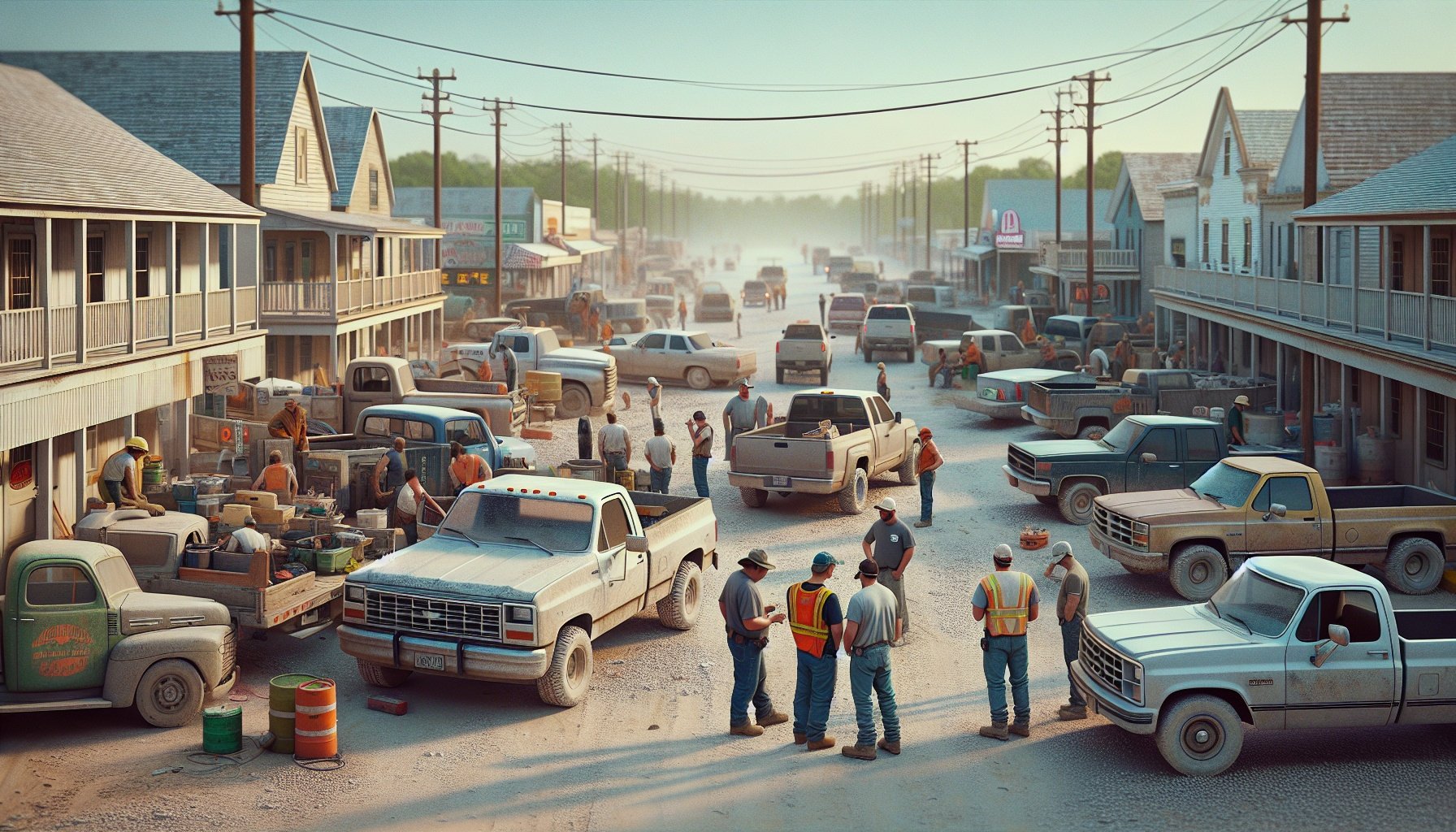
Crews now arrive from across Central Louisiana, north Louisiana, and even neighboring states, drawn by steady schedules and large-scale commercial contracts tied to Meta’s build-out. Electricians, concrete finishers, steel erectors, and HVAC techs stack up on site in rotating shifts, with some firms running six-day workweeks to keep pace. Specialty subcontractors handle fiber installation, high-voltage switchgear, fire suppression, and precision climate control, while local companies provide fencing, security, janitorial, and materials hauling. Hotels along I-20 stay packed with traveling trades, and RV parks fill with long-term project workers. Equipment rental yards see excavators, lifts, and generators booked out weeks in advance, showing how the AI data center is pulling not just core construction trades, but an entire support economy into the region.
Housing, materials, and equipment pressure: ripple effects on local builders and DIY projects
Surging crews and suppliers around the Meta site push Winnsboro, Monroe, and smaller towns like Rayville and Delhi into a tight squeeze for housing, materials, and heavy gear. Builders trying to frame a spec house or small duplex now compete with data center contractors for the same OSB, rebar, and ready‑mix slots, often facing longer lead times or higher bids. Local hardware stores report pallet orders of conduit, wire, and fasteners heading straight to commercial jobs, leaving weekend DIY projects waiting on backorders. Skid steers, manlifts, and mini‑excavators disappear from rental yards for months at a time, forcing smaller contractors to reschedule pours and remodels, or travel farther across Central Louisiana to find what is needed to keep projects moving forward.
Good to Know: The expansive campus spans 4 million square feet, equivalent to nearly 70 football fields, and supports more than 500 direct new operational jobs with average salaries 150% above Louisiana’s per capita average.
Source: Louisiana Economic Development
Training pipelines: community colleges, trade schools, and union/non-union pathways into data center work
Local training pipelines ramp up as Meta’s build reshapes expectations for construction careers from Alexandria to Monroe. Community colleges like Louisiana Delta Community College and Central Louisiana Technical Community College quickly expand courses in electrical, HVAC, welding, low‑voltage systems, and industrial safety, aligning programs with data center standards. Trade schools around Alexandria, pineville, and Ruston report higher enrollment in short‑term certifications as residents look to step into higher‑paying commercial work. Onsite contractors blend union and non‑union crews, pulling licensed electricians and millwrights from regional apprenticeship programs while also hiring entry‑level workers who complete OSHA and basic trade training locally. This mix creates a long‑term skills base that stays in Central and Northeast Louisiana long after initial phases of the Meta project finish.
Opportunities and Challenges for the Regional Construction Industry
As Meta’s data center build shifts from site prep to full-scale construction, the local story becomes more than upgraded utilities and a redefined skyline. Thousands of craft workers, project managers, and specialty trades are cycling through northeast Louisiana, filling hotels, short-term rentals, and diners that once sat half-empty. Wage levels are climbing, apprenticeship pipelines are stretching, and contractors from Monroe to Alexandria are weighing whether to buy new equipment, expand payrolls, or enter unfamiliar scopes tied to AI infrastructure. Those choices bring real upside, but also risk, setting the stage for a closer look at the opportunities and challenges facing the regional construction industry.
Quick Insight: Meta’s $10 billion data center investment allocates $200 million for local infrastructure enhancements including roads and water systems, spurring a construction boom across Northeast Louisiana.
Source: Louisiana Economic Development
Upgrading skills for AI-era infrastructure: electrical, cooling, and high-spec building systems
Electricians who once wired simple metal buildings now face miles of bus duct, medium-voltage gear, and dense conduit racks feeding AI server halls. Cooling crews are learning to balance massive chilled-water loops, evaporative cooling towers, and precision controls that keep equipment within a narrow temperature band, even during August heat along the Ouachita. Mechanical contractors are being pushed toward BIM coordination, laser layout, and factory-level tolerances just to fit everything inside tight equipment galleries. Local firms that adapt can chase similar hyperscale projects from Shreveport to Dallas, while those staying with only light commercial work risk getting left out. The data center is quietly turning northeast Louisiana into a training ground for high-spec building systems that once showed up only on the coasts.
Expert Insight: Construction peaks with over 5,000 skilled trade workers onsite, generating thousands of temporary high-impact jobs and driving significant economic activity in Northeast Louisiana.
Source: Louisiana Economic Development
Balancing mega-project schedules with small-town projects and residential work
Mega-project milestones at the Meta site pull hundreds of tradespeople off smaller jobs across Richland, Ouachita, and Franklin parishes, forcing tough choices for local contractors. Crews pouring data hall slabs or setting prefab electrical rooms cannot easily leave for a kitchen remodel in Rayville or a roof replacement in Mangham. Some firms now run split teams: a core group dedicated to the data center’s critical path and a rotating crew that keeps small-town municipal work, church renovations, and residential builds moving. Schedulers lean on staggered shifts and weekend residential crews, trying to avoid leaving homeowners and Main Street businesses waiting months. Managed well, the surge lets firms grow staff and equipment while still serving long-time local customers who supported them before the tech boom.
Long-term outlook: spin-off development, supplier growth, and planning for the post-construction phase
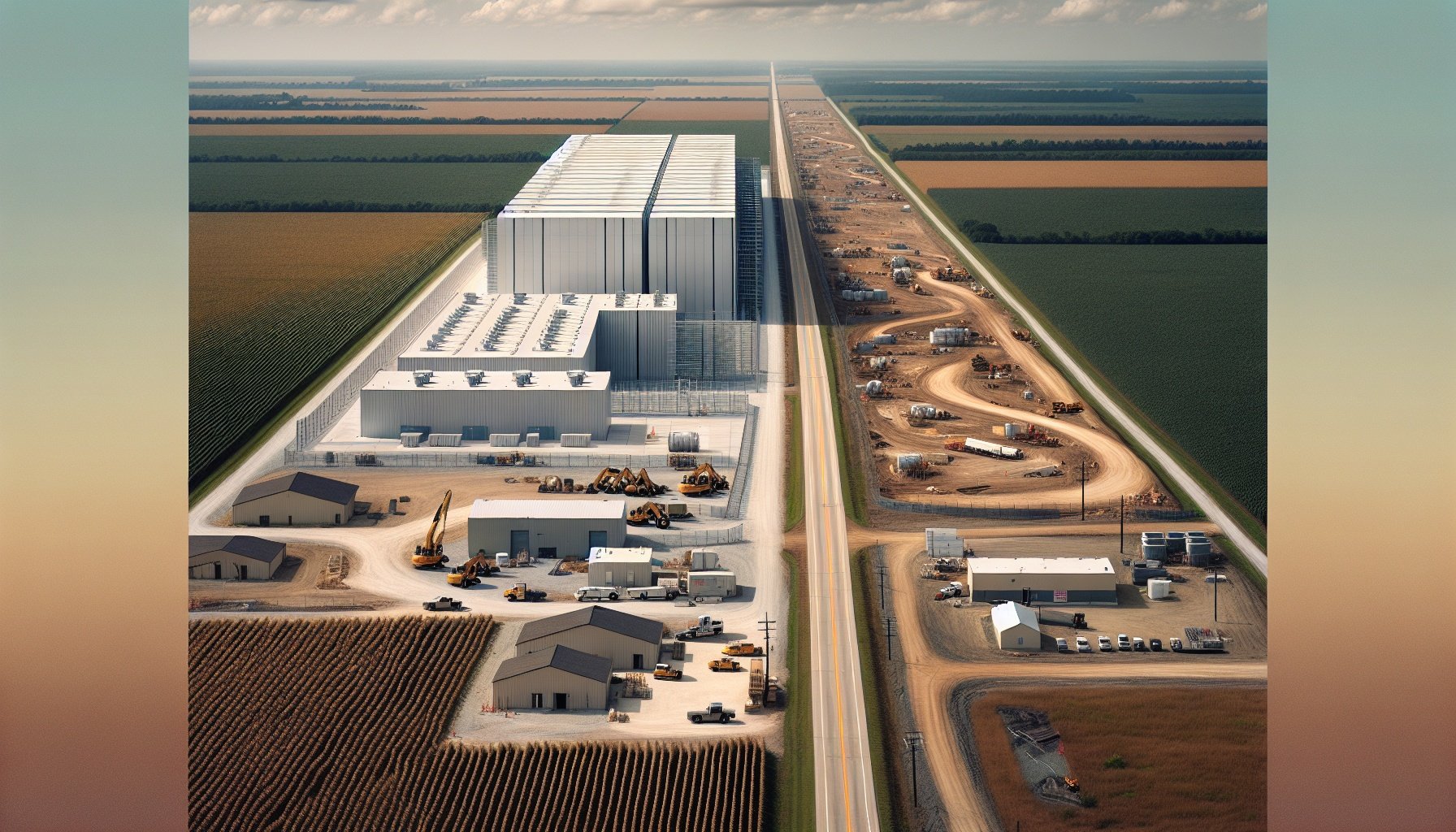
As steel tops out on Meta’s early buildings near Alto, real estate scouts already watch corridors along I‑20 and Highway 165 for spin-off development. Flex warehouses in Monroe, prefab panel yards in Rayville, and specialty metal shops in Winnsboro stand to supply future AI campuses across the lower Mississippi Valley. Concrete plants, electrical wholesalers, and HVAC fabricators that scale up for the data center phase can later chase work at hospitals, university labs in Ruston, and industrial sites around Lake Providence. Long-term risk sits in what happens once the tower cranes leave, so forward-looking contractors build service divisions for maintenance, retrofits, and tenant improvements, turning today’s boom into steady, post-construction revenue instead of a one-shot surge.
Conclusion
Meta’s massive data center expansion is turning rural northeast Louisiana into one of the hottest construction zones in the state. Towns from Monroe and Alexandria to Rayville and Winnsboro are feeling the surge as thousands of skilled workers, higher pay scales, and new partnerships flow into communities that once struggled to attract large projects. AI-driven construction is pushing local contractors, training programs, and craft professionals to level up quickly, opening doors while also testing capacity and resources. This moment will help determine which companies and workers become long-term players in the data and AI infrastructure market. Now is the time for regional builders, schools, and community leaders to lean in, collaborate, and claim a lasting stake in this new construction economy.
Frequently Asked Questions
- What is Meta building in Northeast Louisiana, and where is the data center located?
- Meta is building a large-scale, next-generation data center campus in Northeast Louisiana. The facility is designed to support platforms like Facebook, Instagram, WhatsApp, and other Meta technologies.
The project is being developed near Monroe and West Monroe, close to key transportation routes that already support regional industry and logistics. This location offers access to a stable power grid, strong fiber connectivity, and a skilled workforce drawn from surrounding parishes and nearby colleges such as the University of Louisiana at Monroe and Louisiana Tech.
The campus includes multiple data halls, administrative buildings, electrical and mechanical yards, security facilities, and support structures. It is planned as a long-term investment, with room for future expansion as demand for digital services grows. - How is Meta’s data center project creating a construction boom in Northeast Louisiana?
- Meta’s data center is driving a major construction boom by pulling in contractors, suppliers, and trades from across the region. The size of the site requires massive amounts of concrete, steel, electrical work, HVAC systems, framing, roofing, and specialty installations.
Local general contractors are partnering with national firms to manage site grading, foundations, structural work, and interior build-out. Subcontractors in plumbing, electrical, mechanical, and fire protection are seeing full project pipelines. Concrete plants are running longer shifts, and material yards are turning over inventory at a faster pace.
Road work, utility upgrades, and nearby commercial developments are also picking up. Hotels, restaurants, equipment rental companies, and fuel suppliers around Monroe, West Monroe, and smaller surrounding towns are experiencing increased demand, turning the data center into a catalyst for a broader construction and service surge. - What types of jobs and skills are most in demand because of the Meta data center construction?
- The Meta data center expansion is increasing demand for a wide range of construction and technical trades in Northeast Louisiana. High-demand roles include:
– Heavy equipment operators for site prep, grading, and utility trenching
– Concrete crews for foundations, slabs, and tilt-wall or structural systems
– Ironworkers and steel erectors for structural frames and support systems
– Electricians and low-voltage technicians for power distribution, backup systems, and data cabling
– HVAC and mechanical technicians for cooling systems, chillers, and air handling units
– Plumbers and pipefitters for water, drainage, and process piping
– Carpenters and finishers for framing, interior build-out, and specialty spaces
– Safety professionals and site supervisors to manage large, active jobsites
As the project transitions from heavy construction to fit-out and commissioning, demand shifts toward controls technicians, network specialists, and facility maintenance staff. Training programs at local trade schools and community colleges are especially valuable for residents looking to step into these roles. - How is the Meta data center affecting the local economy and small businesses in Northeast Louisiana?
- The Meta data center is boosting the Northeast Louisiana economy in several ways.
Construction spending is flowing into local payrolls, material suppliers, equipment rental companies, and transportation services. Small businesses such as concrete suppliers, steel fabricators, lumber yards, and electrical distributors are seeing higher order volumes.
Service businesses in and around Monroe and West Monroe—restaurants, caterers, hotels, laundries, auto repair shops, and fuel stations—benefit from the influx of construction crews and project staff. Real estate activity increases as workers seek housing options, from apartments to short-term rentals.
Over the long term, the completed data center lifts the region’s profile as a technology and infrastructure hub. That can attract additional industrial, logistics, and tech-related projects, creating a ripple effect that extends beyond the construction phase. - What infrastructure improvements are happening around the Meta data center site?
- Large data center projects like Meta’s often require significant upgrades to local infrastructure, and Northeast Louisiana is no exception.
Key improvements typically include:
– Power grid upgrades, including new substations, transmission lines, and redundant feeds to support high, stable electrical demand
– Fiber-optic expansions to provide the high-speed connectivity required for global data operations
– Road and intersection improvements to handle increased truck traffic during construction and ongoing facility support
– Water and sewer system enhancements to manage cooling water needs and general facility use
These upgrades not only support the data center but also strengthen services for nearby neighborhoods, businesses, and industrial sites. Over time, stronger infrastructure can make the area more attractive for other employers looking to build or expand. - Are there any environmental or energy-efficiency features planned for the Meta data center?
- Meta data centers are typically designed with a strong focus on energy efficiency and sustainability, and similar strategies are expected in Northeast Louisiana.
Common features include:
– Highly efficient cooling systems that use advanced air handling, water-side economizers, and optimized airflow to reduce energy use
– Modern electrical systems that minimize power loss between the utility connection and the server racks
– Smart building controls that monitor temperature, humidity, and equipment performance to keep systems running efficiently
– Use of recycled or regionally sourced building materials where practical
Meta often pairs data center projects with commitments to renewable energy procurement, such as new solar or wind projects in the region or state. This approach reduces the carbon footprint of the facility’s operations and supports broader clean energy development in Louisiana and the Gulf South. - How long will the construction boom last, and what happens after the data center is finished?
- Construction on a large data center campus can last several years, especially when built in multiple phases. The initial surge brings the heaviest activity, with hundreds or even thousands of workers on site at peak.
As the core buildings are completed, heavy construction gradually tapers off, but interior fit-out, testing, and commissioning keep trades busy. If Meta expands with additional data halls over time, new waves of construction follow, extending the boom.
Once the main build is finished, the project shifts from construction to long-term operations. Permanent jobs remain for facility technicians, electricians, HVAC specialists, security teams, grounds crews, and operations staff.
The improved infrastructure, trained workforce, and higher regional visibility created during the construction phase continue to benefit Northeast Louisiana, making the area more appealing for other companies considering major construction or technology investments.
Categories
News