
ICE Raid at Meta Data Center Shakes Up Louisiana Construction
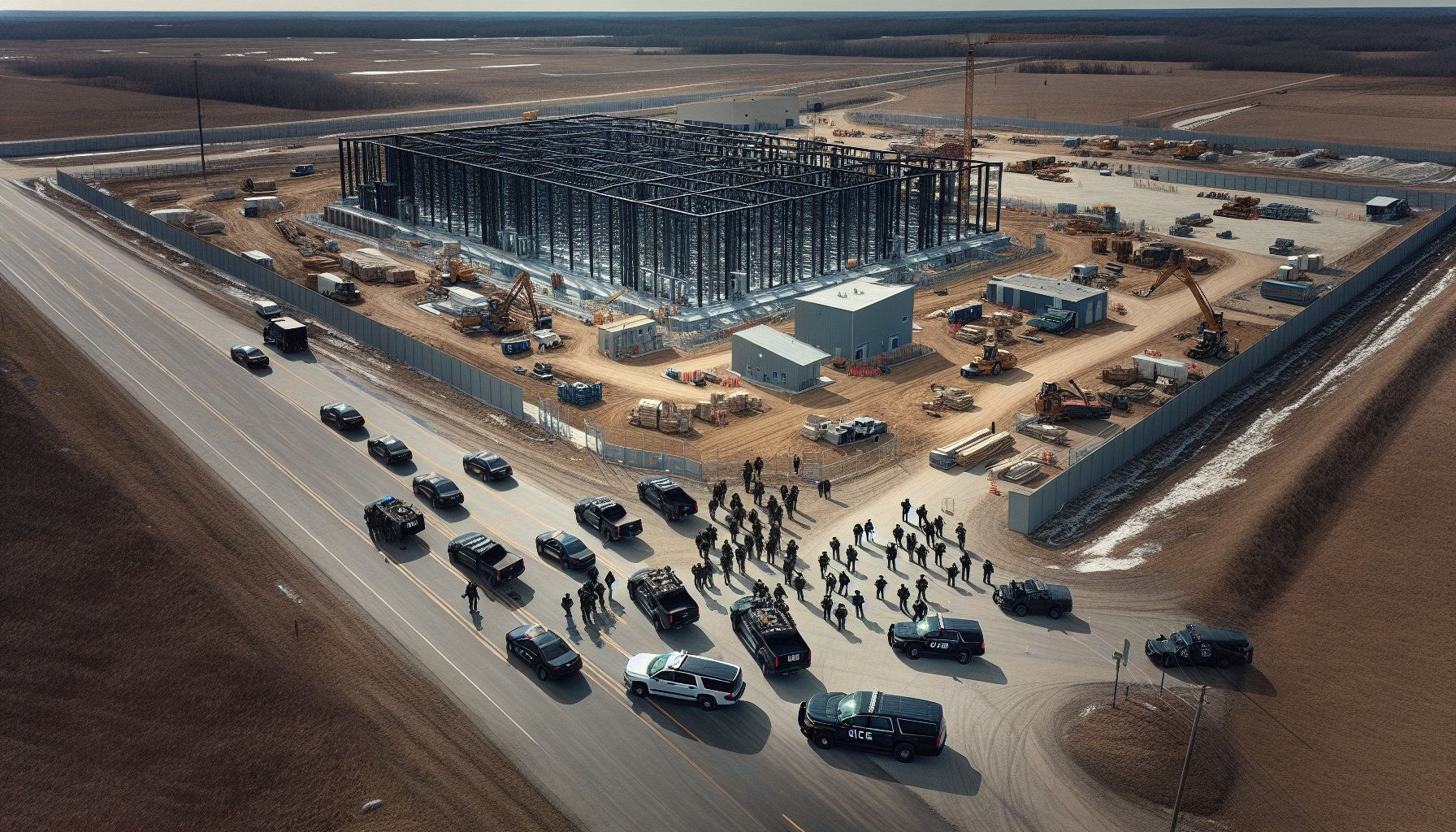
ICE lights up a jobsite in a way no tower crane ever could, and not in a good way. One morning of flashing blue lights at a Meta data center site in rural Louisiana turns a routine workday into a scramble over badges, paperwork, and missing crews. Supervisors suddenly juggle halted trades, restless owners, and safety worries, while office staff dig through I-9 files and subcontractor lists. The recent ICE Targets Meta Site Under Construction in Rural Louisiana – The Wall Street Journal (ICE Targets Meta Site Under Construction in Rural Louisiana – The Wall Street Journal) shows how fast work can grind to a halt when ICE agents roll in, arresting dump truck drivers and checking worker status right at the gate.
Quick Navigation:
ICE Operation at the Meta Data Center: Timeline, Tactics, and On-Site Response | Immigration Compliance Pressures on Louisiana Construction Projects | Ripple Effects on Central Louisiana’s Construction Workforce and Project Timelines | Frequently Asked Questions
That kind of surprise enforcement hits every level of a project, from laborers worried about job security to project managers staring down blown milestones and liquidated damages. E-Verify that once felt like a box to check suddenly looks like a potential weak spot, especially when layered subs and labor brokers muddy the trail of responsibility. Contracts, insurance carriers, and lenders start asking hard questions about compliance, documentation gaps, and exposure to federal investigations. A single raid can turn a high-profile job from a point of pride into a source of stress for the whole Central Louisiana construction community.
For big builds tied to national brands like Meta, the stakes stretch far beyond one site fence. Lost crews, reworked schedules, overtime fatigue, and pressure to replace skilled workers quickly can ripple into other projects across Rapides, Richland, and nearby parishes. Owners still expect ribbon cuttings on time, even as teams rethink sequencing, safety protocols, and long-term workforce planning. That tension between staying on schedule and staying compliant sets the stage for a closer look at how immigration enforcement is reshaping construction in Louisiana and what it means for every phase of a major build.
ICE Operation at the Meta Data Center: Timeline, Tactics, and On-Site Response
As the dust settled from the initial shock, the picture on-site came into sharper focus: this was not a quick pass-through check, but a clockwork operation built around a tightly mapped timeline. Agents staged just off the parish road, coordinated with local deputies, and moved in according to a preplanned sequence that controlled both access points and material flow. Radio traffic between ICE teams, security staff, and project leadership sketched out a minute‑by‑minute playbook, from the first blocked gate to the final worker interviews, setting the stage for a closer look at how the operation actually unfolded on the ground.
Chronology of the Meta data center raid: early warnings, warrant execution, and site lockdown
Early indicators surfaced before sunrise as local deputies reported unmarked SUVs staging near the Cotile Lake turnoff, with state troopers positioned farther down the access road. By mid-morning, ICE supervisors executed a federal search and arrest warrant at the main gate, presenting paperwork to Meta’s prime contractor and the on-site safety manager while agents diverted all inbound traffic to a secondary staging area. Crews already inside the fence were ordered to remain in place as gate guards locked badge readers and disabled temporary passes. Radio chatter confirmed a full perimeter lockdown: haul roads were blocked, dump trucks rerouted to a gravel lot, and supervisors escorted to a designated trailer for interviews while agents moved methodically from gatehouse to laydown yard and then toward the central steel and concrete work zones.
Coordination between ICE, Rapides Parish law enforcement, and site security teams
Coordination tightened once the federal warrant went live, with ICE supervisors operating from a mobile command unit parked near the north laydown yard and Rapides Parish Sheriff’s Office brass handling traffic and crowd control along Highway 28 West. Radio logs confirmed that parish deputies managed the outer ring, relaying plate numbers of departing vehicles while ICE teams focused on targeted arrests inside controlled zones. Site security, led by the contracted guard service and Meta’s regional security manager, funneled real-time badge data and contractor rosters into the command unit, matching ICE name lists against active access credentials. A shared channel on the parish interoperability system linked all three groups, reducing cross-talk and keeping the operation contained to the construction footprint rather than spilling into surrounding Tioga and Boyce neighborhoods.
Expert Insight: Construction traffic from the Meta data center site caused a 600% increase in crashes on local roads in Richland Parish, with 64 incidents reported from January to mid-September 2025 compared to nine in all of 2024.
Source: Louisiana Illuminator
On-the-ground impact during the raid: arrested workers, halted trades, and safety protocol adjustments
Once teams were confined to muster points, ICE agents began pulling individuals from mixed crews, focusing first on concrete finishers, electrical helpers, and drywall installers aligned with two large subcontractors. Witnesses reported roughly three dozen workers escorted to a staging tent near the east parking pad, with handcuffs used only after on-site questioning shifted to formal detention. Mechanical, electrical, and plumbing trades went quiet within minutes as tool circuits were locked out and scissor lifts tagged out of service, freezing overhead work on multiple data halls. Safety coordinators walked the decks with Rapides Parish deputies, re-checking tie-off points and hot-work permits, and requiring foremen to re-run headcounts before any partial restart, reflecting concern over shaken crews and disrupted supervision.
Immigration Compliance Pressures on Louisiana Construction Projects
Once the immediate chaos at the Meta site faded, a different kind of pressure settled over the Central Louisiana construction scene: quiet, steady, and regulatory. General contractors started calling lawyers, HR teams revisited I-9 files, and subcontractors checked whether long-standing hiring habits could stand up to a deeper federal look. Questions spread fast across job trailers from Alexandria to Pineville: how much liability sits on the prime contract, how far it travels down the sub and labor-broker chain, and what happens when federal expectations collide with tight bid margins. These mounting questions define the immigration compliance squeeze now facing Louisiana projects.
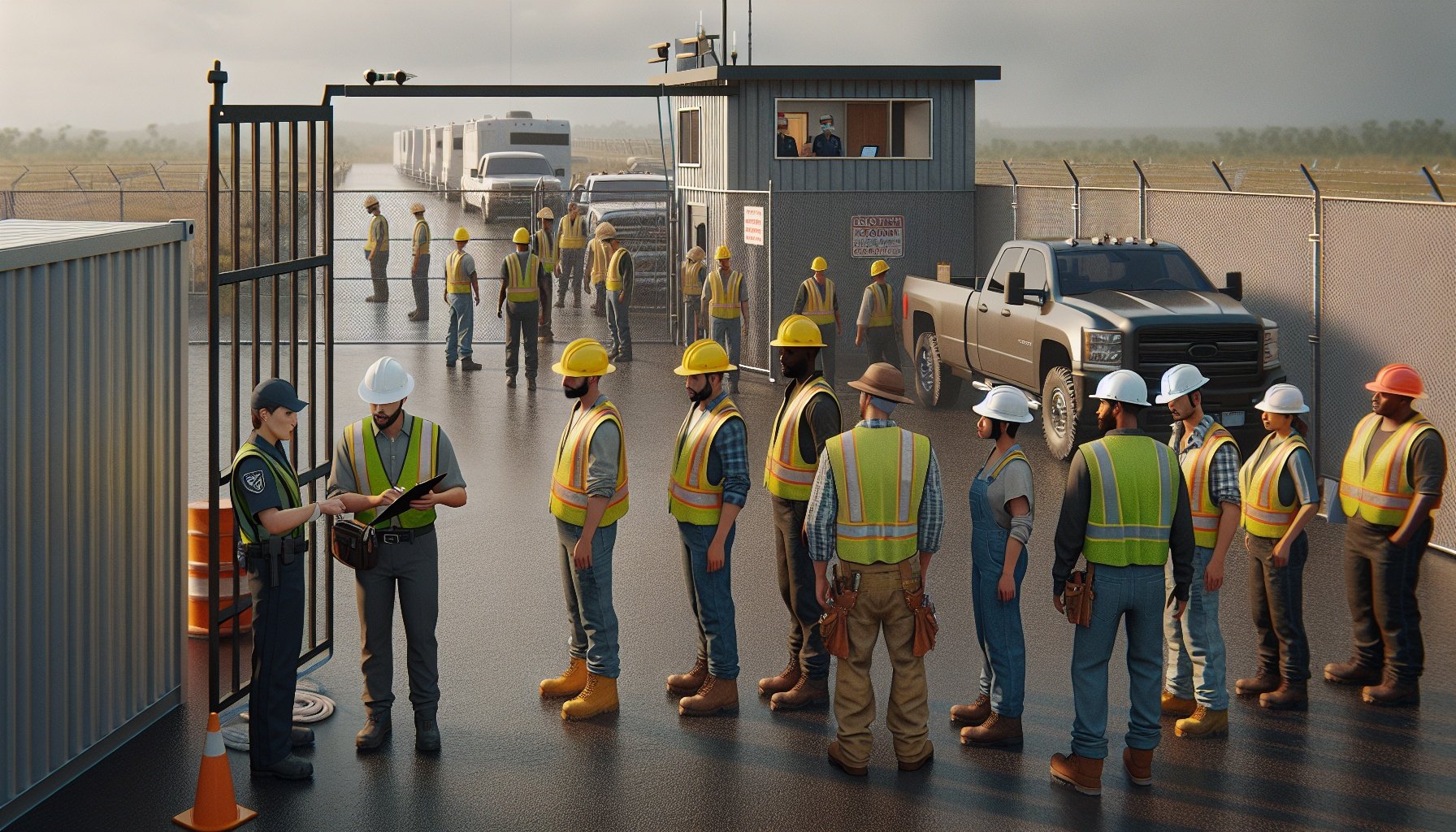
Did you know? Federal agents’ presence at the $27 billion Meta data center site in Richland Parish on January 14, 2026, involved coordination with three major contractors, highlighting integrated oversight in large-scale builds.
Source: NOLA.com
Verification practices under scrutiny: E-Verify, subcontractor vetting, and documentation gaps
Investigators did more than count who was on site; they pulled apart how workers ever cleared the gate in the first place. E-Verify records for prime contractors became a focal point, but attention quickly shifted to layered subcontractor chains common on large data center builds. Some smaller firms on the Meta job reportedly relied on photocopied IDs passed through multiple hands, with no consistent re-check when workers moved between crews or scopes. Gaps showed up where a payroll company handled checks, a staffing firm recruited labor, and a mid-tier subcontractor “owned” the badge list, leaving no single entity clearly responsible. ICE questioning highlighted missing I-9 forms, unsigned attestations, and backdated start dates that suggested compliance was treated as paperwork, not a real screening system.
Shifting liability from general contractors to layered subs and labor brokers
Investigators described a quiet but deliberate trend on the Meta job: risk flowing downhill from the branded general contractor to a maze of subs, labor brokers, and payroll intermediaries. Contracts pushed I-9 and status verification obligations onto lower tiers, while the top-line firm presented clean compliance files and distance from day‑to‑day hiring. Some drywall and concrete crews were technically employed by out‑of‑state labor brokers, then “leased back” to specialty subs, leaving three or four entities between the worker and the main contract. When questioned, several supervisors pointed to broker agreements that required “full legal compliance” but had no audit rights or jobsite checks. ICE agents flagged this as intentional insulation, not accidental paperwork sloppiness, and signaled that future investigations may pierce those layers and follow control, not just contract language.
Good to Know: The Meta data center project in Richland Parish awarded $875 million in contracts to local Louisiana businesses by December 2025, boosting the regional economy despite ongoing immigration checks.
Source: Meta Newsroom
Contract and insurance repercussions: federal investigations, delays, and cost escalations
Federal agents did not stop at worker interviews; they pulled contract binders, insurance certificates, and bond files tied to the Meta build. Federal subpoenas forced disclosure of master service agreements, labor-supply contracts, and wrap‑up insurance policies, triggering legal reviews that stalled change orders and pay applications. Carriers quietly opened claim files, flagging potential misrepresentation on headcounts, payroll classifications, and use of out‑of‑state brokers. Underwriters signaled premium increases at renewal and hinted at exclusions tied to immigration violations. One major sub reported a performance‑bond rider demand before being allowed back on a separate public job in Rapides Parish. Schedule cushions vanished as compliance lawyers re‑drafted subcontracts, slowing procurement and pushing overall project costs upward across Central Louisiana.
Ripple Effects on Central Louisiana’s Construction Workforce and Project Timelines
Coordinated enforcement on a site as large as Meta’s does more than pause a single day’s work; it reshapes how contractors across Central Louisiana think about crews, contracts, and calendars. Subcontractors that once relied on steady labor now face unexpected gaps in skilled trades, forcing reshuffles between jobs in Alexandria, pineville, and the smaller towns that feed workers to the project. Insurance carriers, bonding companies, and project lenders begin asking harder questions about workforce verification, while schedulers rework critical-path timelines to account for inspections, re-badging, and potential labor shortages. These pressures converge into three clear areas of fallout for the region’s construction economy.
Pro Tip: Federal immigration officers arrested two dump truck drivers at the Meta data center construction site in rural Louisiana on January 15, 2026, as part of heightened enforcement efforts targeting undocumented workers.
Source: Bloomberg
Labor shortages after the raid: lost skilled crews, schedule slippage, and overtime strain
As detained workers were transferred out of Rapides Parish, gaps opened fastest in the most specialized trades. Electrical foremen reported losing whole conduit crews in a single morning, while concrete teams at satellite projects in Pineville and Alexandria suddenly ran short on finishers who knew Meta’s specs and safety routines. That knowledge loss rippled through scheduling boards: crane picks were pushed back, inspections slipped a week at a time, and just-in-time deliveries stacked up in staging yards along Highway 28. To keep milestones alive, remaining hands worked 60‑ to 70‑hour weeks, with double-time on Sundays becoming common. Overtime costs climbed, but so did fatigue, near-miss incidents, and rework rates, stretching already tight project contingencies past the breaking point.
Good to Know: Immigration enforcement actions in 2025 led to a notable decline in undocumented labor availability for Louisiana’s construction sector, prompting contractors to explore automated machinery for site operations.
Source: Construction Dive
Adjusting build strategies in rural Louisiana: re-sequencing work, prefab options, and trade reskilling
Superintendents from woodworth to DeRidder responded by tearing up old look‑ahead schedules and rebuilding sequences around the trades still standing. Interior rough‑in planned behind Meta’s high‑voltage corridor got pushed, while low‑skill site packages—fencing, drainage, laydown expansion—moved forward to keep equipment and remaining crews productive. Some contractors shifted to panelized wall systems and pre‑wired racks assembled in Alexandria shops, cutting the amount of on‑site electrical and drywall labor needed at the Cottonport and Lecompte satellite jobs. Others leaned on community colleges in Alexandria and Avoyelles Parish, pressing for accelerated NCCER electrical helper and concrete finisher tracks so local hands could step into roles once filled by long‑time migrant crews, even if that meant stretching completion milestones into the next festival season.
Keep in Mind: Louisiana’s 2025 regulatory changes expedited approvals for power plants to support data centers like Meta’s, enabling faster energy infrastructure development for high-demand tech projects.
Source: Louisiana Illuminator
Long-term workforce planning: local training pipelines, wages, and competition for compliant labor
General contractors along the U.S. 165 and I‑49 corridors began treating workforce planning less as a bid-by-bid problem and more as a long-range survival strategy. After the raid, Cenla firms met with CLTCC leaders to map out steady cohorts of electricians, concrete finishers, and low-voltage techs feeding job sites from Pineville to Leesville, not just short “boot camps.” That shift pushed wages up, as contractors competing for fully documented crews raised base pay and per‑diem to keep workers from jumping to industrial jobs in Lake Charles or the plants along the Mississippi River. Union halls and non‑union shops alike reported increased poaching, and subcontractors quietly locked in multi‑year agreements to secure scarce compliant foremen before the next big federal contract hit Rapides Parish.
Conclusion
The Meta data center raid in Central Louisiana turned a routine build into a high-stakes lesson on immigration enforcement, workforce compliance, and project risk. Arrests on site, documented through radio traffic and confirmed by local officials, exposed how fast a large project can shift from full production to legal triage. General contractors, HR teams, and long-time subcontractors now treat I‑9 audits, hiring practices, and liability chains with fresh urgency. That single operation sent a message across job sites from Alexandria to Pineville: compliance is no longer background paperwork, but core project planning. With thoughtful systems, clear communication, and steady leadership, Louisiana construction can adapt, protect vital projects, and keep major investments moving forward across the region.
Frequently Asked Questions
- What happened during the ICE raid at the Meta Data Center construction site in Louisiana?
- Federal immigration agents carried out a surprise raid at the Meta Data Center construction project in Louisiana. The operation targeted suspected undocumented workers employed by subcontractors on the job.
Agents reportedly:
– Entered the site during active work hours
– Detained a number of workers for immigration status checks
– Collected documents and employment records
– Questioned supervisors and site managers
Work came to a stop or slowed down sharply while agents were on-site. The sudden ICE presence disrupted normal construction activities, created confusion among crews, and forced contractors to respond quickly to legal and safety concerns.
The incident highlighted how one morning of federal enforcement on a large jobsite can cause big interruptions and ripple through the entire project schedule. - How can an ICE raid impact construction schedules and project timelines in Louisiana?
- An ICE raid at a major construction site can cause serious delays, especially on a complex, high-profile project like the Meta Data Center in Louisiana.
Typical impacts include:
– Immediate work stoppages while agents secure the area and question workers
– Loss of workforce if detained workers are removed from the job and crews are left short-handed
– Slow restart as contractors scramble to reassign tasks, bring in replacement workers, and meet safety rules
– Inspection and compliance pauses while management reviews hiring paperwork and subcontractor agreements
– Schedule slippage that can push back completion dates and milestone targets
On large data center projects, every day of delay can affect technology companies, local suppliers, and planned economic activity. Project owners may need to renegotiate timelines, shift trades, or re-phase work to keep critical paths moving. - Why are large construction projects like the Meta Data Center often affected by immigration enforcement actions?
- Large construction projects rely heavily on labor from many subcontractors and staffing firms. On a massive job such as the Meta Data Center in Louisiana, it is common to have:
– Multiple layers of subcontracting
– Crews coming from several states
– Fast ramp-up of labor to meet tight deadlines
This structure can create gaps in oversight if documentation and verification are not managed tightly at each level. Federal authorities often focus on:
– Projects with big workforces and complex labor chains
– Industries known for hiring immigrant workers, including framing, concrete, electrical, and mechanical trades
– Sites backed by major national or global companies, where enforcement actions draw attention to broader labor issues
When documentation problems or suspected unauthorized employment patterns appear, large, visible projects become prime targets for enforcement because they send a strong signal to the whole construction industry. - How does immigration enforcement affect contractors, subcontractors, and workers on Louisiana construction jobs?
- Immigration enforcement actions like the Meta Data Center raid can create challenges for everyone involved on a jobsite.
For general contractors:
– Project schedules may fall behind
– Relationships with project owners can become strained
– Extra time and money may be needed for legal support and workforce replacement
For subcontractors:
– Crews can be reduced overnight
– Contracts may be reviewed or even terminated if violations are confirmed
– Insurance, bonding, and licensing issues may surface
For workers:
– Detained workers face immigration proceedings and possible removal from the country
– Co-workers often experience fear and uncertainty about returning to work
– Families can be affected by sudden loss of income
Across the site, the atmosphere can shift from fast-paced construction to tense and unsettled, which slows productivity and increases risk of mistakes. - What legal and compliance issues came to light from the ICE raid at the Louisiana Meta Data Center project?
- The raid brought attention to several important legal and compliance issues linked to the construction workforce in Louisiana:
– Employment eligibility verification (Form I-9): Employers must verify that workers are authorized to work in the United States. ICE often checks whether these forms are properly completed and stored.
– Use of subcontractors and labor brokers: When staffing is handled through multiple layers, general contractors may not have direct control over who is hired. This can still create exposure if enforcement agencies believe there is a pattern of ignoring hiring rules.
– Recordkeeping and documentation: ICE typically reviews payroll, timecards, and contracts to see if the documented workforce matches the workers actually on site.
– Potential fines and penalties: Employers found to have hired or knowingly continued to employ unauthorized workers can face civil fines, criminal charges in serious cases, and possible debarment from federal projects.
The raid underscored that large, well-known projects are not exempt from these rules and that construction companies in Louisiana must treat workforce compliance as seriously as jobsite safety. - What are the broader impacts of ICE raids on the Louisiana construction industry and local communities?
- A high-profile enforcement action at a site like the Meta Data Center reaches far beyond one jobsite.
For the Louisiana construction industry:
– Contractors may become more cautious about hiring and subcontracting
– Labor shortages can worsen if experienced workers leave or avoid certain projects
– Bid pricing may rise as companies factor in compliance costs and potential risks
For local communities and the regional economy:
– Project delays can slow the arrival of new technology infrastructure and investment
– Local suppliers may see reduced or postponed orders if work slows down
– Families connected to detained workers can face financial hardship
In areas around Alexandria, Pineville, and the broader Central Louisiana region, large construction projects support restaurants, housing, and small businesses. When a data center job hits a sudden pause because of immigration enforcement, that energy cools off for a while, and the effects spread across town. - How might future large tech and industrial projects in Louisiana respond to incidents like the Meta Data Center ICE raid?
- High-tech and industrial developers planning major projects in Louisiana are likely to adjust strategies after an event like the Meta Data Center raid.
Common responses may include:
– Stricter contractor screening: Owners may demand more proof that subcontractors follow immigration and labor laws before awarding work.
– Tighter site access control: Badging systems, sign-in procedures, and ID checks at gates may become stricter to ensure documented workforces.
– More compliance training: Project managers and HR staff may receive added training on I-9 requirements, E-Verify use, and dealing with enforcement visits.
– Contract changes: Agreements may include tougher language on workforce verification, with penalties for non-compliance and clearer lines of responsibility.
Large data center and industrial projects are important to Louisiana’s economic future. After a visible enforcement action, owners and contractors often look for ways to keep jobs moving while staying clearly within federal and state rules.