
Historic Brownstone Renovation: Blending Modern Comfort With Classic Charm

Brownstone streetscapes tell stories that stretch back more than a century, with carved stone stoops, tall Windows, and hand‑crafted woodwork that still turn heads on busy urban blocks. Renovating these historic homes brings the chance to preserve that character while layering in the comfort, efficiency, and technology expected from contemporary city living. Each project becomes a careful balancing act: protecting original cornices, staircases, and millwork while solving real‑world challenges like aging structures, tight floor plans, and strict city rules. Thoughtful planning turns potential obstacles into design opportunities, allowing classic parlor rooms, high ceilings, and brick facades to work hand‑in‑hand with open spaces, modern kitchens, and spa‑like baths. Hidden upgrades such as quiet mechanical systems, updated wiring, and efficient plumbing support daily life without stealing attention from period details. Smart strategies for storage, vertical circulation, and natural light help narrow row houses feel generous, while energy‑saving improvements respect both the building’s history and the demands of an urban climate. From the sidewalk to the rooftop, every decision shapes how a brownstone can honor its past yet function as a comfortable, resilient home for decades to come.
Quick Navigation:
Evaluating Historic Brownstones for Modern Renovation | Design Strategies for Blending Modern Comfort With Classic Charm | Practical Renovation Techniques in Tight Urban Settings | Frequently Asked Questions
Evaluating Historic Brownstones for Modern Renovation
Before design concepts or finish selections take shape, a historic brownstone benefits from a careful, boots‑on‑the‑ground evaluation. A detailed survey often starts with mapping past alterations, noting where walls were moved, fireplaces closed, or stoops rebuilt, since those changes influence what is possible now. Specialists look for telltale clues of moisture, settlement, and past fire damage, as well as clues hidden in attic framing, cellar foundations, and party walls. Environmental concerns, such as lead paint, asbestos, and outdated oil tanks, also play a major role. This early detective work sets priorities and guides every smart renovation decision that follows.
Keep in Mind: Renovation of brownstones in cities like New York promotes environmental sustainability by reusing existing structures, reducing the carbon footprint associated with new construction and preserving urban green spaces in dense settings.
Source: Journal of Planning Literature
Documenting original architectural details: cornices, staircases, and millwork
Documenting original features starts with a room‑by‑room survey before any Demolition. Detailed photographs capture cornices at all angles, showing cracks, missing sections, and original profiles that later guide replication. Elevation sketches and measurements of staircases record tread depth, riser height, baluster spacing, and newel post shape, helping designers integrate code upgrades or new railings without losing character. For millwork, teams tag and number each casing, baseboard, door, and built‑in, noting wood species, joinery style, and unique details like rosettes or fluted pilasters. Even damaged panels or fragments are saved as physical templates. This careful documentation becomes a working archive that allows walls to move, systems to be upgraded, and layouts to shift while preserving a clear roadmap back to the brownstone’s original craftsmanship.
Assessing structural integrity, foundation settlement, and masonry conditions
Assessing structural integrity starts with tracing load paths from roof to foundation, checking for deflected beams, sloping floors, and cracked plaster that may signal hidden framing issues behind preserved millwork. Foundation settlement is evaluated by mapping stair out-of-level conditions, monitoring diagonal cracks at window heads, and measuring step cracks in party walls from sidewalk to roofline. In dense urban blocks, past coal chutes, underpinning, or subway vibrations often show up as bowed façades or loose stoop masonry. Brick and brownstone are inspected for spalling, open mortar joints, and past cement patching that traps moisture. Core samples, crack gauges, and laser level surveys provide hard data so structural repairs can be sequenced around both restoration work and new mechanical and plumbing runs.
Understanding local preservation guidelines, zoning rules, and code requirements in urban districts
Understanding local preservation guidelines, zoning rules, and code requirements shapes what is possible long before demolition starts. Landmark designations often control exterior changes on front façades, limiting new window configurations, balcony additions, or rooftop terraces visible from the street. Zoning overlays in dense districts set height limits, rear-yard depths, and lot coverage, which affect rear extensions, garden-level walkouts, and penthouse additions. Code upgrades layer on top of this: egress stair width, fire ratings between units, sprinkler thresholds, and accessibility rules can drive layout choices more than aesthetics. Urban brownstone blocks near transit or in flood-prone zones may also trigger special structural, acoustic, or floodproofing provisions, so the early diagnostic walk-through must be paired with a detailed code and zoning review to avoid redesigns later.
Design Strategies for Blending Modern Comfort With Classic Charm
With the structure assessed and hidden systems mapped out, attention can shift to the look and feel of each room. Design decisions begin to shape how original masonry, stair halls, and front parlors interact with cleaner lines, lighter palettes, and streamlined fixtures. Thoughtful planning establishes clear hierarchies, letting historic elements take center stage while modern pieces provide quiet support. Color, texture, lighting, and furniture scale all play a role in softening tight proportions and highlighting period craftsmanship. From entry stoop to top-floor bedroom, each move can reinforce a cohesive story that blends past and present through intentional design choices.
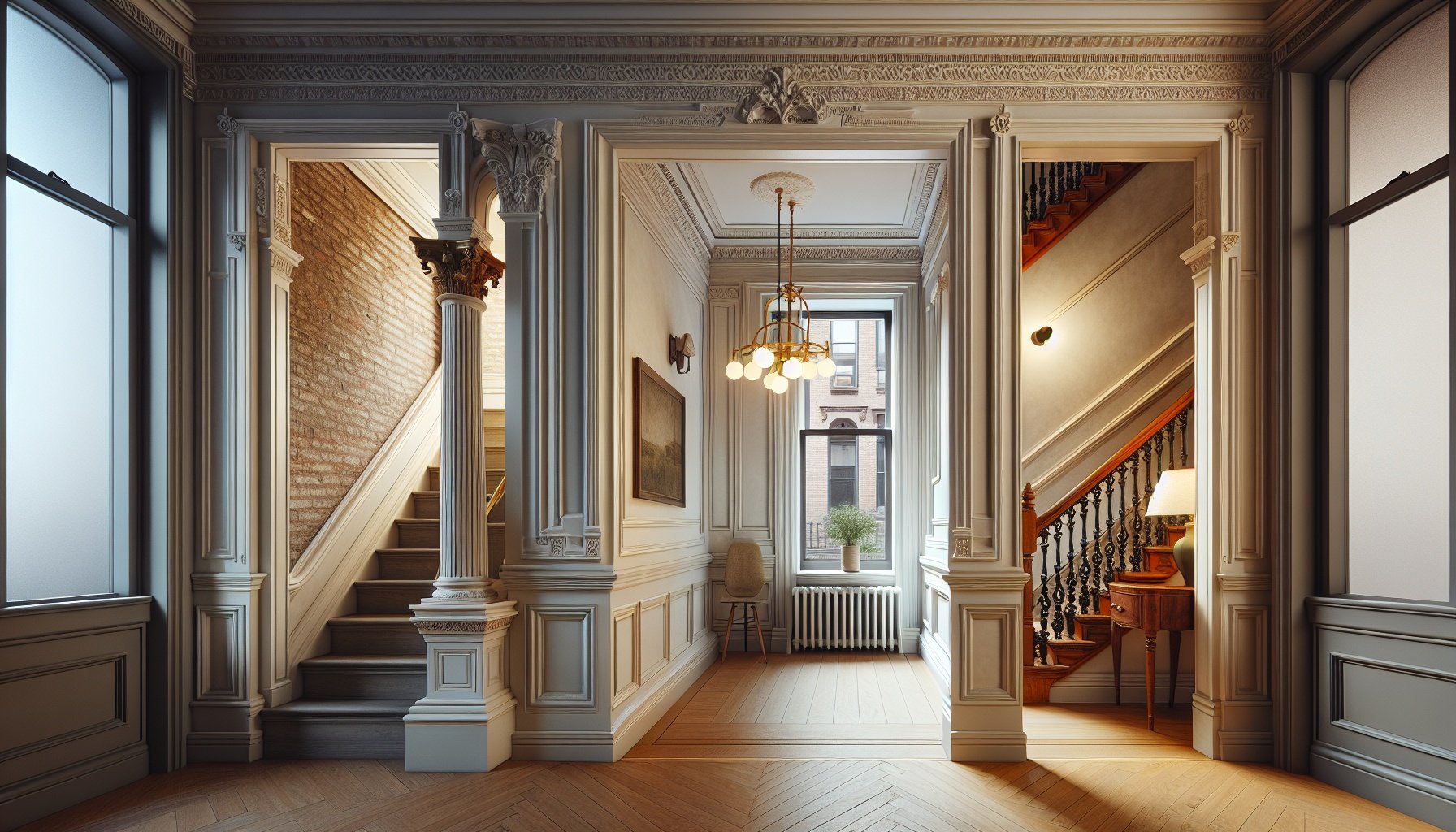
Keep in Mind: In 2025, historic preservation efforts in urban brownstone districts emphasize data-driven approaches to enhance socioeconomic diversity and sustainable growth, with new datasets enabling geospatial analysis of neighborhood impacts.
Source: Columbia GSAPP
Planning open yet respectful layouts that protect defining rooms and features
Designing open yet respectful layouts in a historic brownstone starts with identifying “non‑negotiable” spaces and features that carry the building’s character. Formal parlors with plaster medallions, stair halls with carved newel posts, and front dining rooms with pocket doors often become anchors. Instead of fully gutting these rooms, designers borrow openness from secondary spaces—removing later partitions between rear parlors and kitchens, or widening existing doorways while keeping original casings and transoms. Sightlines are planned so modern living areas still frame fireplaces, arched openings, or bay windows as focal points. New circulation paths often run along the edges of historic rooms, protecting original floor patterns and ceiling details while still providing the airy, flexible flow expected in contemporary urban living.
Integrating modern kitchens and baths while retaining period character
Integrating modern kitchens and baths into a historic brownstone works best when new elements quietly echo original detailing. Cabinetry with simple panel fronts can mirror existing door profiles, while painted finishes match or complement historic trim colors. Stone or quartz counters stay calm and light so original brick, plaster, or wood remains the visual star. In baths, classic materials such as subway tile, small hex floors, and framed mirrors pair well with concealed thermostatic valves and low‑profile fixtures. Freestanding tubs sit away from original window casings, and custom vanities are sized to fit between existing walls to avoid cutting historic baseboards. Under‑cabinet lighting, discreet exhaust systems, and panel‑ready appliances add comfort while allowing period millwork and masonry to keep center stage.
Keep in Mind: Adaptive reuse of historic brownstones contributes to urban vitality by integrating modern functions while maintaining cultural heritage, as seen in revitalized districts where older buildings support community resilience and economic growth.
Source: Columbia GSAPP
Upgrading mechanical, electrical, and plumbing systems with minimal impact on historic finishes
Upgrading mechanical, electrical, and plumbing systems in a brownstone works best when routing respects existing paths and cavities. Stacked closets, chimney chases, and party‑wall fur‑outs often become quiet “highways” for new ductwork, wiring, and supply lines, keeping plaster and ornate millwork intact. Slim high‑efficiency air‑handlers can tuck under stair runs or in the top‑floor eaves, feeding rooms through small, well‑planned ceiling or high‑wall registers that align with trim lines. Electric upgrades favor fishing new circuits behind baseboards or through floor cavities instead of cutting long wall channels. Plumbing risers typically follow original wet walls, with shut‑offs and access panels hidden inside cabinetry or closet backs, allowing reliable service and future maintenance without disturbing historic finishes.
Practical Renovation Techniques in Tight Urban Settings
Once the building’s story and condition are understood, attention turns to the everyday logistics of working in a dense city block. Crews plan material deliveries around narrow streets, limited curb space, and strict noise rules, often relying on smaller loads and just‑in‑time schedules. Interior work leans on compact, low‑dust tools, careful debris chutes, and shared access through stoops and stairwells that must stay safe and clean for neighbors. Staging, storage, and even temporary workshops get squeezed into basements, backyards, or sidewalk sheds, setting the stage for specific layout, systems, and finish strategies that suit tight urban conditions.
Pro Tip: Brownstones emerged as a popular building material in New York City during the mid-19th century, quarried from New Jersey and used in row houses that symbolize the city’s architectural evolution from the late 1800s onward.
Source: The Science Survey
Working within narrow footprints: storage solutions, vertical space, and natural light
Narrow brownstone floor plates reward smart built-ins and careful use of vertical space. Deep window seats with concealed drawers, banquette dining with lift-up benches, and millwork wrapped around chimney breasts create storage without crowding circulation paths. Tall ceilings common in historic rowhouses invite floor-to-ceiling shelving, gallery-style picture rails, and high transom cabinets above doorways, keeping everyday items at hand while seasonal pieces stay higher up. To keep long, narrow plans from feeling tunnel-like, openings between parlors are widened with cased openings or glass pocket doors, allowing light from front bay windows and rear garden doors to travel farther. Light wells, restored skylights over stair halls, and pale, matte finishes along party walls help bounce daylight through the full depth of the home.
Keep in Mind: Renovating historic brownstones in urban areas like Brooklyn costs between $450 and $750 per square foot for major projects in 2026, reflecting the premium for preserving architectural details amid rising material prices.
Source: Metro Contractors NYC
Improving energy efficiency with insulation, window restoration, and high‑performance systems
Improving Energy efficiency in a historic brownstone starts with a careful envelope upgrade that respects old plaster and carved trim. Dense-pack cellulose or mineral wool can be blown into party walls and roof cavities from small access points, boosting R-values without stripping historic finishes. Original wood windows often perform well once restored: sash cords replaced, weatherstripping added, and single panes paired with low-profile interior storm panels that preserve slim muntins while cutting drafts and street noise. High‑efficiency boilers, variable‑speed heat pumps, and smart zoning controls tuck into tight basements or under stoops, feeding compact radiators or radiant floors. Together, these upgrades stabilize indoor temperatures, reduce utility costs, and keep classic brownstone facades and interiors intact for the long term.

Good to Know: Brooklyn’s Park Slope neighborhood features brownstones renovated with modern interiors that blend cozy aesthetics and innovative designs, showcasing how historic facades adapt to contemporary urban living in 2025.
Source: Elle Decor
Coordinating trades, materials delivery, and site protection in dense city neighborhoods
Renovating historic brownstones on tight city blocks depends on a finely tuned schedule that keeps neighbors, trades, and deliveries in sync. Staggered start times for carpenters, electricians, and plumbers prevent stairwells from clogging and protect original railings and plaster. Just‑in‑time delivery reduces sidewalk clutter, with pallets broken down at the curb and materials carried inside in smaller loads to avoid blocking stoops and fire escapes. Sidewalk sheds, debris chutes, and temporary plywood tunnels safeguard passersby while preserving access for mail, packages, and building services. Ram board, padded runners, and custom plywood edge guards shield historic floors, new systems, and restored millwork from constant traffic so insulation upgrades, window restoration, and mechanical work proceed without damage to finished spaces.
Conclusion
Renovating historic brownstones in urban settings involves balancing modern functionality with the preservation of original architectural features like ornate cornices and intricate woodwork. Careful investigation of structure, systems, and past alterations lays the groundwork for smart decisions, from reinforcing old joists to planning energy-efficient upgrades and discreet smart home technology. Thoughtful interior design then steps in, using color, texture, lighting, and furniture scale to highlight grand stair halls, tall windows, and plaster details while keeping rooms comfortable and practical for daily life. Solid on-site strategies keep projects moving smoothly, even on tight city blocks. Every brownstone holds a story worth protecting, and with the right team and plan, that story only grows stronger as new chapters are added.
Frequently Asked Questions
- What makes a brownstone renovation different from a regular home remodel?
- Brownstone renovation focuses on updating comfort and function while protecting historic character. These buildings often date back more than a century, with carved stone stoops, detailed moldings, tall windows, and original wood floors.
Unlike a standard remodel, work in a brownstone usually involves:
– Preserving original features like stair railings, fireplaces, pocket doors, and plaster walls.
– Dealing with older materials such as brick, stone, and aged framing that may not match current building standards.
– Working around load‑bearing masonry walls instead of modern stud walls.
– Coordinating with local historic districts or preservation boards that regulate visible changes to facades, windows, and stoops.The goal is to blend modern comfort—better insulation, efficient heating and cooling, updated plumbing and electrical—with classic charm, so the home still feels like a true brownstone, not a new building wrapped in old stone.
- How can modern comfort be added to a historic brownstone without losing its classic charm?
- Modern comfort in a brownstone comes from smart upgrades that stay respectful to original design. Common strategies include:
– Hidden insulation and air sealing: Adding insulation in ceilings, roofs, and rear walls while keeping original plaster, trim, and brick exposed where it matters most.
– Discreet HVAC systems: Using high‑efficiency boilers, mini‑splits, or high‑velocity systems with small ducts that fit inside existing walls and ceilings, so historic details remain visible.
– Careful window planning: Restoring original wood windows with weatherstripping and storm windows, or installing historically appropriate replacements that keep the same sightlines and divided‑light patterns.
– Updated kitchens and baths: Placing sleek appliances, stone counters, and modern fixtures inside layouts that still respect original room proportions and door openings.
– Thoughtful lighting and wiring: Running new electrical lines inside walls and ceilings, adding recessed or track lighting where appropriate, and using decorative fixtures that match the era of the house.By tucking modern systems behind walls and choosing finishes that complement original details, a brownstone can feel both timeless and comfortable.
- What historic features are most important to preserve during a brownstone renovation?
- Historic brownstones often have distinct features that define their character and add long‑term value. Key elements worth preserving include:
– Front stoop and façade: Brownstone steps, carved stone details, cornices, arched doors, and window surrounds form the face of the building. These are often protected by local regulations.
– Original woodwork: Staircases, banisters, doors, window casings, wainscoting, and crown moldings showcase the craftsmanship of the era.
– Fireplaces and mantels: Even if not used for heating anymore, original mantels, tile surrounds, and hearths anchor living spaces.
– Flooring: Old-growth hardwood floors, parquet patterns, or inlaid borders are hard to replace and help keep the period feel.
– Plaster and ceiling details: Decorative plaster medallions, ceiling beams, and curved walls add depth and texture.Preserving these pieces, even when layouts change, keeps the building rooted in its history and often increases both curb appeal and resale value.
- Are there special permits or rules for renovating historic brownstones in cities?
- Most urban brownstones fall under some level of local oversight, especially in historic districts. Rules vary by city, but common requirements include:
– Landmark or historic district approvals: Exterior changes visible from the street—like windows, doors, stoops, railings, and façades—often need review by a preservation commission.
– Standard building permits: Structural changes, new Bathrooms, electrical upgrades, and major mechanical systems usually require permits from the building department.
– Zoning and use rules: Converting a multi‑family brownstone into a single‑family (or the reverse) may trigger zoning reviews, egress requirements, and added fire‑safety measures.
– Energy and accessibility codes: Some upgrades must meet modern energy standards and basic accessibility rules, while still respecting historic constraints.Working with a contractor or architect experienced in historic urban renovation helps keep the project aligned with local codes and shortens approval timelines.
- How can structural issues in an old brownstone be handled during renovation?
- Many brownstones have hidden structural concerns that show up during renovation. Common issues include settling foundations, sagging floor joists, deteriorated beams, and damaged masonry. Typical solutions involve:
– Professional assessment: Structural engineers and experienced contractors inspect foundations, bearing walls, stoops, and roof framing to map out safe repair plans.
– Reinforcing framing: Sistering joists, adding steel beams, or installing new posts can stiffen old floors and support new layouts like open kitchens.
– Masonry repair: Repointing mortar joints, rebuilding damaged stoops, and replacing spalled brownstone with matching stone or high‑quality restoration materials.
– Moisture control: Fixing roof leaks, gutter problems, and basement water infiltration to protect repaired framing and foundation walls.Addressing structure early in the project protects both modern upgrades and historic finishes, preventing costly damage later.
- What modern systems are most important to upgrade in a historic brownstone?
- Key modern systems often need complete updating during a brownstone renovation to meet safety, comfort, and efficiency goals:
– Electrical: New wiring, grounded outlets, upgraded service panels, and dedicated circuits reduce fire risk and support modern appliances and technology.
– Plumbing: Replacing old galvanized or lead lines with modern piping improves water quality and reduces leaks; updated drain lines handle new bathrooms and laundry rooms.
– Heating and cooling: High‑efficiency boilers, radiant heat, heat pumps, or mini‑splits provide even temperatures without bulky radiators in every space.
– Insulation and air sealing: Targeted insulation in roof decks, rear walls, and between units in multi‑family brownstones increases comfort and cuts energy costs.
– Life safety systems: Smoke detectors, carbon monoxide detectors, sprinkler systems (where required), and improved egress give better protection in older buildings.Planning these upgrades early ensures that new finishes and restored details do not need to be disturbed later.
- How can space be reconfigured in a brownstone while keeping its historic feel?
- Reconfiguring space in a brownstone often means balancing modern needs with historic layouts. Effective approaches include:
– Gentle layout changes: Combining smaller rooms into a larger kitchen‑dining area or adding a primary suite, while leaving main stair halls and key parlors intact.
– Using level changes: Garden, parlor, and upper floors can be assigned clear functions—such as living, entertaining, and sleeping—without major structural changes.
– Respecting original circulation: Keeping main hallways and staircases in place preserves the rhythm of the house and avoids costly structural work.
– Adding light responsibly: Opening rear walls with larger windows or glass doors to a yard or terrace while keeping the historic front façade mostly unchanged.
– Flexible built‑ins: Custom storage, window seats, and shelving that follow original wall lines and trim profiles, so new elements look like they belong.This approach keeps the classic brownstone character—the stoop, the parlor, the tall ceilings—while making the interior function for contemporary urban living.