
Worley Lands Calcasieu Pass LNG Expansion, Boosts Cameron Parish Jobs
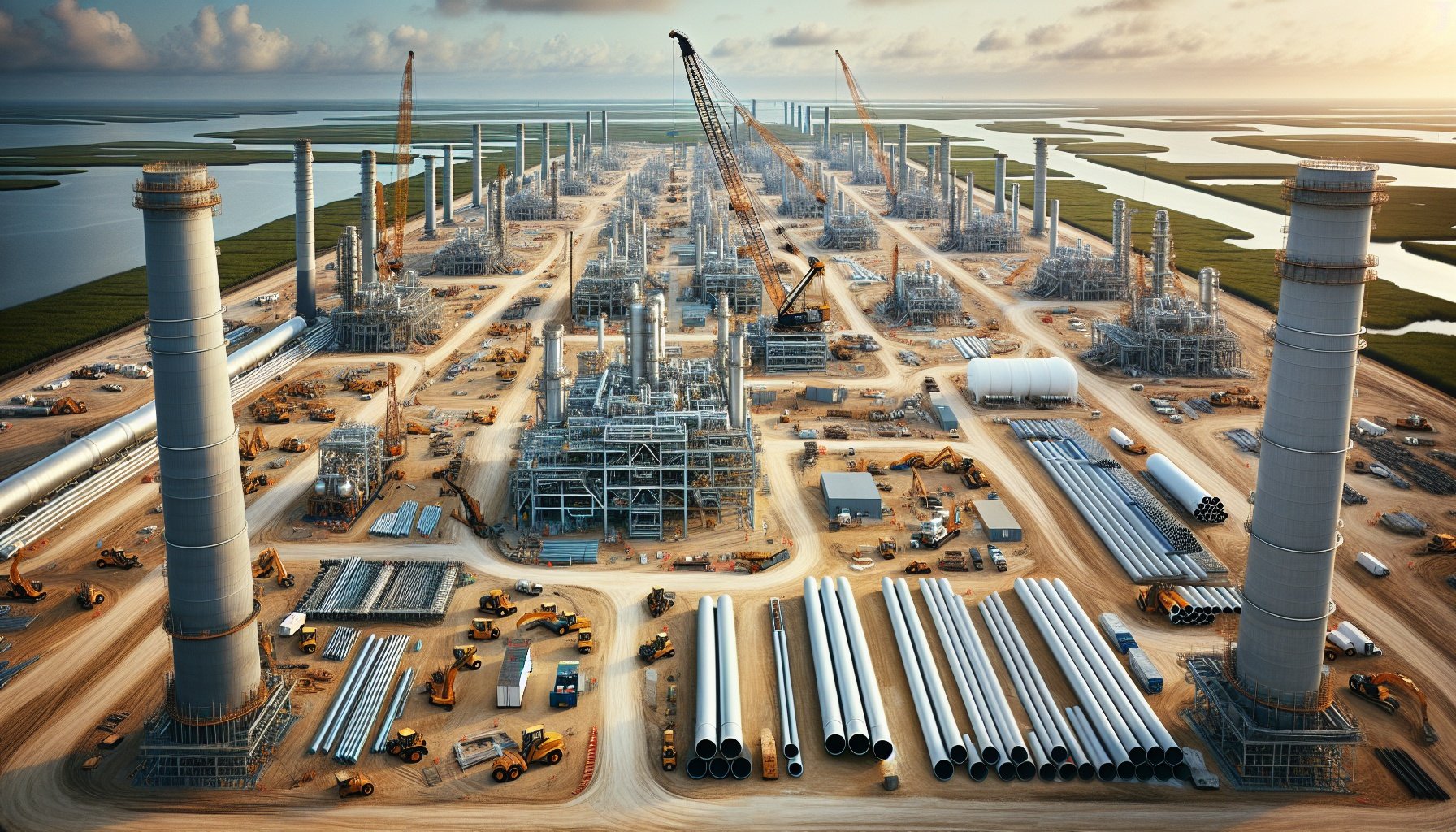
Worley landing the EPC contract for the Calcasieu Pass 2 LNG expansion hits like a siren call across Louisiana’s construction field. Crews from Alexandria to Lake Charles keep hearing about big industrial projects but worry those massive paychecks, per diem slots, and steady rotations will pass them by yet again. Contractors battle tight margins, long bid cycles, and pipeline gaps between shutdowns and new work, while equipment sits idle and experienced hands chase short-term jobs in Texas. The recent Worley Wins EPC Award for Second Phase of Big Louisiana LNG – Engineering News-Record confirms that Venture Global awarded Australia-based Worley an EPC contract for phase two of the Calcasieu Pass 2 LNG export terminal in Cameron Parish, adding 5.6 million metric tons per year of capacity with ten liquefaction trains and two storage tanks on top of phase one’s 14.4 million tpa, a signal that this job will be big, complex, and long-running for the region’s builders and skilled trades.
Quick Navigation:
Worley’s Calcasieu Pass LNG Expansion Win and What It Means for Louisiana Construction | Job Creation, Skilled Trades Demand, and Opportunities for Central Louisiana | Ripple Effects for Local Contractors, Suppliers, and Industrial Supply Chains | Frequently Asked Questions
Across Central and Southwest Louisiana, another headache comes from never knowing how many boots a project will actually need or how long the hours will hold. Craftspeople invest in TWIC cards, NCCER credentials, and TWIC renewals, only to watch start dates slide and scopes shrink after mobilization. Small and mid-sized contractors around places like DeRidder, leesville, and Oberlin juggle cash flow while trying to keep key hands on payroll between turnarounds. Families feel the strain when construction schedules shift with Gulf weather, regulatory approvals, and global LNG demand, making it hard to plan housing, childcare, or steady routes down to Cameron Parish.
These problems matter because LNG jobs can be life-changing when the work is steady, the overtime is real, and the project lasts more than a season. A mega-project on the coast pulls in concrete crews, crane operators, pipefitters, and electricians from across Central Louisiana, but only when information on timelines, manpower ramps, and subcontractor packages is clear. Local suppliers in places like pineville and Natchitoches want a piece of the action in aggregates, ready-mix, steel, and heavy haul, yet often feel shut out by distant decision-makers. With Worley’s Calcasieu Pass expansion now moving forward, attention turns to how this massive LNG build can turn those frustrations into real jobs, stronger backlogs, and long-term industrial careers for Louisiana’s construction community.
Worley’s Calcasieu Pass LNG Expansion Win and What It Means for Louisiana Construction
Worley’s win at Calcasieu Pass shifts the LNG expansion from talk to traction, setting up a long stretch of craft hours, vendor purchase orders, and heavy equipment movement across Cameron Parish. This contract turns the site into a long-term anchor project that can stabilize workforces who usually bounce between outages and short shutdowns. Fabrication yards, module shops, and specialty contractors from across Louisiana now see a real shot at multi-year commitments instead of one-and-done scopes. As Calcasieu Pass grows into a cornerstone of the state’s energy export network, Louisiana’s industrial construction scene faces a new level of opportunity and competition.
Overview of the EPC contract and scale of the Calcasieu Pass LNG expansion
The EPC award puts Worley in charge of full-scope delivery, from detailed engineering and procurement of major process units to construction of marine facilities, utilities, and power systems that will knit Calcasieu Pass 2 into the existing terminal. The expansion pushes total site capacity above 20 million tons per year, placing Cameron Parish alongside global LNG hubs in Qatar and the Gulf Coast’s largest export terminals. That scale drives heavy civil packages for deep foundations, pile driving, and high-spec concrete, plus major mechanical and electrical scopes tied to compressors, pipe racks, and high-voltage substations. Fabrication shops in Central Louisiana and along the I‑10 corridor stand to benefit from structural steel, modular skid work, and ongoing maintenance support once trains move into operation.
How the project fits into Louisiana’s broader LNG and energy infrastructure surge
Calcasieu Pass expansion arrives alongside a wave of Gulf Coast LNG terminals, petrochemical upgrades, and pipeline build‑outs that is turning Louisiana into a true export powerhouse. Together with projects in Lake Charles, Hackberry, and along the Mississippi River corridor, this work tightens the link between Cameron Parish, the Permian and Haynesville plays, and global gas markets. Worley’s win helps lock in a steady backlog of industrial construction, supporting long-haul pipelines, high‑voltage transmission, gas compression, and storage tank projects that follow. Local contractors gain a stronger case to invest in cranes, piling rigs, and Welding equipment, while craft workers see more chances to move between LNG, midstream, and power jobs without leaving the state.
Worth Noting: Calcasieu Pass LNG started operations in 2022 as the seventh U.S. LNG export terminal with a liquefaction capacity of 1.3 billion cubic feet per day.
Key project phases and expected construction timeline in Cameron Parish
Work in Cameron Parish rolls out in distinct waves, each with its own job and contractor needs. Early site prep and civil work ramp up first, with pile driving, drainage upgrades, and access roads drawing dirt contractors, survey crews, and materials suppliers from Lake Charles to Sulphur. Detailed engineering overlaps with this phase, then gives way to peak construction as process modules, cryogenic tanks, pipe racks, and marine facilities go vertical over a multi‑year window. Mechanical, electrical, and instrumentation trades see the heaviest demand during this stretch. Final tie‑ins, commissioning, and performance testing extend the schedule, keeping specialized craft and OEM technicians on site even after main construction winds down, and spreading paychecks across several Cameron Parish seasons.
Job Creation, Skilled Trades Demand, and Opportunities for Central Louisiana
With the EPC deal locked in, Calcasieu Pass 2 shifts from a distant headline to a real jobs engine for Cameron Parish and the Central Louisiana construction belt. Beyond steel and concrete, this expansion drives fresh demand for pipefitters, riggers, millwrights, welders, crane operators, and safety pros who can handle heavy industrial work on the coast, then carry that experience back up Highway 165 and 171. As schedules firm up, that demand spills into training programs, union halls, craft schools, and small fabrication yards, opening the door to a new wave of careers, crews, and company growth across Central Louisiana.
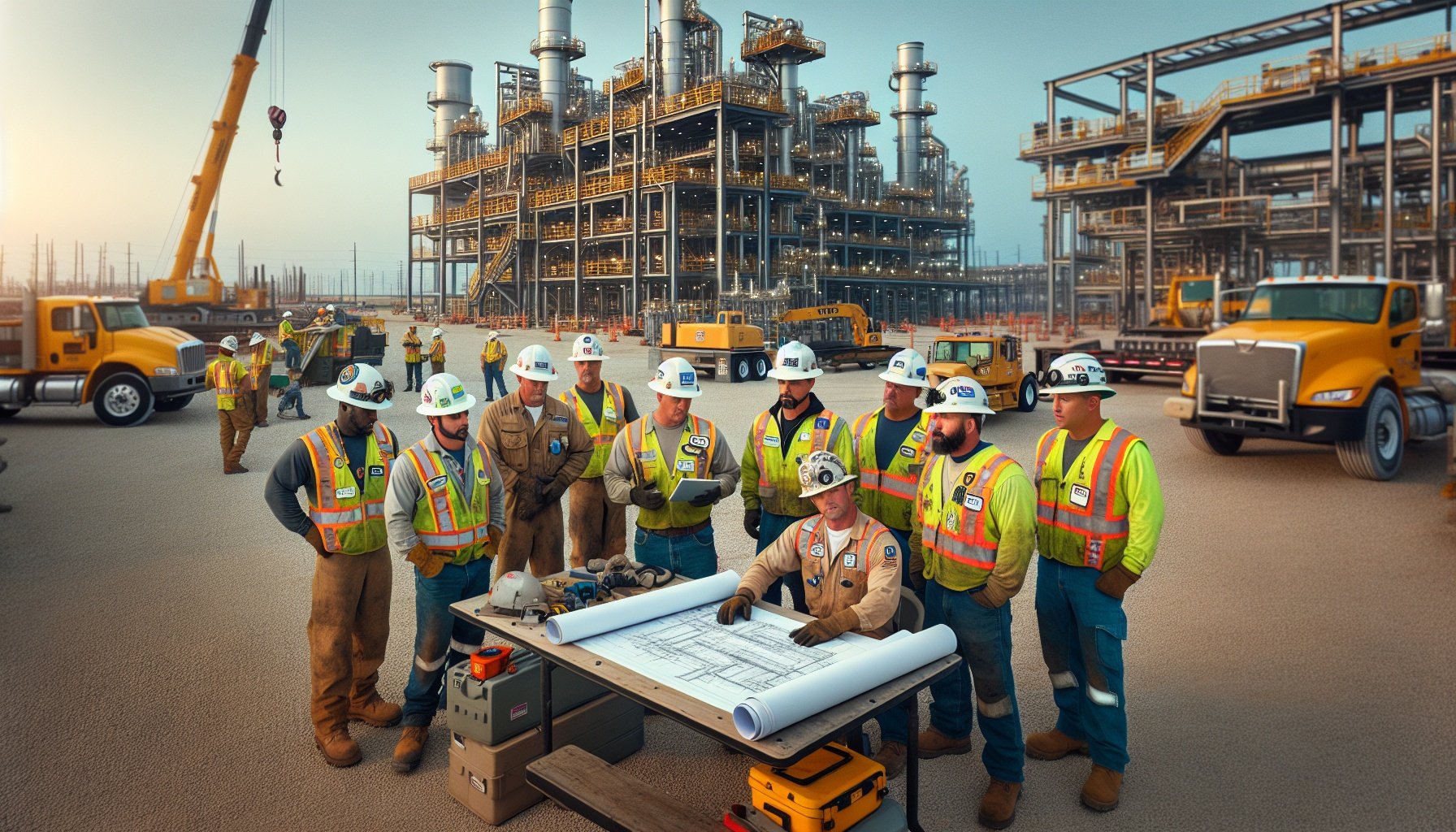
Projected workforce needs across crafts: civil, mechanical, electrical, and specialty trades
Forecasts around Calcasieu Pass 2 point to a layered workforce need across every major craft. Civil crews top the list early, with hundreds of operators, carpenters, form setters, and concrete finishers expected for pile caps, foundations, roads, drainage, and levee tie-ins along the Cameron Parish coast. Mechanical demand ramps as modules land, calling for large numbers of pipefitters, ironworkers, riggers, and millwrights to handle LNG pipe racks, compressor skids, cryogenic systems, and structural steel. Electrical and instrumentation teams will follow tight sequences, wiring substations, control buildings, heat trace, and fiber networks that tie the plant into Louisiana’s power and pipeline grid. Specialty trades—insulators, scaffold builders, NDE techs, coatings crews, and crane operators—round out a craft mix sized for a Gulf Coast mega-project.
Expert Insight: Venture Global’s Calcasieu Pass 2 LNG facility will reach a total capacity of 28 million metric tons per annum after completing phase two under Worley’s EPC contract.
Source: Reuters
Pathways for Central Louisiana workers to participate: unions, merit shops, and industrial contractors
Central Louisiana workers can plug into Calcasieu Pass 2 through multiple channels that fit different career goals. Building trades unions based out of Lake Charles, Alexandria, and Baton Rouge are expected to dispatch carpenters, operators, pipefitters, electricians, and welders under project labor agreements or craft-specific calls. Merit shop contractors tied to ABC chapters in Central and Southwest Louisiana will staff open‑shop crews, often pulling in helpers and green hands from Rapides, Avoyelles, and Vernon parishes for on‑the‑job training. Large industrial contractors with a strong Gulf Coast footprint—firms already active at Sasol, Lotte, and other Lake Charles complexes—are lining up bids that include housing plans, per diem packages, and shuttle systems, making regular rotations from Central Louisiana to Cameron Parish practical and steady.
Worth Noting: Venture Global invested $8.2 billion in the CP2 LNG project by late 2025, with potential total costs up to $28 billion for the Louisiana expansion.
Source: Engineering News-Record
Impact on wages, overtime potential, and long-term industrial construction careers
Calcasieu Pass 2 stacks up as a true high-wage job engine, with industrial construction pay scales already trending higher along the Gulf Coast. Journeyman pipefitters, electricians, and welders on comparable LNG work often see base rates in the upper $30s to mid-$40s per hour, with premium pay for specialty certs and night work. Once peak construction hits, extended schedules—6/10s or even 7/12s in certain phases—create strong overtime potential that can push annual earnings into six-figure territory for seasoned craft hands. That kind of income supports families back in Central Louisiana while keeping crews tied to long-term industrial careers. Experience on a mega-LNG expansion also builds résumés for future refinery, petrochemical, and carbon capture projects across the state.
Ripple Effects for Local Contractors, Suppliers, and Industrial Supply Chains
With Worley locked in as EPC on the Calcasieu Pass LNG expansion, the impact now stretches far past the fence line of the plant. The job touches every layer of Louisiana’s heavy industrial ecosystem, from small Cameron Parish dirt contractors to Lake Charles steel fabricators and Port of Iberia module yards. Concrete batch plants, piping distributors, scaffold crews, valve reps, crane companies, and marine transport outfits all stand to see steadier order books and stronger backlogs. As the work ramps, those connections form a true industrial supply chain hub along the Gulf Coast, setting up major ripple effects for local contractors, suppliers, and service providers.
Worth Noting: Calcasieu Pass LNG project is located in Cameron Parish, Louisiana, providing strategic access to Gulf Coast shipping routes for exports.
Opportunities for regional subcontractors in site work, concrete, steel, and modular fabrication
Regional subcontractors stand to see steady backlogs as Worley breaks the Calcasieu Pass expansion into large, specialized work packages. Civil and site-work firms from Central and Southwest Louisiana can compete for clearing, drainage, pile caps, deep foundations, access roads, and laydown yards across the marshy footprint. Concrete outfits gain runway from mass foundation pours, tank rings, chiller slabs, and elevated control-room decks, with batch plants likely staged nearby along Highway 27 and LA 82. Steel erectors and fab shops around Lake Charles, Alexandria, and Opelousas can chase structural steel, pipe racks, and platforms, feeding truckloads down to the coast. Modular fabricators in Alexandria, Pineville, and Lafayette can assemble pre-wired piperacks, equipment skids, and e-houses that roll straight into the LNG site for fast, repeatable installation.
Expert Insight: Venture Global became the second-largest U.S. LNG exporter four years after building its first Calcasieu Pass facility.
Source: Reuters
Material and equipment demand: aggregates, ready-mix, structural steel, piping, and heavy equipment services
The Calcasieu Pass LNG expansion drives a surge in hard construction demand that ripples from Cameron Parish through Central and North Louisiana. Massive foundation and paving packages translate into steady orders for aggregates from pits along the Calcasieu, Red, and Atchafalaya corridors, along with continuous volumes of ready-mix dispatched to the coast. Structural steel mills, service centers, and fab shops in places like Alexandria, Pineville, and Lake Charles see stronger call‑offs for beams, plate, embeds, and pipe racks. Gulf Coast pipe distributors gain from large-bore process piping, utility piping, and specialty alloy requirements. On the equipment side, heavy-haul firms, crane services, and earthmoving fleets across the state stay booked supplying dozers, excavators, RT cranes, and crawlers needed to keep the EPC schedule on track.
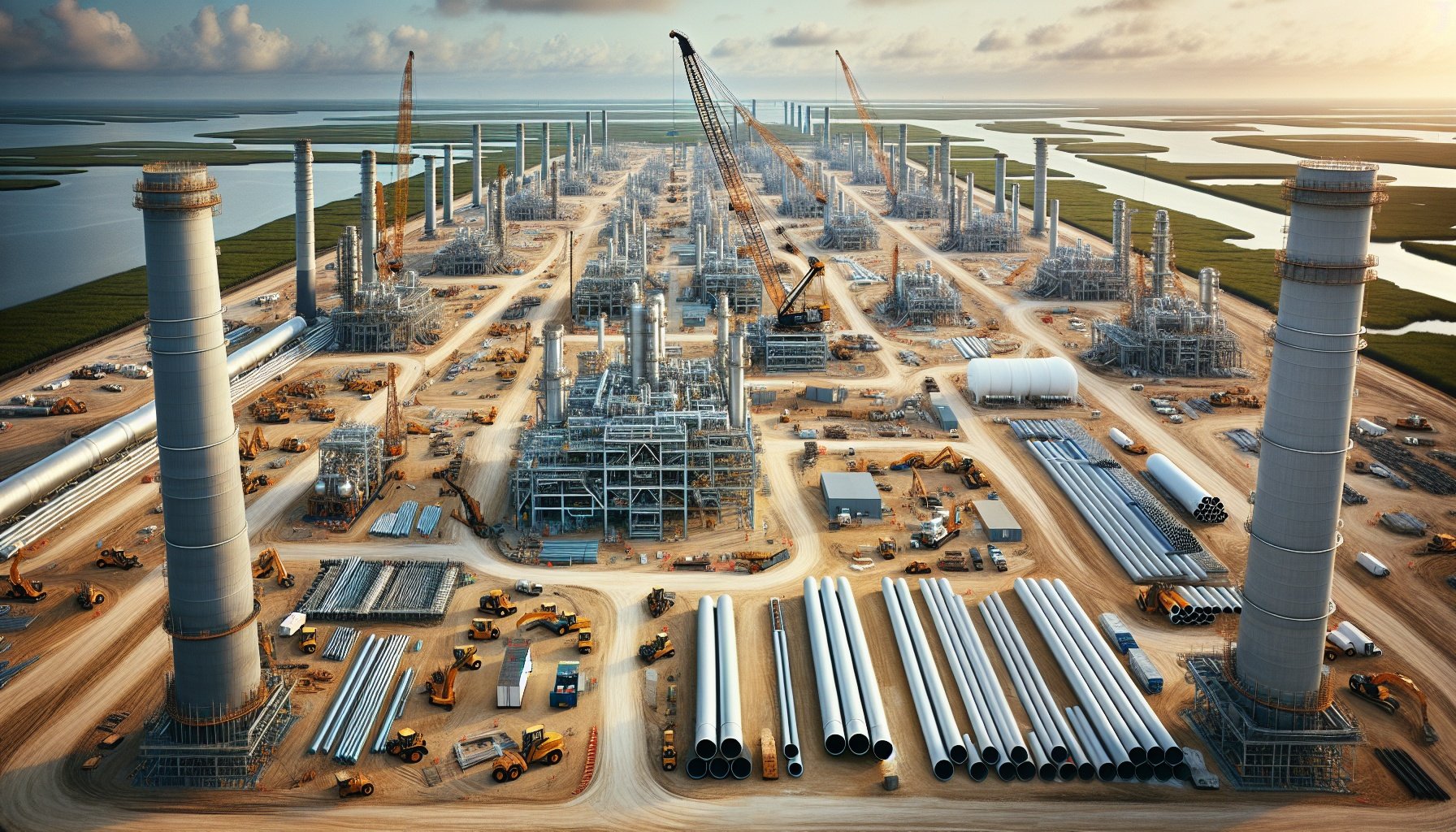
Worth Noting: Worley’s reimbursable EPC contract for CP2 phase two includes engineering, procurement, construction, plant balance design, and interconnection coordination.
Source: Reuters
Logistics and housing impacts on Central and Southwest Louisiana: yards, laydown space, and worker accommodations
The Calcasieu Pass LNG expansion also reshapes how Central and Southwest Louisiana handle construction logistics, staging, and workforce housing. Fabrication yards and laydown space along the I‑10 and US‑171 corridors become prime assets, as Worley and its subs look for secure sites to stockpile pipe, module components, and bulk materials closer to the coast. Underused industrial tracts around Lake Charles, Sulphur, DeRidder, and even Oakdale can see new lease revenue as temporary yards and transload points. Worker accommodations grow into a major spin-off market, with hotels, RV parks, and man-camps from Cameron and Carlyss up through Moss Bluff and DeQuincy filling with craft labor. Local contractors pick up work building, expanding, and maintaining these facilities, keeping construction dollars circulating well beyond the LNG fence line.
Conclusion
Worley landing the EPC contract for the Calcasieu Pass LNG expansion marks a major win for Louisiana’s construction industry. Calcasieu Pass is locking in as a powerhouse of the state’s energy export network, turning Cameron Parish into a serious jobs engine and opportunity magnet. The build-out brings large-scale, long-duration work that strengthens careers in heavy industrial construction and pushes skills, experience, and paychecks across Central Louisiana.
As this massive project moves from planning to full execution, Louisiana contractors, suppliers, and craft professionals stand at the front of a historic energy infrastructure boom. Now is the time for local firms and workers to gear up, lean into training, and claim a strong role in the next chapter of growth along the Gulf Coast.
Frequently Asked Questions
- What is the Calcasieu Pass 2 LNG expansion project and why does it matter for Louisiana?
- The Calcasieu Pass 2 (often called CP2) LNG expansion is a major build‑out of the existing Calcasieu Pass liquefied natural gas export facility in Cameron Parish, Louisiana. The original Calcasieu Pass plant chills natural gas into liquid form so it can be shipped overseas. The expansion adds more liquefaction capacity, storage, and export capability.
This project matters for Louisiana because:
– It increases demand for natural gas produced across the Gulf Coast and inland regions.
– It brings long‑term construction and operations jobs to Cameron Parish and surrounding parishes like Calcasieu, Beauregard, and Allen.
– It supports local businesses in Lake Charles, Sulphur, Hackberry, and Grand Lake through housing, food service, equipment rentals, and transportation.
– It helps keep southwest Louisiana on the map as one of the top LNG hubs in the United States, alongside places like Sabine Pass and Cameron.
With Worley securing the EPC contract, the project gains a large, experienced engineering partner, which often helps move an LNG expansion from planning into active construction. - What does it mean that Worley secured the EPC contract for the Calcasieu Pass LNG expansion?
- Worley securing the EPC contract means the company has been chosen as the main contractor responsible for Engineering, Procurement, and Construction (EPC) for the Calcasieu Pass 2 LNG expansion.
EPC covers three big areas:
– Engineering: Detailed design of process units, piping, electrical systems, control systems, foundations, and structural steel. This includes drawing up plans that meet U.S. safety codes, Coast Guard requirements, and local parish regulations.
– Procurement: Purchasing and coordinating delivery of major equipment like LNG trains, compressors, heat exchangers, tanks, pumps, valves, and instrumentation, plus thousands of smaller components.
– Construction: Managing field crews, heavy equipment, welders, electricians, pipefitters, and civil workers to build out the new units safely and on schedule.
When a global firm like Worley lands an LNG EPC contract in Cameron Parish, it signals a large, multi‑year investment with significant local hiring, subcontracting, and spending in the region. - How will the Calcasieu Pass 2 LNG expansion affect jobs and the local economy in Cameron Parish?
- The CP2 LNG expansion is expected to create a strong wave of economic activity across Cameron Parish and the surrounding region.
Key job and economic impacts include:
– Construction jobs: Multi‑year work for pipefitters, welders, ironworkers, equipment operators, concrete crews, scaffold builders, electricians, and instrument techs. Many positions will be filled by workers from Cameron, Calcasieu, and nearby parishes.
– Long‑term operations roles: Once CP2 is online, the facility will need control room operators, maintenance technicians, safety specialists, lab techs, and support staff.
– Local business growth: Hotels and rentals in Lake Charles and Sulphur, restaurants around Prien Lake Road, fuel stations along Highway 27, and service companies near Cameron and Hackberry often see higher demand.
– Parish revenue: Increased industrial activity generally supports local tax bases, helping fund roads, schools, emergency services, and hurricane‑resilient infrastructure.
With Worley’s EPC footprint, additional subcontractors, suppliers, and service providers from Central and Southwest Louisiana are likely to be pulled into the project, keeping more dollars circulating close to home. - What is LNG and how does the Calcasieu Pass facility handle it safely?
- LNG, or liquefied natural gas, is natural gas cooled to about –260°F (–162°C) so it becomes a liquid. This process shrinks its volume to roughly 1/600 of its size as a gas, making it practical to transport by specialized tankers.
At Calcasieu Pass and its CP2 expansion, safety is built into every step:
– Design standards: Tanks, piping, and equipment follow strict API, ASME, and NFPA standards along with U.S. Coast Guard and PHMSA regulations.
– Containment systems: LNG storage tanks use multiple layers of containment and insulation to keep the liquid cold and contained.
– Gas detection and fire protection: Fixed gas detectors, firewater systems, foam systems, and emergency shutdown valves are placed throughout critical areas.
– Control systems: Central control rooms with advanced automation monitor pressure, temperature, and flow 24/7 and can trigger automatic shutdowns if needed.
– Emergency planning: Coordination with Cameron Parish emergency management, local fire departments, and state agencies, with drills and training to handle unlikely incident scenarios.
These measures allow the facility to move large volumes of LNG through the Calcasieu Ship Channel while keeping safety as the top priority. - How does the Calcasieu Pass LNG expansion impact the environment and coastal communities?
- Any large LNG expansion along the Louisiana coast comes with environmental and community considerations, especially in a storm‑prone area like Cameron Parish.
Common environmental aspects for projects like CP2 include:
– Air emissions: LNG plants use gas‑fired turbines and heaters, which generate emissions. Projects typically go through federal and state air permitting, including controls for nitrogen oxides (NOx), carbon monoxide, and greenhouse gases.
– Water use and discharge: Cooling water, stormwater, and process wastewater must meet strict discharge limits set by environmental permits, often under Louisiana Department of Environmental Quality (LDEQ) oversight.
– Wetlands and wildlife: Construction in coastal Louisiana often intersects with marshland and habitat for fish, birds, and other wildlife. Mitigation, restoration, or offsets can be required by the Army Corps of Engineers and other agencies.
– Storm and hurricane resilience: Facilities in Cameron Parish are designed with elevation, flood barriers, and robust foundations to handle storm surge and high winds common along the Gulf.
Worley’s engineering role involves designing to meet or exceed environmental standards, folding in coastal protection, spill prevention, and resilience measures that fit the unique conditions of the Calcasieu and Cameron coastline. - What kinds of local and regional businesses might benefit from Worley’s EPC work on Calcasieu Pass 2?
- A large EPC contract like Worley’s on the Calcasieu Pass 2 project brings opportunity to a wide range of local and regional businesses across Louisiana and East Texas.
Typical beneficiaries include:
– Construction trades: Local contractors providing civil work, foundations, pile driving, steel erection, scaffolding, insulation, painting, and specialty welding.
– Equipment and material suppliers: Vendors for structural steel, concrete, pipe, valves, fittings, electrical cable, control systems, and safety gear.
– Transportation and logistics: Trucking companies hauling materials along Highway 82 and Highway 27, barge services, and port support along the Calcasieu Ship Channel.
– Service companies: Surveyors, testing and inspection labs, environmental consulting firms, security services, and catering operations.
– Hospitality and retail: Hotels, RV parks, and short‑term rentals from Lake Charles and Moss Bluff down to Cameron; restaurants, grocery stores, and fuel stops that serve construction crews.
This broad supply chain means economic benefits ripple beyond Cameron Parish into places like Lake Charles, DeRidder, Alexandria, and even across the border toward Orange and Beaumont. - How does the Calcasieu Pass LNG expansion fit into the broader energy picture for the Gulf Coast and the U.S.?
- Calcasieu Pass and the CP2 expansion sit at the heart of a major shift in how the Gulf Coast supports both U.S. and global energy needs.
The project’s wider role includes:
– Strengthening U.S. LNG exports: Additional liquefaction capacity in Cameron Parish allows more American natural gas to reach markets in Europe, Asia, and Latin America through LNG carriers.
– Supporting Gulf Coast gas production: More LNG capacity helps back upstream drilling and gathering systems in Louisiana, Texas, and nearby states by providing a steady export outlet.
– Enhancing energy security for allies: LNG shipped from the Calcasieu Pass area helps partner countries diversify away from single‑source gas suppliers, especially during geopolitical tension.
– Anchoring industrial investment: The LNG cluster stretching from Cameron and Sabine Pass up toward Lake Charles continues to attract pipelines, storage projects, and related manufacturing, reinforcing the Gulf Coast’s role as an energy and petrochemical hub.
With Worley delivering EPC services on CP2, the Calcasieu Pass complex grows from a single project into a larger, long‑term anchor in the U.S. LNG network, tying local jobs in Cameron Parish to global energy flows.