
Best Drought-Tolerant Ground Covers for Water-Saving Landscapes

Lawns and planting beds across Central Louisiana face a tough mix of blazing summer heat, sticky humidity, and surprise downpours that can leave soil either baked dry or washed out. Drought-tolerant ground covers offer a smart way to handle all that wild weather while still keeping landscapes lush and inviting. These hardy, low-growing plants thrive on less water, hold soil in place during storms, and help keep weeds from taking over. With the right planning, they blend beautifully into water-saving landscape designs, cut back on weekly maintenance, and support healthier soil over time.
Quick Navigation:
Climate Considerations and Site Planning for Central Louisiana Landscapes | Top Drought-Tolerant Ground Cover Varieties for Water Conservation | Installation, Maintenance, and Erosion Control Strategies | Frequently Asked Questions
Drought-tolerant ground covers are plants that thrive in arid conditions with minimal watering, making them ideal for regions facing water restrictions. These options help conserve water while preventing soil erosion and suppressing weeds in landscapes. Selecting the right drought-tolerant varieties can transform dry, barren areas into vibrant, sustainable gardens that require little ongoing maintenance. Thoughtful choices about sun exposure, drainage, and existing irrigation zones can turn problem spots—like slopes, hot curb strips, and compacted paths—into durable, green spaces that stand up to both dry spells and sudden Louisiana showers.
From sunny open yards in Alexandria to shady corners near Bayou Rapides, the right mix of native and adapted ground covers can handle foot traffic, frame patios, and boost curb appeal without constant watering. With simple installation techniques, smart watering schedules, and strategic placement around foundations and driveways, these plants become quiet workhorses in any water-wise landscape, protecting the property and keeping it looking fresh season after season.
Climate Considerations and Site Planning for Central Louisiana Landscapes
Central Louisiana’s climate challenges go beyond heat and storms, with big swings between soggy seasons and late-summer dry spells that stress shallow-rooted plants. Thoughtful site planning helps drought-tolerant ground covers handle this roller coaster. Small changes in elevation, wind exposure, and shade from pines or live oaks create pockets that stay cooler, hotter, wetter, or bone dry. Matching plant choices to these microclimates keeps ground covers thriving while trimming water use. Soil type also matters, from sandy river bottoms near the Red River to heavy clays around Alexandria. These local conditions shape decisions about layout, grouping, and plant placement.
Interesting Fact: In Mediterranean climates of California and Spain, drought-tolerant ground covers like lavender have been cultivated since the 18th century for erosion control and water-efficient agriculture.
Source: Encyclopædia Britannica
Assessing soil type, drainage, and sun exposure before choosing drought-tolerant ground covers
Soil in Central Louisiana shifts quickly from sandy river bottoms to heavy Yazoo clay, so simple on-site checks matter before picking drought-tolerant ground covers. A quick squeeze test shows texture: sandy soil falls apart, loam holds a soft shape, and clay forms a tight ribbon. Then a basic drainage test—filling a small hole with water and timing how fast it disappears—reveals whether to favor tough, shallow-rooted plants for wet-prone spots or deeper-rooted, drought specialists for faster-draining areas. Sun exposure also changes block to block, from wide-open full sun along driveways to dappled shade under big pecan and live oak trees, guiding where sun-loving covers like lantana fit best and where shade-tolerant options perform reliably.
Pro Tip: A 2025 report indicates that adopting drought-tolerant ground covers in U.S. residential yards could save homeowners an average of 20,000 gallons of water annually per household.
Balancing drought-tolerance with Louisiana humidity, heat, and occasional heavy rain events
Balancing drought-tolerance with Louisiana humidity, heat, and downpours means choosing ground covers that handle swings, not just dry spells. Central Louisiana summers bring thick humidity and long stretches of 90°+ heat, then a surprise gully‑washer rolling through. Plants like dwarf mondo grass, frogfruit, and Asiatic jasmine hold up well because roots stay tough in dry soil but foliage resists leaf spot and mildew when air stays sticky. Spreading forms with flexible stems ride out heavy rain better than brittle, upright types that snap or mat. Slightly raised beds, shallow swales, and mulched edges let water run off just enough so crowns do not sit in soggy soil, while still storing moisture for the next hot, rainless stretch.
Expert Insight: In 2024, the global market for drought-resistant landscaping plants, including ground covers, reached USD 12.5 billion, driven by water conservation initiatives in arid regions.
Source: Statista
Integrating ground covers into existing irrigation zones and water-saving landscape layouts
Integrating drought-tolerant ground covers into existing irrigation zones works smoothly when plant needs match the system layout. High-heat, full-sun areas on fixed-spray heads fit tough, low growers like creeping thyme, frogfruit, or Asiatic jasmine that thrive with deep, occasional soakings instead of frequent misting. Converting outer lawn zones to drip or micro-spray lines reduces overspray on driveways and sidewalks and pushes more water straight to roots. Around patios in Alexandria or near Monroe’s shaded side yards, dwarf mondo grass and liriope handle reduced run times as part of a water-saving schedule. Grouping similar ground covers on the same valve makes seasonal adjustments simple, so controllers can stay set for longer, less frequent cycles that match Central Louisiana’s hot, often rain-bursty climate.
Top Drought-Tolerant Ground Cover Varieties for Water Conservation
Drought-tolerant ground covers are plants that thrive in arid conditions with minimal watering, making them ideal for regions facing water restrictions. Beyond basic toughness, each variety brings its own strengths, from quick spreading to dense, low-growing mats that block out problem patches of bare soil. Some choices handle reflected heat off concrete and brick, while others cool down shady corners under pines and oaks common across Central Louisiana. A mix of textures, bloom times, and foliage colors also keeps beds and borders looking fresh through long dry spells, setting the stage for a closer look at top-performing varieties for water conservation.
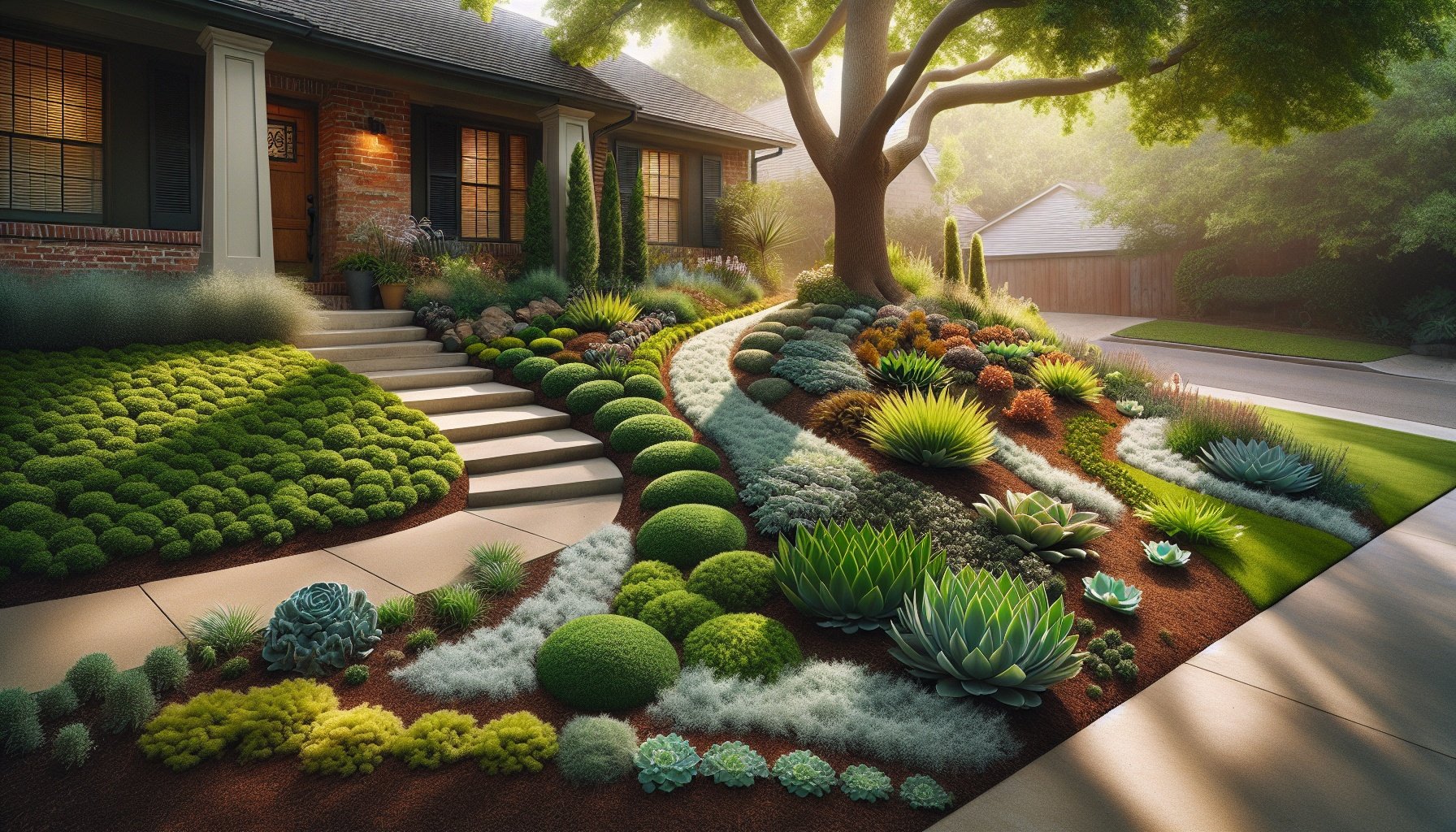
Low-growing native and adapted species for Central Louisiana, such as frogfruit, sedums, and Confederate jasmine
Low-growing native and adapted species handle Central Louisiana’s swings between soaking rains and late-summer dry spells with steady performance. Frogfruit forms a tight, spreading mat that weaves between stepping-stones and along driveway edges, staying green on less water while feeding pollinators with tiny white blooms. Sedums, especially creeping types, thrive in hot, reflected areas near concrete and brick, storing water in fleshy leaves and shrugging off dry spells that stress lawn grasses. Confederate jasmine works as a drought-tolerant ground cover on slopes, embankments, and around pine trunks, rooting as stems trail and locking soil in place. Once established, these choices fill bare soil, limit weeds, and reduce the need for overhead irrigation in Central Louisiana landscapes.
Good to Know: Scientific studies show that native drought-tolerant ground covers such as buffalo grass enhance soil health by improving water infiltration rates by 30% compared to traditional turf grasses.
Source: U.S. Geological Survey
Foot-traffic-tolerant options for paths, around patios, and between stepping stones
Foot-traffic-tolerant ground covers keep high-use areas attractive without constant watering or re-sodding. Creeping thyme is a favorite between stepping stones and along path edges, staying low, releasing a light scent when stepped on, and shrugging off heat once roots are established. Woolly thyme and elfin thyme stay even tighter to the ground for narrow joints in flagstone or paver patios. For a softer, lawn-like look, dwarf mondo grass and liriope work well beside walkways and between wider stones, handling occasional use and filtering runoff. In hot, reflected-heat spots near patios, creeping sedums pair nicely with these tougher covers, filling gaps while the traffic-tolerant plants absorb most of the wear and keep soil protected.
Did you know? Technological advancements in 2024 include AI-driven apps that recommend drought-tolerant ground covers based on local soil and climate data to optimize water conservation in gardens.
Source: Nature Scientific Reports
Flowering and evergreen ground covers that boost curb appeal while reducing water use
Flowering and evergreen ground covers keep beds and slopes looking lush year-round while quietly cutting water use. Sun-loving lantana forms colorful mounds that shrug off heat and drought once established, drawing butterflies along front walks and mailbox plantings. For a more formal look, Indian hawthorn and dwarf yaupon holly create dense, evergreen carpets that frame foundations and driveways with deep green structure. On shaded sides of homes, Asiatic jasmine and dwarf azaleas offer glossy foliage and seasonal blooms without demanding constant irrigation. These choices pair well with tougher options used between stones or in hot patio zones, tying the whole landscape together with continuous color, texture, and curb appeal on a lean watering schedule.
Installation, Maintenance, and Erosion Control Strategies
Drought-tolerant ground covers are plants that thrive in arid conditions with minimal watering, making them ideal for regions facing water restrictions. These options help conserve water while preventing soil erosion and suppressing weeds in landscapes. Selecting the right drought-tolerant varieties can transform dry, barren areas into vibrant, sustainable gardens that require little ongoing maintenance. Proper installation sets roots deep enough to handle dry spells, while smart Mulching, spacing, and grading guide water to the right places. Simple, low-effort care then keeps plants dense and healthy, allowing living ground covers to anchor soil, slow runoff, and protect every slope, edge, and pathway from washing away.
Soil preparation, mulching, and proper spacing techniques to establish drought-tolerant ground covers
Healthy drought-tolerant ground covers start with loose, well-draining soil. Compacted clay around Alexandria benefits from 2–3 inches of compost or pine bark tilled into the top 4–6 inches, while sandy river-bottom soils near the Red River respond well to added organic matter that holds moisture without turning soggy. After planting, a 2-inch layer of pine straw, shredded bark, or finely crushed gravel stabilizes temperature, slows evaporation, and reduces weeds while still letting rain soak in. Ground covers need room to spread, so plants are usually spaced 8–18 inches apart, depending on mature width. Tight, even spacing helps foliage knit together quickly, shading the soil surface and building a thick, living carpet that naturally conserves water and controls erosion.
Watering schedules, weed suppression, and long-term care with minimal maintenance
Drought-tolerant ground covers settle best with deep, infrequent watering rather than light daily sprinkles. New plantings appreciate a good soak once or twice a week during the first month, then shift to every 10–14 days, letting the soil dry between waterings. Established ground covers like creeping thyme, lantana, or sedum often thrive on rainfall alone, needing extra water only during long dry spells. As plants knit together, their dense foliage blocks sunlight from reaching the soil, naturally reducing weed growth. Occasional hand-pulling of early weeds and topping up mulch once a year keeps beds clean. Long-term care usually comes down to trimming back overgrown patches, checking for bare spots, and replanting small sections where coverage has thinned.

Keep in Mind: Drought-tolerant ground covers like creeping thyme and sedum reduce water usage by up to 50% in urban landscapes, supporting sustainable gardening amid increasing drought frequency projected through 2025.
Using ground covers on slopes, around foundations, and along driveways to control erosion and runoff
Drought-tolerant ground covers anchor loose soil on slopes, slow down rainwater, and keep valuable topsoil from washing away. Deep-rooted choices like creeping rosemary, dwarf lantana, and juniper knit into banks and roadside ditches, holding steep grades that might otherwise rut and gull. Around foundations, low-growing options such as blue fescue or hardy thyme form a permeable mat that absorbs roof runoff, reducing splash against siding and helping keep slabs drier. Along driveways and walkways, tough, spreading ground covers catch water that sheets off concrete and gravel, guiding it into the soil instead of storm drains. Mixed with stone borders or gravel bands, these hardy plants create attractive, low-maintenance buffers that protect both landscapes and hardscapes.
Conclusion
Drought-tolerant ground covers are plants that thrive in arid conditions with minimal watering, making them ideal for regions facing water restrictions. These options help conserve water while protecting soil on everything from sandy Red River bottoms to heavier clays around Alexandria. The right mix of sun-loving and shade-tolerant varieties keeps beds full under pines and oaks and along hot concrete and brick. Thoughtful planning, solid soil prep, and simple maintenance support dense, healthy coverage that stays attractive through long dry spells. Layering colors, textures, and bloom times also keeps water-saving landscapes interesting season after season. Choosing smart, drought-tolerant ground covers turns every drop of water into a stronger, more resilient landscape ready for the next Central Louisiana summer and beyond.
Frequently Asked Questions
- What makes a ground cover plant drought-tolerant in Central Louisiana’s hot, humid climate?
- A drought-tolerant ground cover in Central Louisiana handles long stretches of heat and limited rainfall without constant watering. Strong, deep roots help plants reach moisture that sits below the surface. Waxy, fuzzy, or small leaves reduce water loss in blazing sun. Many drought-tolerant ground covers spread low and wide, shading the soil and keeping it cooler. Tough plants also handle the region’s sticky humidity and occasional heavy downpours without rotting. Native or well-adapted species, such as some sedums, liriope, and certain native grasses, usually perform the best because they already match local soil, rainfall patterns, and temperature swings.
- Which drought-tolerant ground covers work well as lawn alternatives in Central Louisiana?
- Several drought-tolerant ground covers can step in where traditional turf struggles under summer heat. Options often used as lawn alternatives include:
– Buffalo grass (in suitable sunny areas) – A low-water warm-season grass that forms a soft, fine texture and needs less mowing.
– Liriope (monkey grass) – A clumping ground cover that stays green, tolerates heat, and handles some foot traffic along edges and paths.
– Clover mixes – Certain clovers stay greener with less water than typical lawns and help enrich the soil.
– Creeping thyme – Works in sunny, well-drained areas, offering fragrance and small flowers that attract pollinators.For most Central Louisiana yards, combining a small area of drought-tolerant turf with surrounding beds of tough ground covers creates a landscape that looks green while using far less water.
- How do drought-tolerant ground covers help conserve water compared to traditional lawns?
- Drought-tolerant ground covers reduce water use in several ways. Deep or fibrous root systems pull moisture from deeper in the soil, so plants need less frequent irrigation than shallow-rooted turf grass. Many drought-tolerant varieties go through brief dry spells without browning out. Dense foliage shades the soil, slowing evaporation under harsh summer sun. As ground covers spread, a living mulch layer forms, protecting soil from baking, cracking, and washing away during sudden storms. Together, these traits cut down on sprinkler run times, lower water bills, and ease pressure on local water supplies, especially during late-summer dry spells across Central Louisiana.
- What soil preparation is needed before planting drought-tolerant ground covers?
- Soil preparation makes a huge difference in how well drought-tolerant ground covers perform. Most of these plants prefer well-drained soil, so heavy clay in Central Louisiana often needs loosening. Common steps include:
– Removing weeds, grass, and roots so new plants do not compete for moisture.
– Loosening soil 4–8 inches deep with a shovel, tiller, or garden fork.
– Mixing in compost to improve structure, drainage, and nutrient content.
– Adding sand or expanded shale where drainage is very poor.
– Leveling and lightly firming the surface so water does not pool in low spots.Good preparation helps roots grow deep, which improves drought tolerance and reduces the need for extra watering later.
- Do drought-tolerant ground covers still need watering, and how often should they be irrigated?
- Drought-tolerant ground covers still need water, especially during the first growing season. After planting, consistent moisture helps roots spread out and anchor into the soil. A common approach is deep watering once or twice a week for the first several weeks, depending on rainfall and temperature. Watering should soak the root zone instead of just dampening the surface. Once established, most drought-tolerant ground covers only need occasional deep watering during extended dry spells. In many Central Louisiana yards, natural rainfall can support mature ground covers most of the year, with supplemental irrigation during the hottest, driest weeks of summer.
- Can drought-tolerant ground covers handle shade, or do they all need full sun?
- Not all drought-tolerant ground covers need full sun. Many prefer at least 4–6 hours of light, but some varieties handle part shade very well. For bright shade or dappled sun under pines or live oaks, choices like mondo grass, liriope, and certain native ferns work well once established. Dry shade spots under large trees often stay thirsty even after rain because roots soak up moisture quickly. Tough, shade-tolerant ground covers can handle those conditions better than turf grass. For full, deep shade, plant selection becomes more limited, but focusing on plants known for dry-shade tolerance keeps the area green while still keeping irrigation needs low.
- How do drought-tolerant ground covers affect maintenance needs such as mowing, weeding, and fertilizing?
- Drought-tolerant ground covers usually reduce maintenance compared to a standard lawn once they fill in. Many spreading varieties form a thick mat that shades out weed seeds, so weeding becomes lighter over time. Mowing is often rare or not needed at all, except for occasional trimming to keep edges tidy. Fertilizer needs are typically lower because these plants grow at a moderate pace instead of fast, lush growth that demands heavy feeding. An initial layer of mulch plus regular spot-weeding speeds up coverage. Over the long term, a water-saving ground cover area around a home in Central Louisiana often means less mowing, fewer chemicals, and more time to enjoy the yard rather than constantly working on it.
Categories
Home Improvement Tips & Tricks